
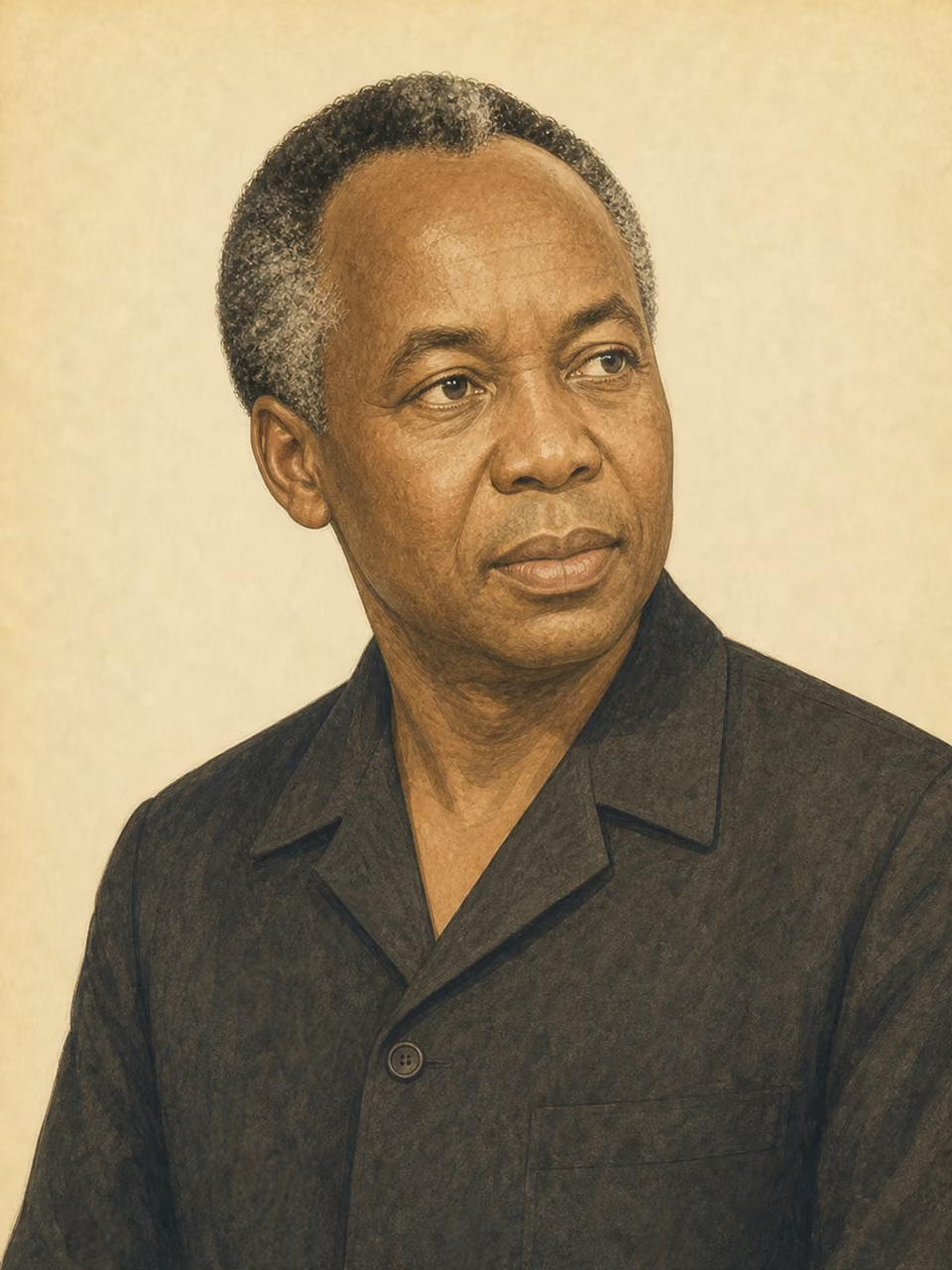
Julius Nyerere

Portrait: AI-generated imagined likeness

Julius Nyerere

Politician · Teacher · Writer · translator

Years
1922–1999
Birthplace
Tanzania
Birth polity
British Tanganyika
Era
Contemporary
Field
Politics
Occupations
Politician · Teacher · Writer · translator

Tanzanian politician. He led the independence of Tanganyika and advocated Ujamaa socialism as the first president of Tanzania. He is a person who thinks about decolonizing Africa and building a nation.

View in catalog

Historical context

Places

  • Dar es Salaam

    Work

Works & achievements

  • Ujamaa socialism

    1967–1985

    Theory

Events

  • Independence of Tanganyika

    1961

    Political event · Leader

  • Formation of the United Republic of Tanzania

    1964

    Political event · Leader

Origins

Origins map
Birth country
Birth country
Tanzania

Map: Natural Earth (PD)

Biography

Early life

Born into the Zanaki community of Tanganyika, he started out as a teacher. In East Africa under British colonial rule, educated intellectuals became the leaders of national movements.

Achievements

He led the Tanganyika African National Union to achieve independence, and united with Zanzibar to form Tanzania. He promoted the Ujamaa policy, which emphasized rural communities, and also showed his presence in non-aligned diplomacy.

Character & anecdotes

Nyerere was called ``Mwalimu'', or teacher. While he was respected for his strong ethics and integrity, his village clustering policy also came with economic difficulties and problems of coercion.

Historical Impact

If you study Nyerere, you will understand that Africa's independence was not just about changing the national flag, but also nation-building around education, rural areas, ethnic integration, and Cold War diplomacy. Students will be able to consider the ideals and limitations of postcolonial nations. Policy choices after independence can also be compared.