
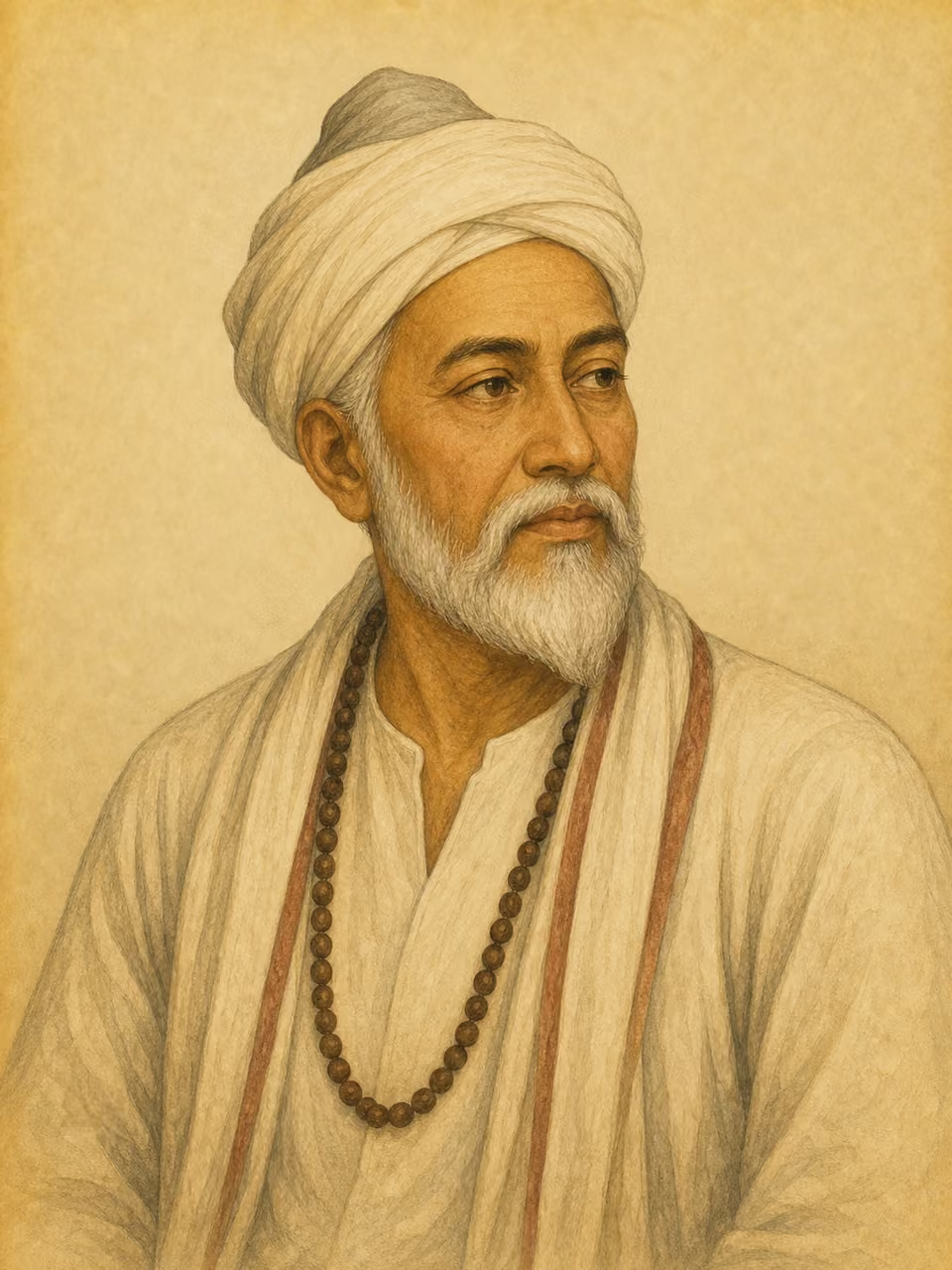
Kabir

Portrait: AI-generated imagined likeness

Kabir

Poet · Philosopher · Writer · Spiritual teacher

Years
c. 1440–c. 1518
Birthplace
India
Birth polity
North Indian religious urban milieu
Era
Early modern
Field
Religion
Occupations
Poet · Philosopher · Writer · Spiritual teacher

A religious poet from North India. He preached direct devotion to God, transcending the boundaries between Hinduism and Islam. He is a person who reads the Bhakti movement and Indian religious culture.

View in catalog

Historical context

Places

  • Varanasi

    Birth

  • Maghar

    Death

Events

  • Bhakti movement

    1450–1518

    Movement · Leader

Origins

Origins map
Birth country
Birth country
India

Map: Natural Earth (PD)

Biography

Early life

He is said to have lived around Varanasi, and there are various theories about his origins and year of birth. In an environment where urban artisans and religious people interacted, he honed his language to criticize established religious authorities.

Achievements

He left behind poems that emphasized inner devotion to God and transcended caste, ritual, and sectarian conflicts. His songs have been passed down in multiple traditions, including Hindu, Islamic, and Sikhism.

Character & anecdotes

According to Kabir's legend, after his death Hindu and Muslim disciples fought over his funeral, but flowers were left in place of his body. This is a symbolic anecdote that transcends sects.

Historical Impact

When we study Kabir, we understand that religious intermixture, craftsman culture, and people's beliefs played important roles in Indian society before and after the Mughal Empire. It is also useful for understanding the background of the Bhakti movement and the establishment of Sikhism. It can also be used for comparison with surrounding areas from the same era.