
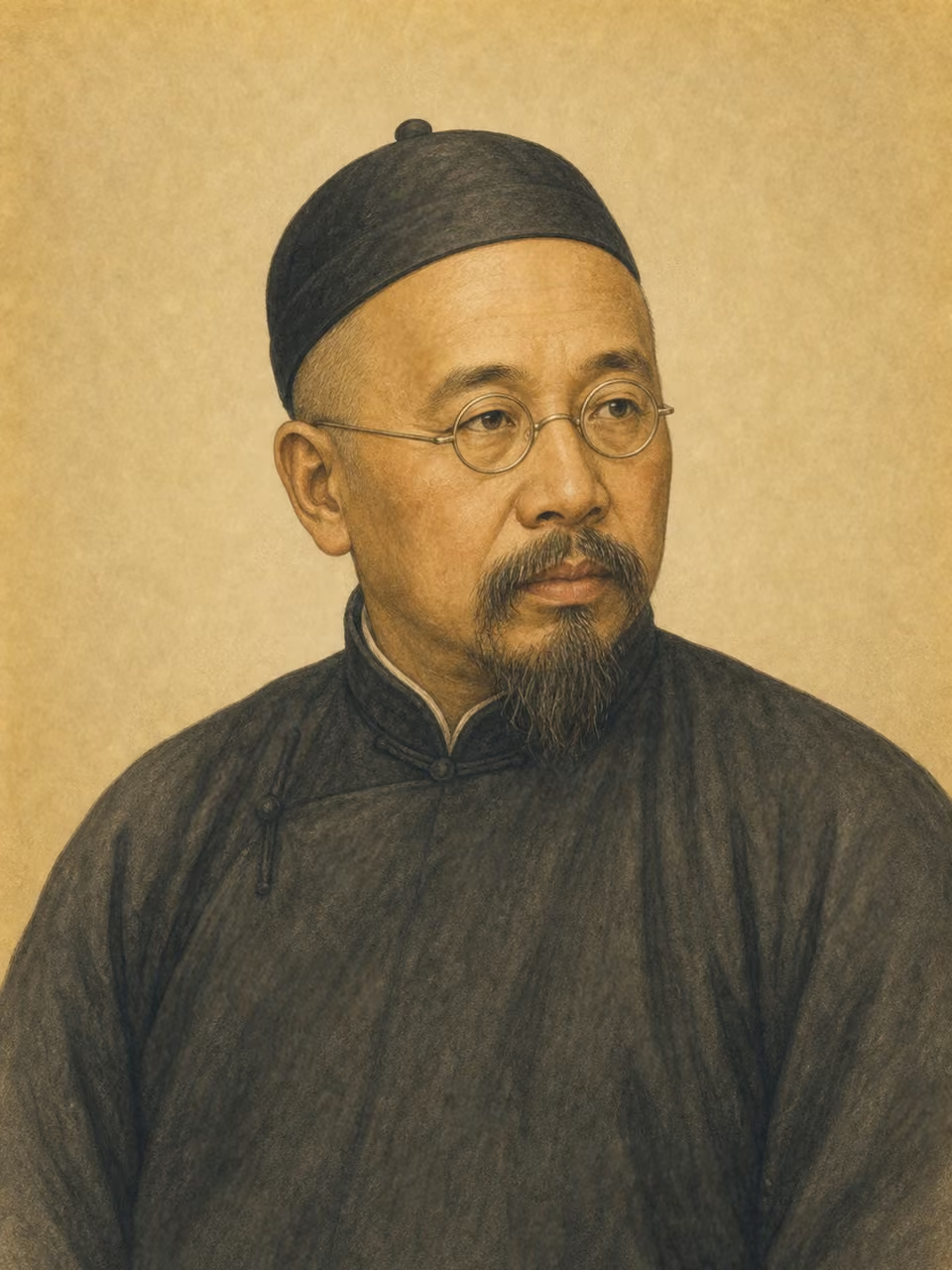
Kang Youwei

Portrait: AI-generated imagined likeness

Kang Youwei

Political activist · Politician · Writer · Philosopher · Journalist

Years
1858–1927
Birthplace
China
Birth polity
Qing dynasty
Era
Modern
Field
Social reform
Occupations
Political activist · Politician · Writer · Philosopher · Journalist

A thinker and reform activist in the late Qing Dynasty who promoted the Bougi Transformation. He appealed for a constitutional monarchy and institutional reform while reinterpreting Confucianism. This is important in understanding China's search for modernization and the limits of Qing reformers.

View in catalog

Historical context

Places

  • Nanhai

    Birth

  • Beijing

    Work

Works & achievements

  • Datong shu

    Book

Events

  • Hundred Days' Reform

    1898

    Movement · Leader

Origins

Origins map
Birth country
Birth country
China

Map: Natural Earth (PD)

Biography

Early life

Born in Nanhai, Guangdong Province, he became interested in Western affairs while attending the imperial examinations. As the Qing Dynasty faced pressure from the great powers and internal crises, it began to believe that traditional scholarship alone would not be able to rebuild the nation.

Achievements

He appealed to Emperor Guangxu for reform, and in 1898, he envisioned reforms to the political system, education, military, and economy through the Bodog Transformation Law. The reformed law was defeated in a short period by Empress Dowager Cixi and other conservatives, and Kang Youwei went into exile.

Character & anecdotes

Kang Youwei tried to reinterpret Confucius as a reformer rather than a symbol of conservatism. It is distinctive in that rather than abandoning tradition, it attempted to use tradition to justify modernization.

Historical Impact

When you study Kang Youwei, you realize that China's reforms at the end of the Qing Dynasty were not simply a matter of Westernization, but rather a question of how to combine Confucianism, imperial power, constitutional politics, and an ethnic crisis. You can understand the options of reformers before the Xinhai Revolution.