
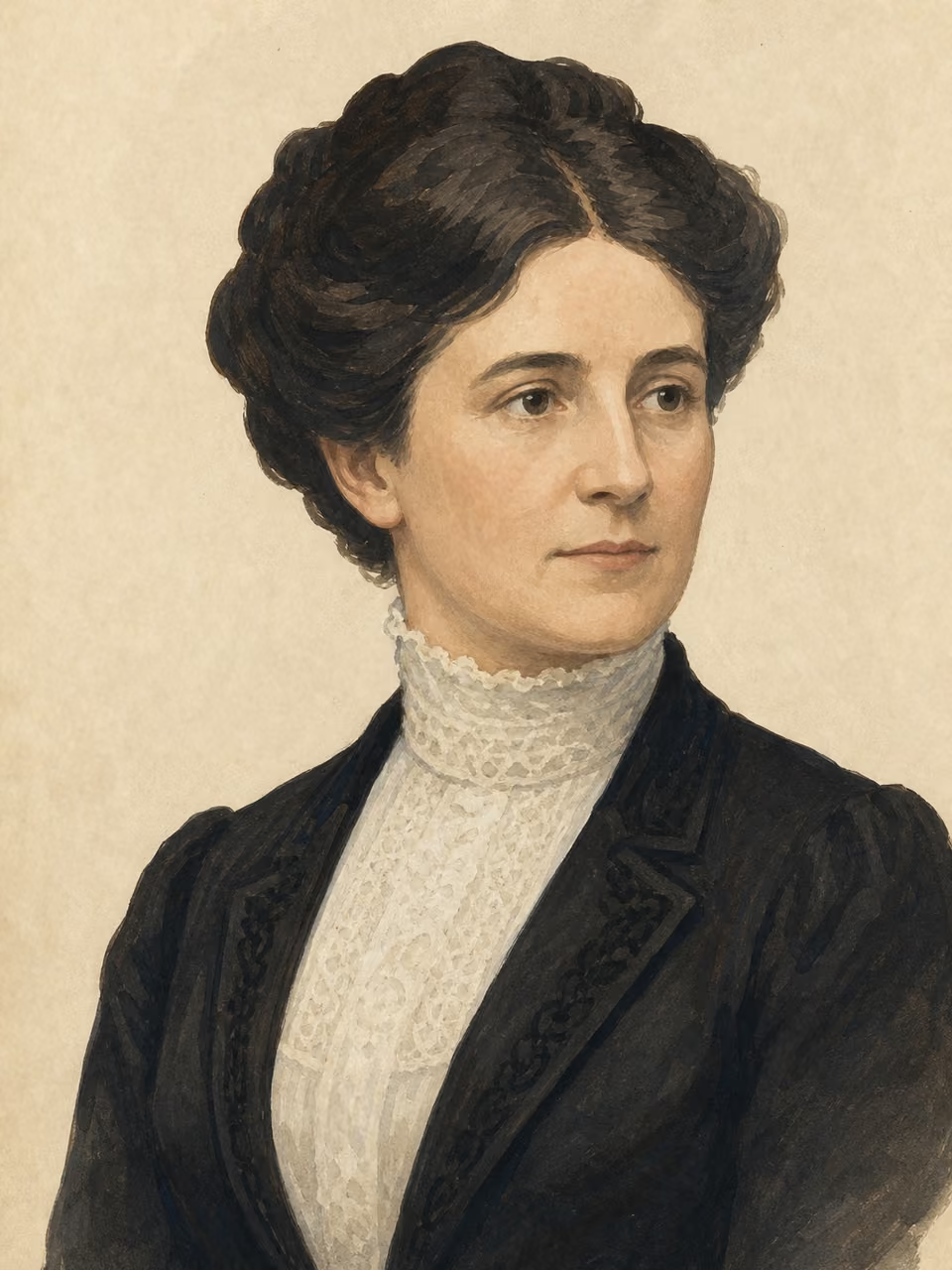
Kate Sheppard

Portrait: AI-generated imagined likeness

Kate Sheppard

Suffragist · Political activist · Women's rights activist · Feminist

Years
1847–1934
Birthplace
United Kingdom
Birth polity
United Kingdom of Great Britain and Ireland
Era
Modern
Field
Social reform
Occupations
Suffragist · Political activist · Women's rights activist · Feminist

In 1893, when a suffrage petition carrying nearly 32,000 names was unrolled before Parliament, Kate Sheppard and her allies turned years of organizing into a public display that politicians could not easily dismiss. Through the Women's Christian Temperance Union she coordinated writing, petition drives, and lobbying that helped secure women's parliamentary voting rights in New Zealand.

View in catalog

Historical context

Places

  • Liverpool

    Birth

  • Christchurch

    Work

Events

  • Women's suffrage in New Zealand

    1893

    Movement · Leader

Origins

Origins map
Birth countryAssociated countries
Birth country
United Kingdom
Associated countries
New Zealand

Map: Natural Earth (PD)

Biography

Early life

Kate Sheppard was born Catherine Wilson Malcolm in Liverpool in 1847. She migrated to Christchurch, New Zealand, as a young woman and married Walter Sheppard in 1871. Through religious and civic organizations she became increasingly involved in campaigns for women's rights and social reform.

Achievements

Working through the Women's Christian Temperance Union, Sheppard organized petitions, wrote for newspapers, and lobbied politicians for women's suffrage. In 1893 she helped gather nearly 32,000 signatures for a petition to Parliament, supporting the Electoral Act that made New Zealand a pioneer in women's national voting rights.

Character & anecdotes

The 1893 suffrage petition was about 270 meters long when unrolled in Parliament, turning the scale of public support into a dramatic visual argument. Sheppard was especially effective as a writer and organizer rather than as a frequent public speaker.

Historical Impact

The 1893 victory did more than change one country's election law: it gave suffrage movements elsewhere a working example that national voting rights for women could be won through organized pressure, coalition building, and persistence. Sheppard remained active through the National Council of Women of New Zealand, and her memory on the ten-dollar note and in preserved historic sites keeps her associated with a broader democratic movement rather than a lone heroic act.

Notes

Her birth name was Catherine Wilson Malcolm; she is also remembered through Kate Sheppard House in Christchurch.