
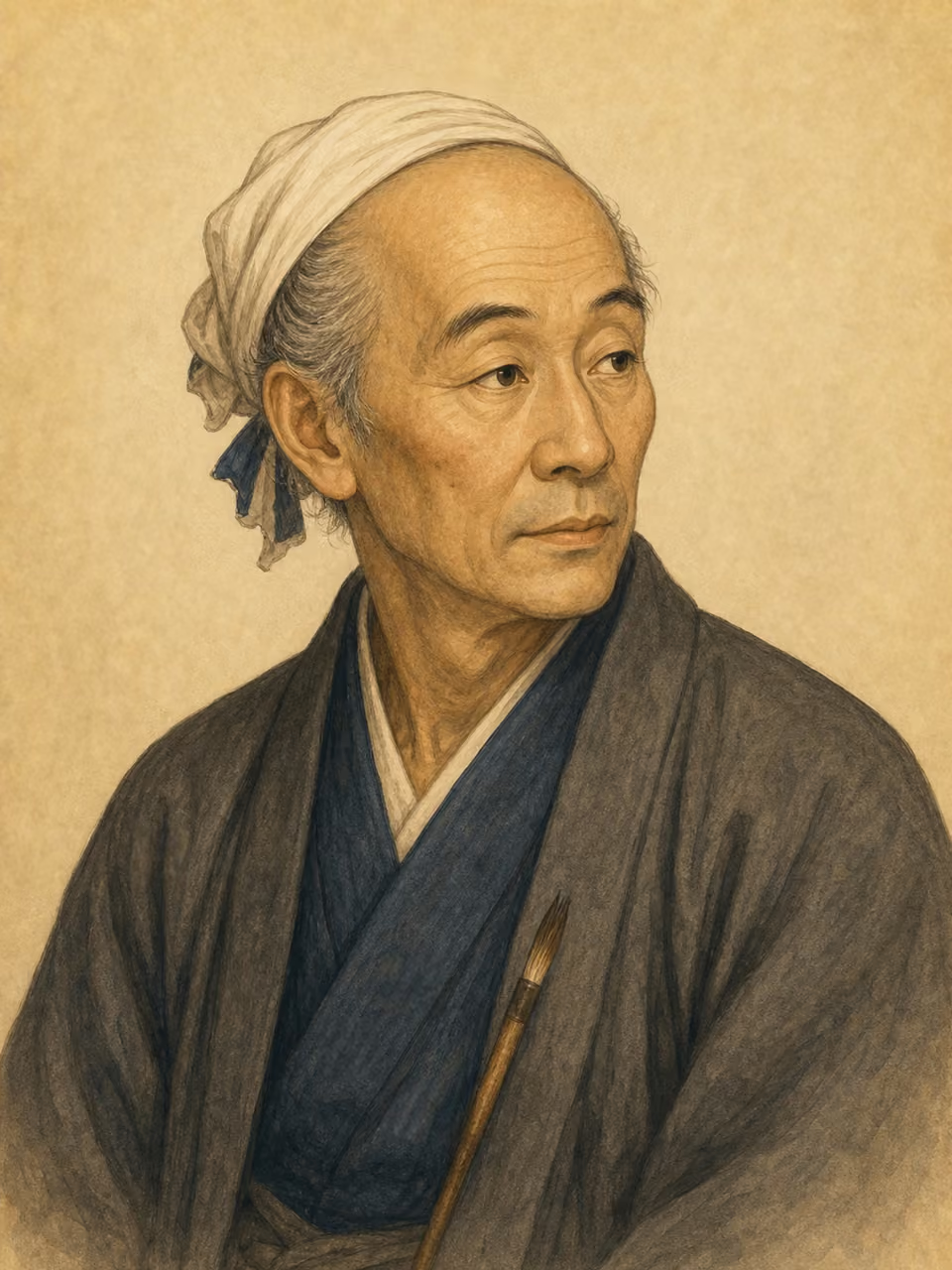
Katsushika Hokusai

Portrait: AI-generated imagined likeness

Katsushika Hokusai

Painter · Printmaker

Years
1760–1849
Birthplace
Japan
Birth polity
Japan under the Tokugawa shogunate
Era
Modern
Field
Art
Occupations
Painter · Printmaker

Working within Edo's vigorous publishing world, Hokusai answered commercial print projects with images that transformed landscape, travel, and everyday motion into widely circulated visual events. Thirty-Six Views of Mount Fuji and especially The Great Wave turned a print-series commission into one of the most recognizable image cycles in world art.

View in catalog

Historical context

Places

  • Edo

    Birth

Works & achievements

  • The Great Wave off Kanagawa

    c. 1831

    Painting

  • Thirty-six Views of Mount Fuji

    c. 1830–c. 1832

    Painting

Origins

Origins map
Birth country
Birth country
Japan

Map: Natural Earth (PD)

Biography

Early life

Katsushika Hokusai was born in Edo in 1760 and entered the world of image making while still young. After training within the Katsukawa school, he gradually absorbed and reworked multiple styles, building a remarkably flexible artistic career inside the vibrant urban culture of late Edo Japan.

Achievements

He is best known for Thirty-Six Views of Mount Fuji and for Hokusai Manga, with The Great Wave off Kanagawa becoming one of the most famous images in world art. Across landscapes, figures, illustrated books, and other formats, he pushed print design toward bolder composition, stronger motion, and wider imaginative range.

Character & anecdotes

Hokusai is famous for repeatedly changing artistic names and moving from place to place, habits that became part of his legend. Even in old age he insisted that his work would continue improving if only he could keep living and drawing long enough, a claim that captures his relentless ambition.

Historical Impact

Hokusai mattered because he expanded what printed images could do for urban spectatorship, design, and popular knowledge, not simply because one wave became famous. Through nineteenth-century Japonisme and later museum culture, his work helped restructure how Japanese art entered global modern art history and the international market for images.