
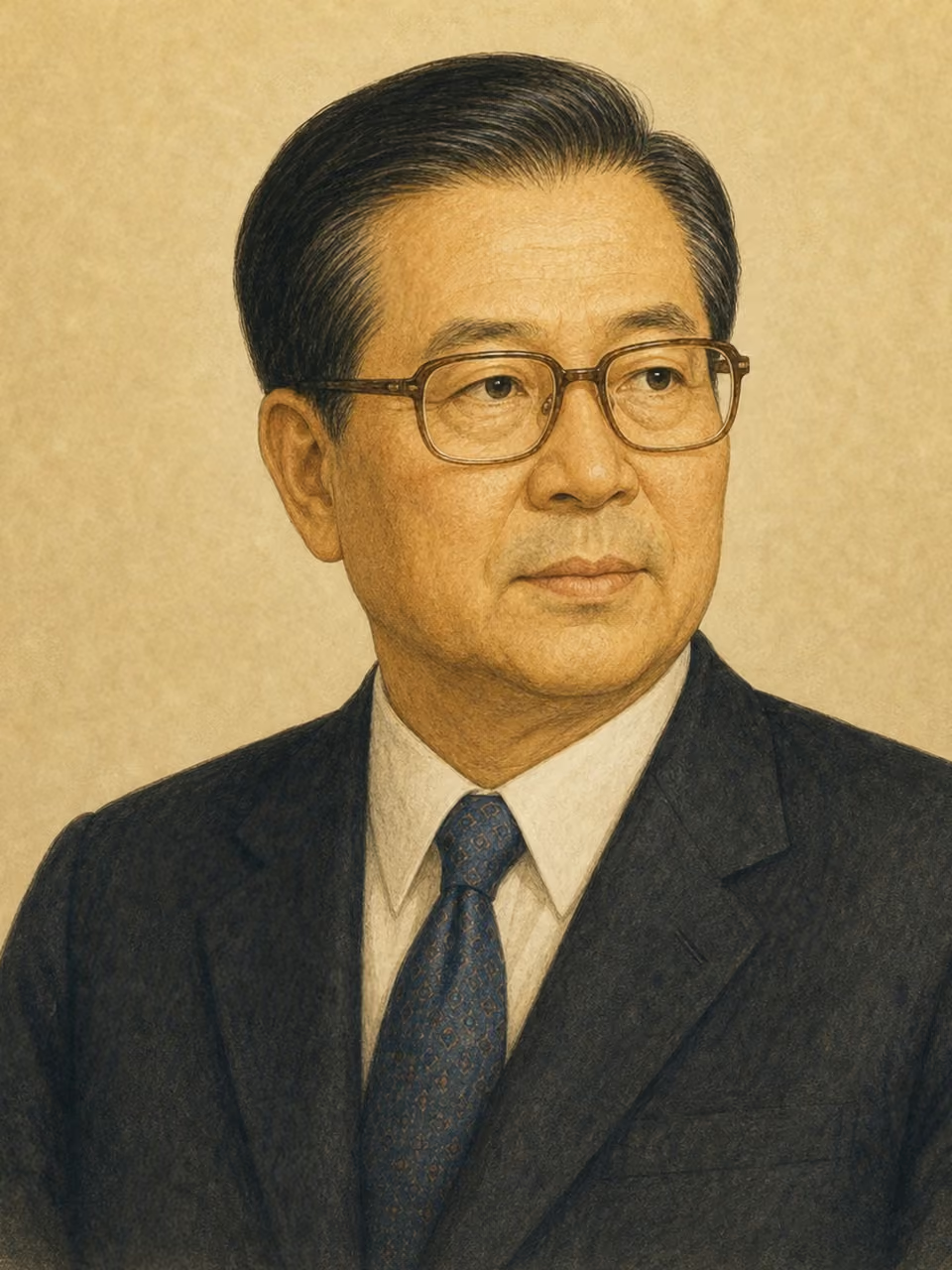
Kim Dae-jung

Portrait: AI-generated imagined likeness

Kim Dae-jung

Politician · Journalist

Years
1924–2009
Birthplace
South Korea
Birth polity
Korea under Japanese rule
Era
Contemporary
Field
Politics
Occupations
Politician · Journalist

Korean politician. He continued the democratization movement for a long time, and later promoted the Sunshine Policy as president. He is a person who thinks about the Korean Peninsula and democracy after the Cold War.

View in catalog

Historical context

Places

  • Seoul

    Work

Events

  • Sunshine Policy

    1998–2003

    Political event · Leader

  • 2000 Nobel Peace Prize

    2000

    Cultural event · Subject

Origins

Origins map
Birth country
Birth country
South Korea

Map: Natural Earth (PD)

Biography

Early life

Born in Korea under Japanese rule, he became a leader of the opposition party through business and political activities. Despite experiencing oppression, abduction, and death sentences under the military regime, he continued to campaign for democracy.

Achievements

He was elected in the 1997 presidential election and symbolized the peaceful transition of power in South Korea. He promoted the Sunshine Policy, which emphasized dialogue with North Korea, and in 2000, he achieved an inter-Korean summit meeting.

Character & anecdotes

Kim Dae-jung's political life was a difficult one, with repeated elections, imprisonment, exile, and return. The Nobel Peace Prize was also an international recognition of efforts for democratization and inter-Korean dialogue.

Historical Impact

Kim Dae-jung is a figure who shows that South Korea's democratization progressed through citizen movements, opposition politics, and international public opinion. Studying him, we learn that in post-Cold War East Asia, the transition from authoritarianism to democracy and the reconciliation of divided nations were simultaneous challenges.