
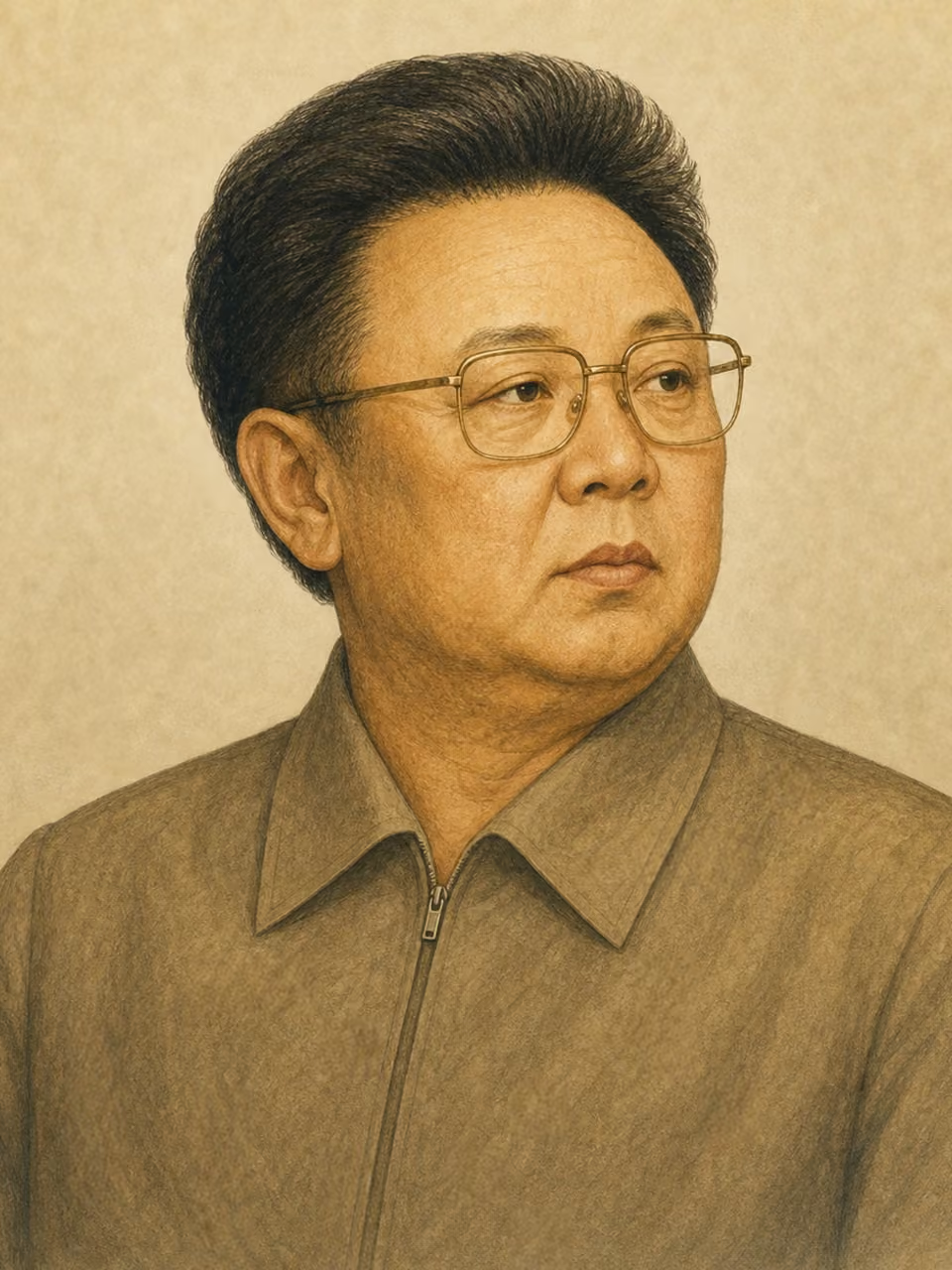
Kim Jong-il

Portrait: AI-generated imagined likeness

Kim Jong-il

Politician · Military leader · film director

Years
1941–2011
Birthplace
North Korea
Birth polity
Soviet Far East
Era
Contemporary
Field
Politics
Occupations
Politician · Military leader · film director

Supreme leader of North Korea. He inherited power as Kim Il Sung's successor and promoted military-first politics and nuclear development. He is a person who thinks about the Korean Peninsula and dictatorial regimes after the Cold War.

View in catalog

Historical context

Places

  • Pyongyang

    Work

Events

  • 1994 North Korean succession

    1994

    Political event · Leader

  • 2006 North Korean nuclear test

    2006

    Political event · Leader

Origins

Origins map
Birth countryAssociated countries
Birth country
North Korea
Associated countries
Russia

Map: Natural Earth (PD)

Biography

Early life

Born into a family with a history of anti-Japanese movements and exile, he was raised as the successor to Kim Il Sung after the founding of North Korea. He expanded his power base through involvement in party propaganda, films, and organizational guidance.

Achievements

After Kim Il Sung's death in 1994, he became supreme leader and advocated a military-first policy that emphasized the military. He ruled through a period of economic crisis and famine, and pursued nuclear development, increasing tensions with the international community.

Character & anecdotes

He was known for his strong interest in film, and was deeply involved in cultural policy and advertising. A cult of personality was created as part of the political system, and the image of a leader was associated with the legitimacy of the state.

Historical Impact

Kim Jong Il is a figure who shows that even after the end of the Cold War, North Korea maintained its hereditary one-party dictatorship and military priority policy. By studying him, you can understand how the division of the Korean Peninsula, the nuclear issue, and the economic crisis were linked to international politics and domestic governance.