
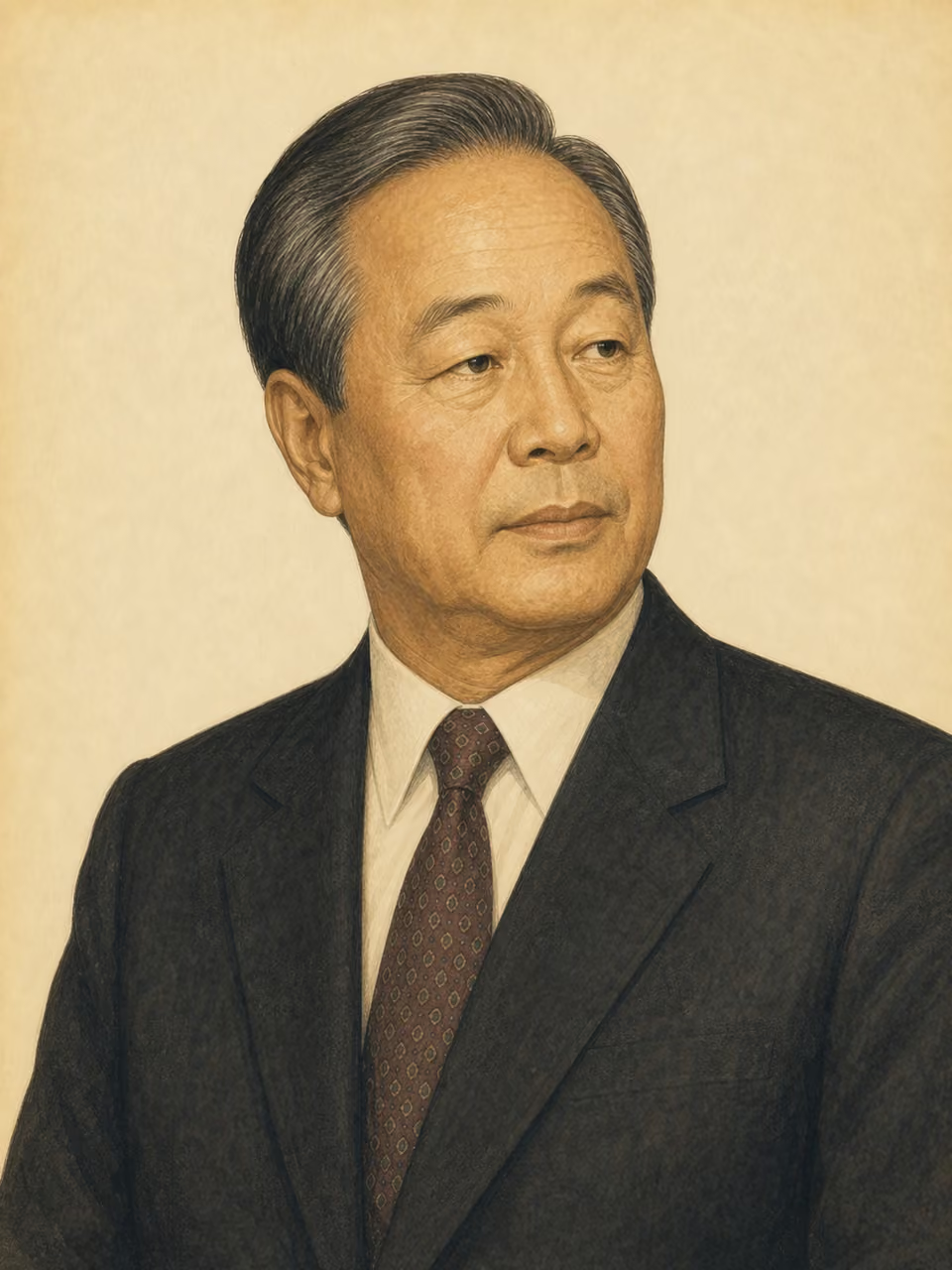
Kim Young-sam

Portrait: AI-generated imagined likeness

Kim Young-sam

Politician

Years
1927–2015
Birthplace
South Korea
Birth polity
Korea under Japanese rule
Era
Contemporary
Field
Politics
Occupations
Politician

Korean politician. A democratic leader who resisted the military regime, he became a civilian president in 1993. He promoted the financial real name system and military reform. He is a person who thinks about politics after South Korea's democratization.

View in catalog

Historical context

Places

  • Seoul

    Work

Events

  • South Korean democratization movement

    1979–1987

    Movement · Leader

  • Establishment of civilian government in South Korea

    1993

    Political event · Leader

Origins

Origins map
Birth country
Birth country
South Korea

Map: Natural Earth (PD)

Biography

Early life

Born in southern Korea under Japanese rule, he became a politician at a young age. During the reigns of Park Chung-hee and Chun Doo-hwan, South Korea enjoyed economic growth, but movements seeking political freedom were suppressed.

Achievements

He supported the democracy movement as an opposition leader, and later became president after the ruling party was reorganized. He promoted the purge of private organizations within the military, the real-name financial system, and the pursuit of responsibility for past military regimes.

Character & anecdotes

Kim Young-sam has long been a symbol of anti-dictatorship, but he joined forces with conservative forces to gain power. It shows the process by which democratic politics is formed between ideals and reality.

Historical Impact

If you study Kim Young-sam, you will see that South Korean democratization progressed not only through street movements, but also through the reorganization of political parties, military control, anti-corruption measures, and the institutionalization of civilian government. This is a turning point in modern Korean politics. Institutionalization of civilian control is also considered.