
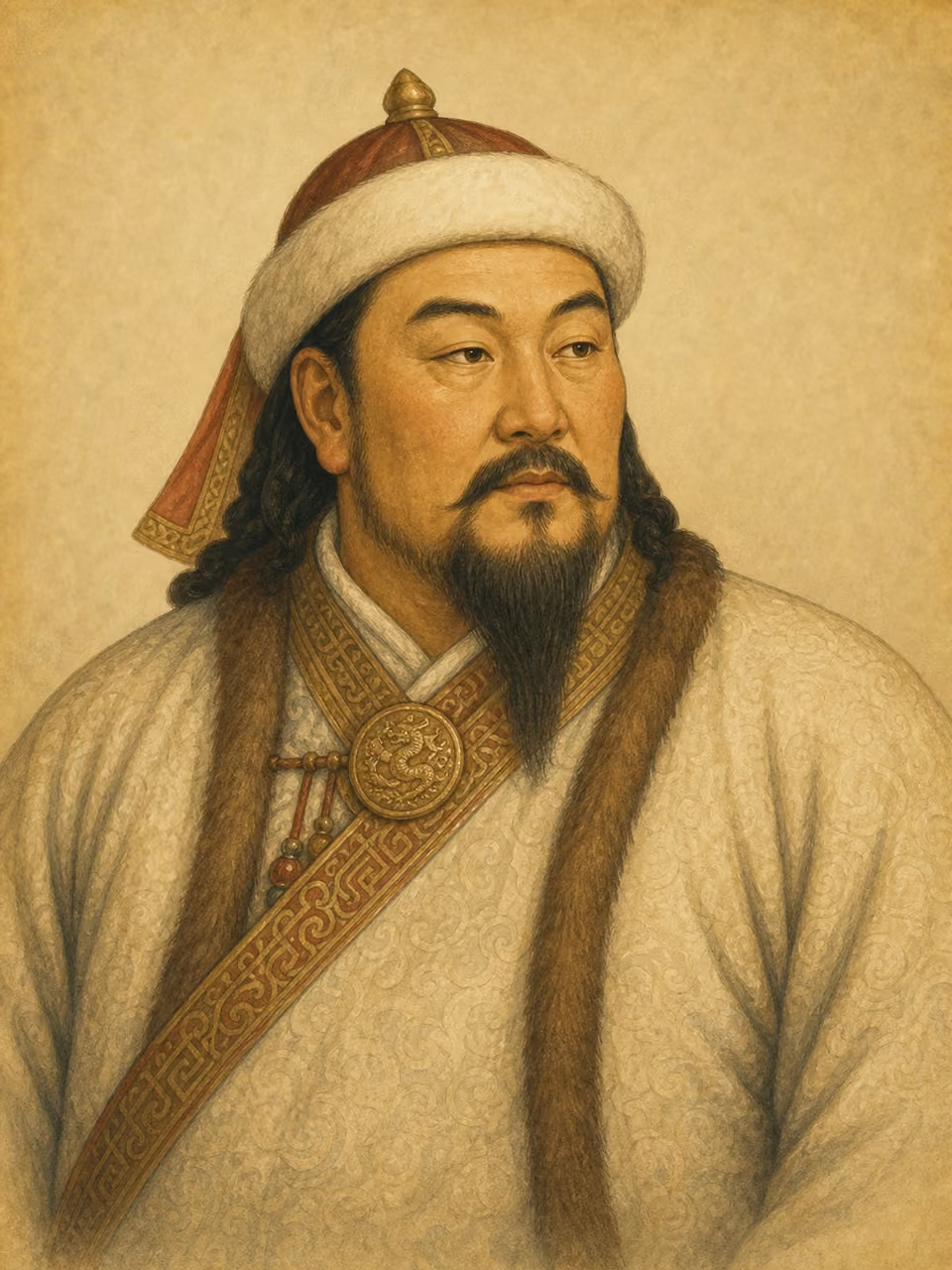
Kublai Khan

Portrait: AI-generated imagined likeness

Kublai Khan

Emperor · Monarch · Military leader

Years
1215–1294
Birthplace
China
Birth polity
Mongol Empire
Era
Medieval
Field
Politics
Occupations
Emperor · Monarch · Military leader

Great Khan of the Mongol Empire, the ruler who founded the Yuan and institutionalized the rule of China. It is important in understanding the points of contact between the Eurasian Empire and the Chinese dynasty. It connects local history and world history and provides clues for deciphering changes during the same era.

View in catalog

Historical context

Places

  • Mongolian Plateau

    Birth

  • Dadu

    Work

Events

  • Founding of the Yuan dynasty

    1271

    Political event · Leader

  • Conquest of Southern Song

    1276–1279

    War · Commander

Origins

Origins map
Birth countryAssociated countries
Birth country
China
Associated countries
Mongolia

Map: Natural Earth (PD)

Biography

Early life

Born as a member of the Genghis family, he grew up during the expansion of the Mongol Empire. During the era of his older brother Mongke, he was in charge of northern China and gained experience in governing China.

Achievements

In 1271, it established itself as a Chinese dynasty, using the country's name and making Dadu its capital. He destroyed the Southern Song Dynasty, unified China, and activated trade and envoys between the East and the West.

Character & anecdotes

Marco Polo's travelogues depicted Kublai's court as a world of great wealth and cosmopolitanism. Although it is necessary to distinguish it from the actual image, it shows that it was originally a stage for world historical exchanges.

Historical Impact

When we study Kublai, we learn that the nomadic empire exercised control over wide areas not only through conquest but also through administrative, financial, and transportation networks. He is a person who connects the Mongol Empire and Chinese history. When you look at the people's activities and works together, it becomes easier to understand the terms in textbooks as concrete historical trends.