
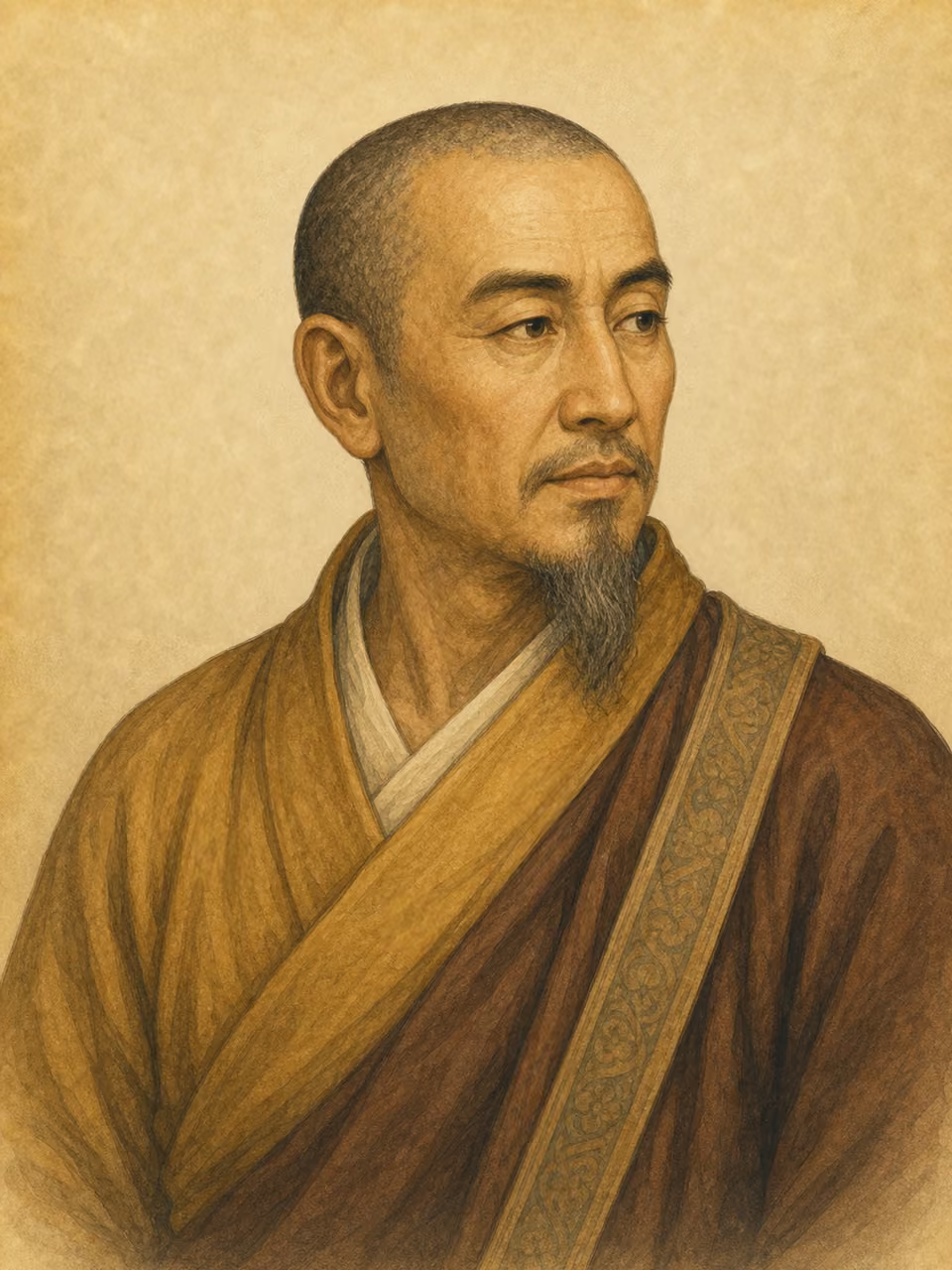
Kumārajīva

Portrait: AI-generated imagined likeness

Kumārajīva

translator · Writer · Buddhist monk · Philosopher

Years
c. 344–c. 413
Birthplace
China
Birth polity
Kucha and the Chinese Buddhist sphere
Era
Ancient
Field
Religion
Occupations
translator · Writer · Buddhist monk · Philosopher

A Buddhist monk and translator from Kamei. He translated Buddhist scriptures into Chinese in Chang'an, and had a great influence on the understanding of the doctrines of Chinese Buddhism. He is a person who reads the Eastern tradition of Buddhism and the culture translated into Chinese.

View in catalog

Historical context

Places

  • Kucha

    Birth

  • Chang'an

    Work

Works & achievements

  • Chinese translation of the Lotus Sutra

    Book

Events

  • Buddhist translation movement in China

    401–413

    Cultural event · Leader

Origins

Origins map
Birth country
Birth country
China

Map: Natural Earth (PD)

Biography

Early life

Born in Kamekushi in the western region, he studied through the interaction between Indian Buddhist culture and Central Asia. The multilingual environment along the East-West trade routes became the foundation for later translation activities.

Achievements

He was welcomed in Chang'an and translated many Buddhist texts into clear Chinese. Translations such as the Lotus Sutra had a long-lasting influence on the understanding of Buddhism in China, Japan, and Korea.

Character & anecdotes

Kumaraju's translation was praised not only for its accuracy but also for its readability and ease of conveying his ideas. This shows that translation is not just a change of language, but a reconfiguration of culture.

Historical Impact

When we study Kumarajya, we learn that Central Asian monks and translation projects played a decisive role in the process of Buddhism's spread from India to China. It provides clues for thinking about the foundations of East Asian Buddhist culture. It can also be used for comparison with surrounding areas from the same era.