
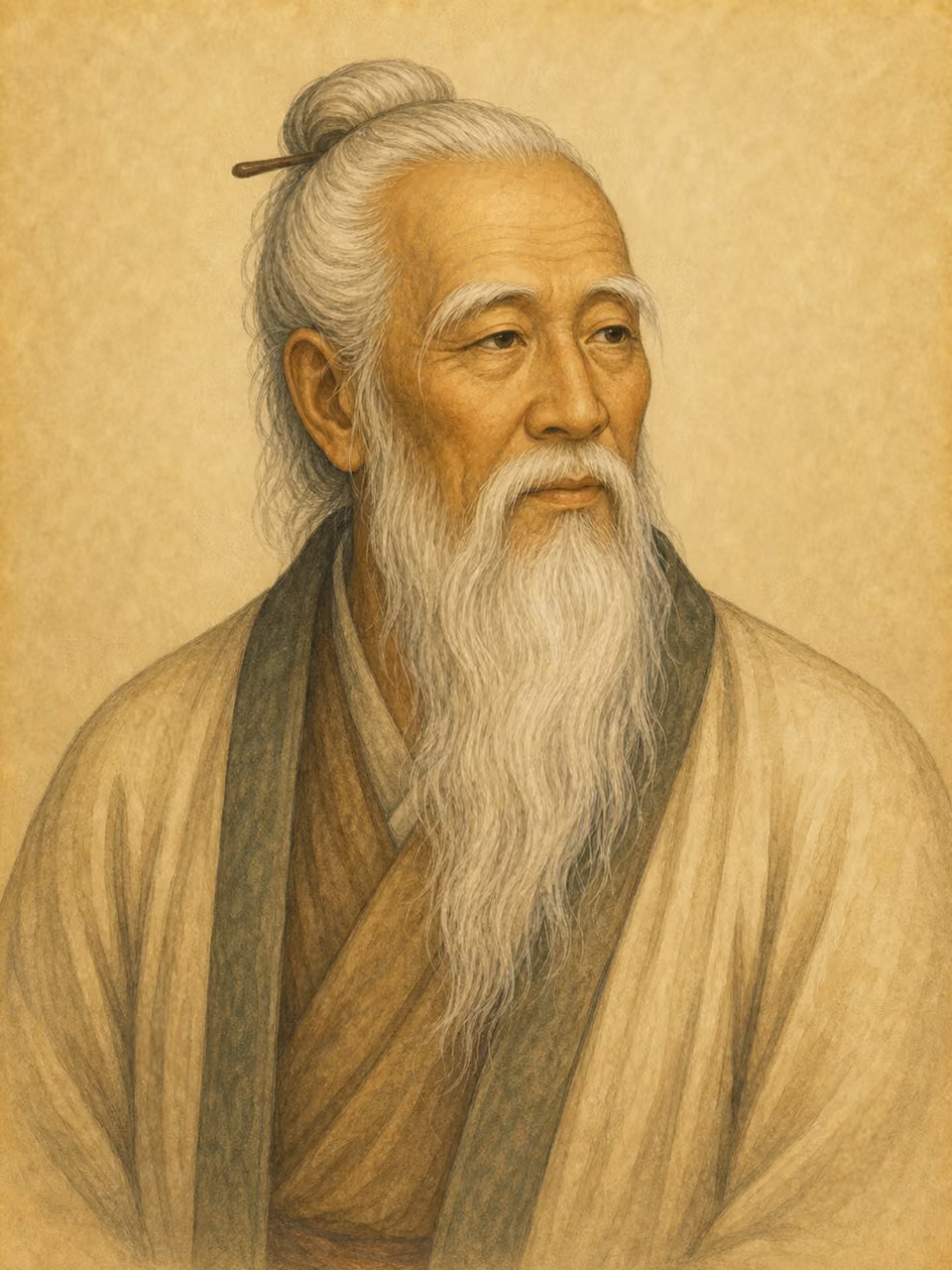
Laozi

Portrait: AI-generated imagined likeness

Laozi

Philosopher · Writer · Religious leader

Years
c. 580 BC–c. 501 BC
Birthplace
China
Birth polity
China in the Spring and Autumn period
Era
Ancient
Field
Philosophy
Occupations
Philosopher · Writer · Religious leader

A person considered to be an ancient Chinese thinker. It is associated with the Tao Te Ching and represents the ideas of wuwei nature and Tao. He is a person who understands the various schools of thought and the diversity of Chinese thought.

View in catalog

Historical context

Places

  • Chu

    Birth

  • Zhou royal court

    Work

Works & achievements

  • Dao De Jing

    Book

Events

  • Formation of Daoist thought

    Movement · Leader

Origins

Origins map
Birth country
Birth country
China

Map: Natural Earth (PD)

Biography

Early life

There are many legendary elements about Laozi's existence and the years of his birth and death. Amid the social changes of the Spring, Autumn, and Warring States periods, it was handed down as a philosophy that showed a different view of governance and life than Confucianism.

Achievements

The ideas of Tao, wuwei, and meekness expressed in the Tao Te Ching emphasized suppressing power and desire and following the natural order. It had a great influence on later Taoist thought and the formation of Taoism.

Character & anecdotes

There is a legend that when Laozi left the barrier, he left a copy of the Tao Te Ching for the gatekeeper. Rather than being a historical figure, he is also important as a symbol of the origin of thought.

Historical Impact

Studying Laozi, we learn that Chinese thought consisted not only of Confucian etiquette and order, but also of a wide range of discussions that included nature, relativization, and criticism of power. It also provides the basis for understanding East Asian political thought and religious culture. It can also be used for comparison with surrounding areas from the same era.