
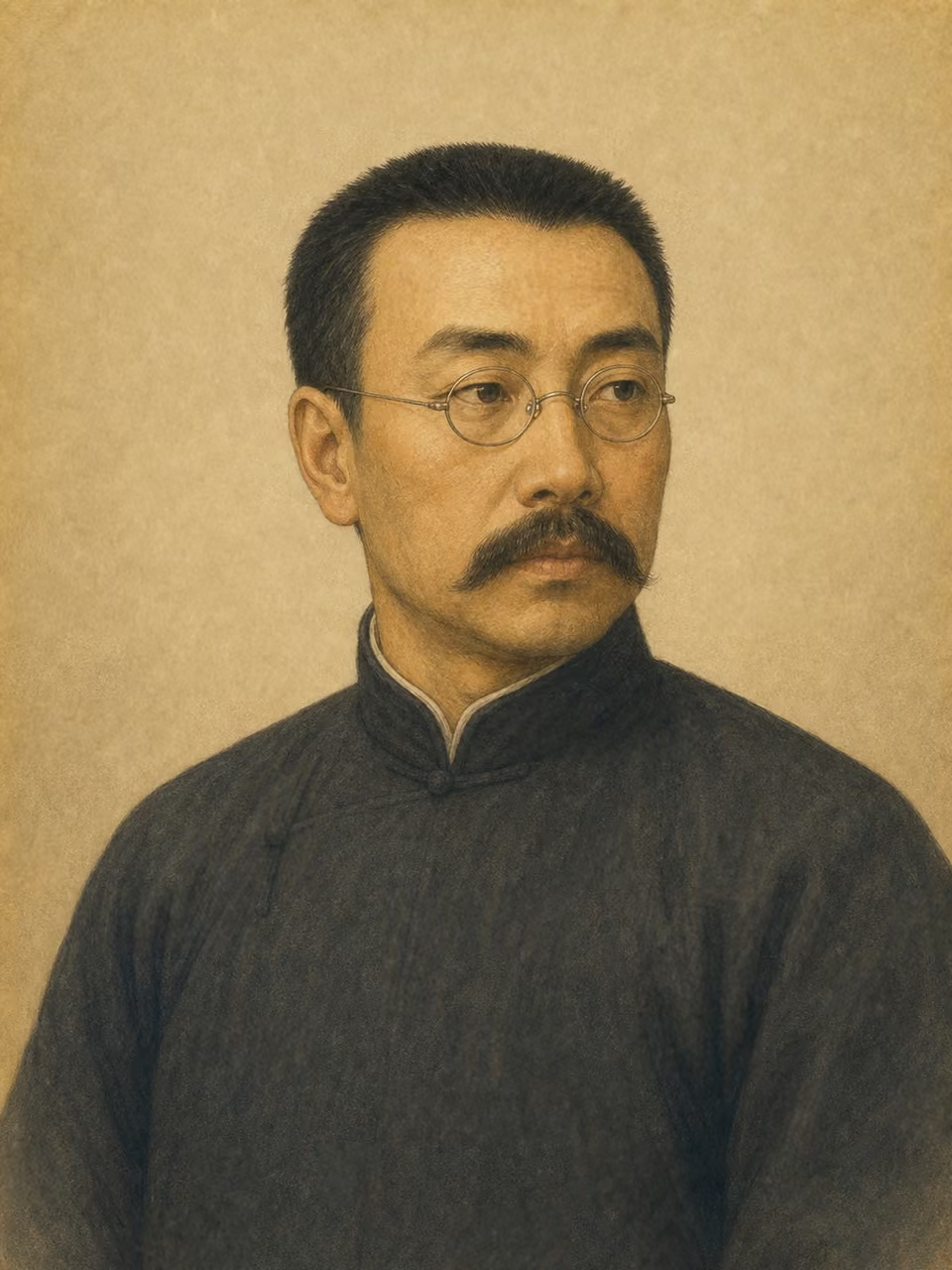
Li Dazhao

Portrait: AI-generated imagined likeness

Li Dazhao

Politician · Philosopher · Journalist · Teacher

Years
1889–1927
Birthplace
China
Birth polity
Qing dynasty
Era
Modern
Field
Politics
Occupations
Politician · Philosopher · Journalist · Teacher

A Chinese thinker and political activist who was a pioneer in introducing Marxism to China. As an intellectual during the May Fourth Movement, he later influenced the formation of the Chinese Communist Party. He is an important figure in modern Chinese thought.

View in catalog

Historical context

Places

  • Laoting

    Birth

  • Peking University

    Work

Works & achievements

  • The Victory of Bolshevism

    1918

    Essay

Events

  • May Fourth Movement

    1919

    Movement · Supporter

  • formation of the Chinese communist movement

    1918–1927

    Movement · Leader

Origins

Origins map
Birth country
Birth country
China

Map: Natural Earth (PD)

Biography

Early life

Born in Hebei, he came into contact with new ideas through studying abroad in Japan and working at Peking University. In China after the Xinhai Revolution, the instability of the republic and pressure from the great powers increased interest in new political ideas.

Achievements

As director of the Peking University Library, he influenced young intellectuals and actively introduced them to the Russian Revolution. Along with Chen Duxiu and others, he was involved in the early formation of the Chinese Communist movement.

Character & anecdotes

The young Mao Zedong is also said to have been influenced by Li Dachao when he worked at the Peking University Library. This shows that universities, magazines, and libraries have become a network of political ideas.

Historical Impact

When we study Li Dajao, we understand that the Chinese revolution began not only with rural uprisings but also with the exchange of ideas between urban intellectuals. You can understand the process by which the May Fourth Movement, Marxism, and national independence are connected. It also serves as the basis for reading later revolutionary movements from an ideological perspective.