
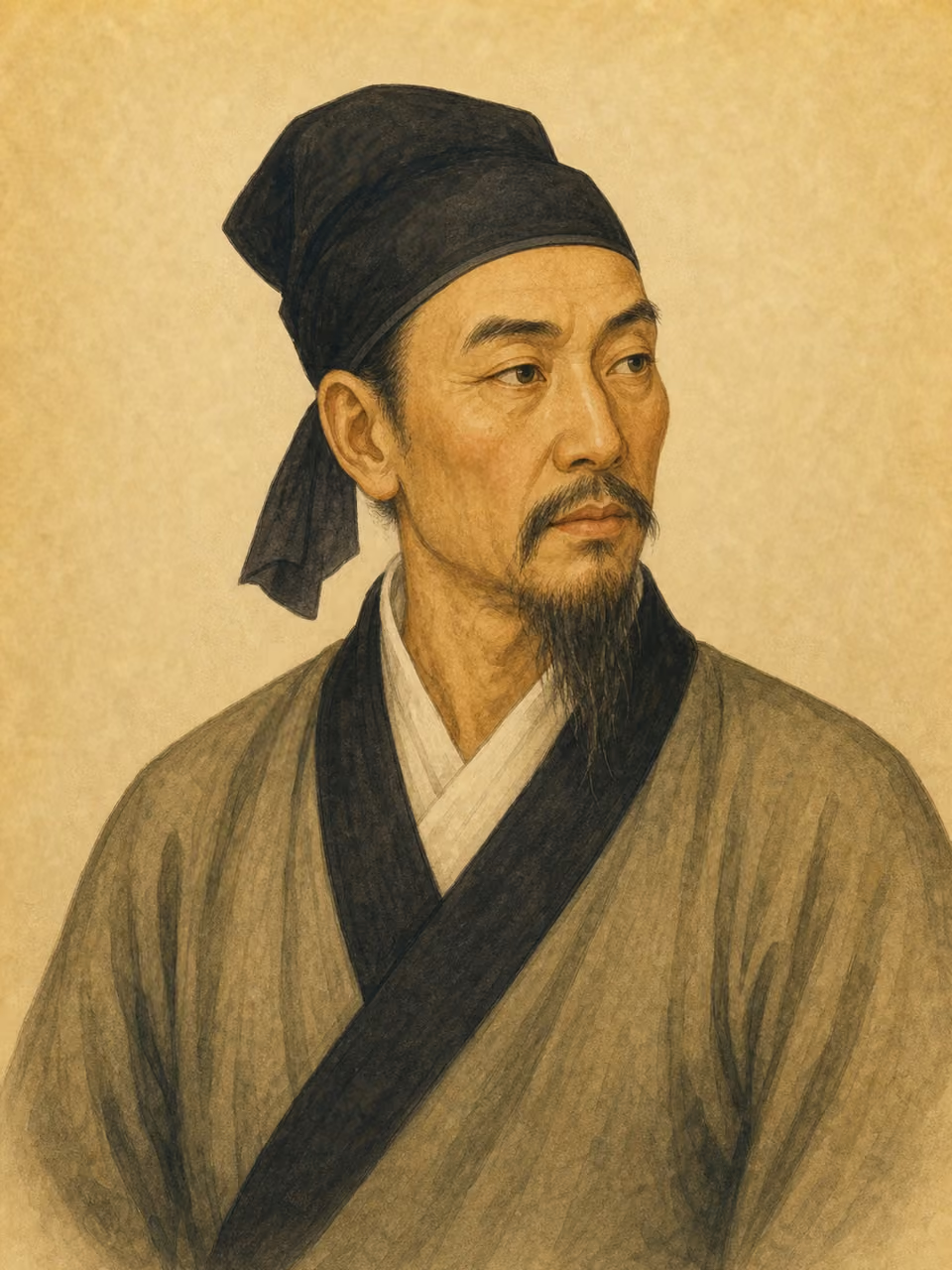
Li Zhi

Portrait: AI-generated imagined likeness

Li Zhi

Philosopher · Writer · Teacher

Years
1527–1602
Birthplace
China
Birth polity
Ming dynasty
Era
Early modern
Field
Philosophy
Occupations
Philosopher · Writer · Teacher

A Chinese thinker from the Ming Dynasty. He was known for his criticism of Confucian morality and authority, and for his arguments that valued the true feelings of individuals. He is a person who understands the thoughts and social changes of the late Ming Dynasty.

View in catalog

Historical context

Places

  • Quanzhou

    Birth

  • Macheng

    Work

Works & achievements

  • A Book to Burn

    Book

Events

  • Late Ming intellectual currents

    1570–1602

    Movement · Leader

Origins

Origins map
Birth country
Birth country
China

Map: Natural Earth (PD)

Biography

Early life

Born in Quanzhou, Fujian, after serving as a bureaucrat, he developed deep doubts about the established Confucian order. In the society of the late Ming dynasty, where commercialization and publishing culture were expanding, the space for the expression of ideas was also expanding.

Achievements

In works such as ``Book Burning,'' he criticized hypocritical Taoism and showed his evaluation of a variety of people, including women and merchants. His ideas were viewed as dangerous by conservative bureaucrats and were suppressed.

Character & anecdotes

Despite being treated as a ``heretic,'' Li Yao attracted many readers. It shows the late Ming era in which thinkers influenced society through publishing culture.

Historical Impact

When we study Li Xi, we can see that commercialization, publishing, and criticism of Confucianism were linked together in China in the late Ming dynasty, leading to a diversification of thought. It also provides a clue for comparing early modern thought in East Asia. It can also be used for comparison with surrounding areas from the same era.