
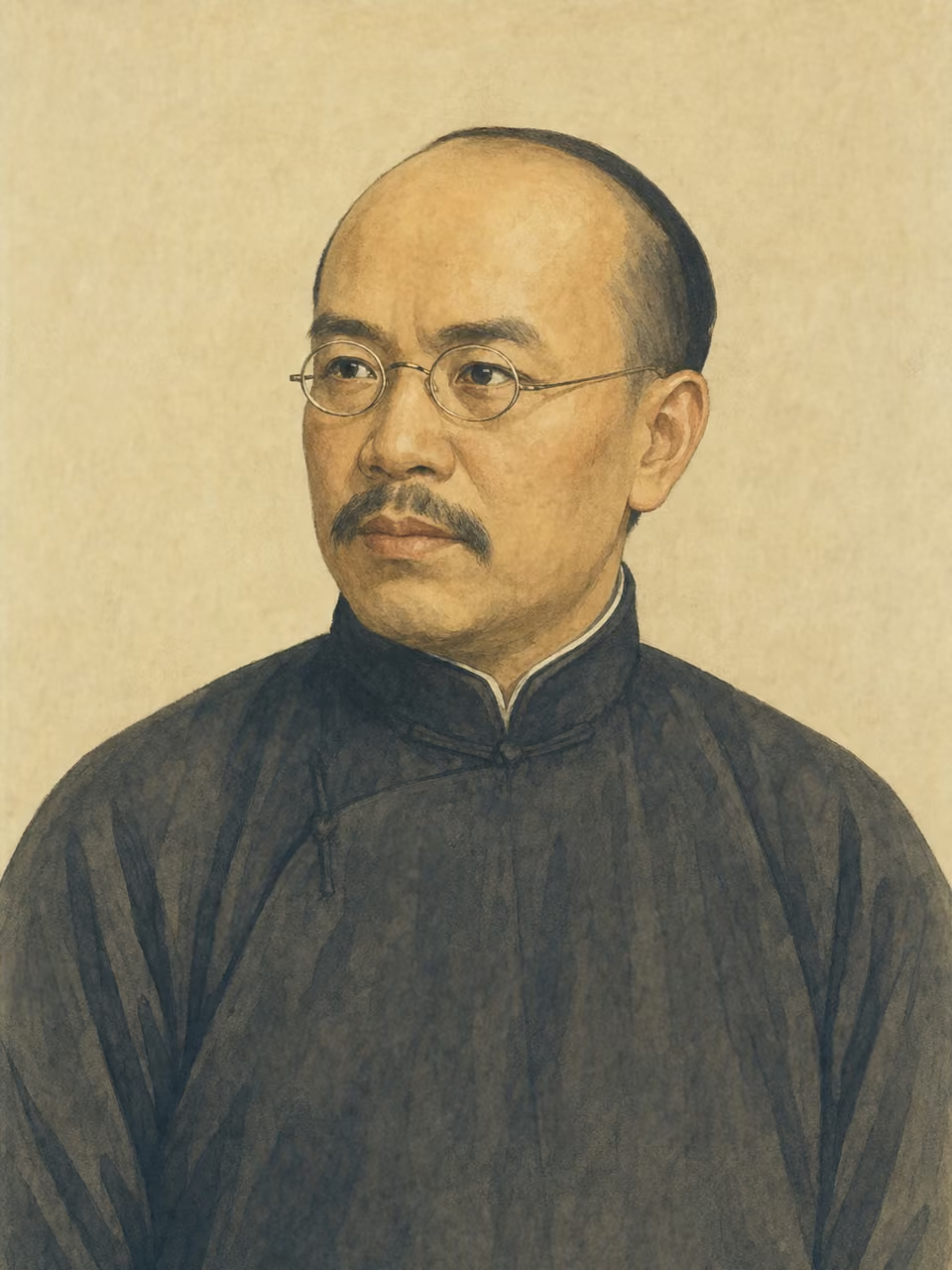
Liang Qichao

Portrait: AI-generated imagined likeness

Liang Qichao

Writer · Politician · historian · Journalist · Philosopher

Years
1873–1929
Birthplace
China
Birth polity
Qing dynasty
Era
Modern
Field
Politics
Occupations
Writer · Politician · historian · Journalist · Philosopher

A thinker and politician from the end of the Qing Dynasty to the beginning of the Republic of China, who spread the reform movement and modern national consciousness. Through his newspapers and writings, he gave Chinese society a new political vocabulary. He is a central figure in modern Chinese thought.

View in catalog

Historical context

Places

  • Xinhui

    Birth

  • exile in Japan

    c. 1898–c. 1912

    Exile

Works & achievements

  • On the New Citizen

    1902

    Essay

Events

  • Hundred Days Reform

    1898

    Movement · Supporter

  • late Qing reform thought

    1898–1911

    Movement · Leader

Origins

Origins map
Birth countryAssociated countries
Birth country
China
Associated countries
Japan

Map: Natural Earth (PD)

Biography

Early life

Born in Guangdong, he studied under Kang Youwei and joined the reformist ideology. In the midst of a sense of crisis following the Sino-Japanese War, institutional reform and national formation became major challenges for China.

Achievements

He supported the reform of Bogi, and after it failed, he defected to Japan and disseminated his reform theory through magazines and writings. It spread concepts such as the constitution, the people, freedom, and history, and influenced the intellectual class.

Character & anecdotes

During his stay in Japan, Liang Qichao absorbed modern languages and political ideas and translated them into the Chinese world. This is a typical example of a place of exile becoming a relay point for ideas.

Historical Impact

When we study Liang Qichao, we learn that China's modernization proceeded not only through changes in its military and institutions, but also through changes in its language and media. Understand knowledge exchange and the formation of nationalism in East Asia. It is also possible that translated words have the power to change political consciousness.