
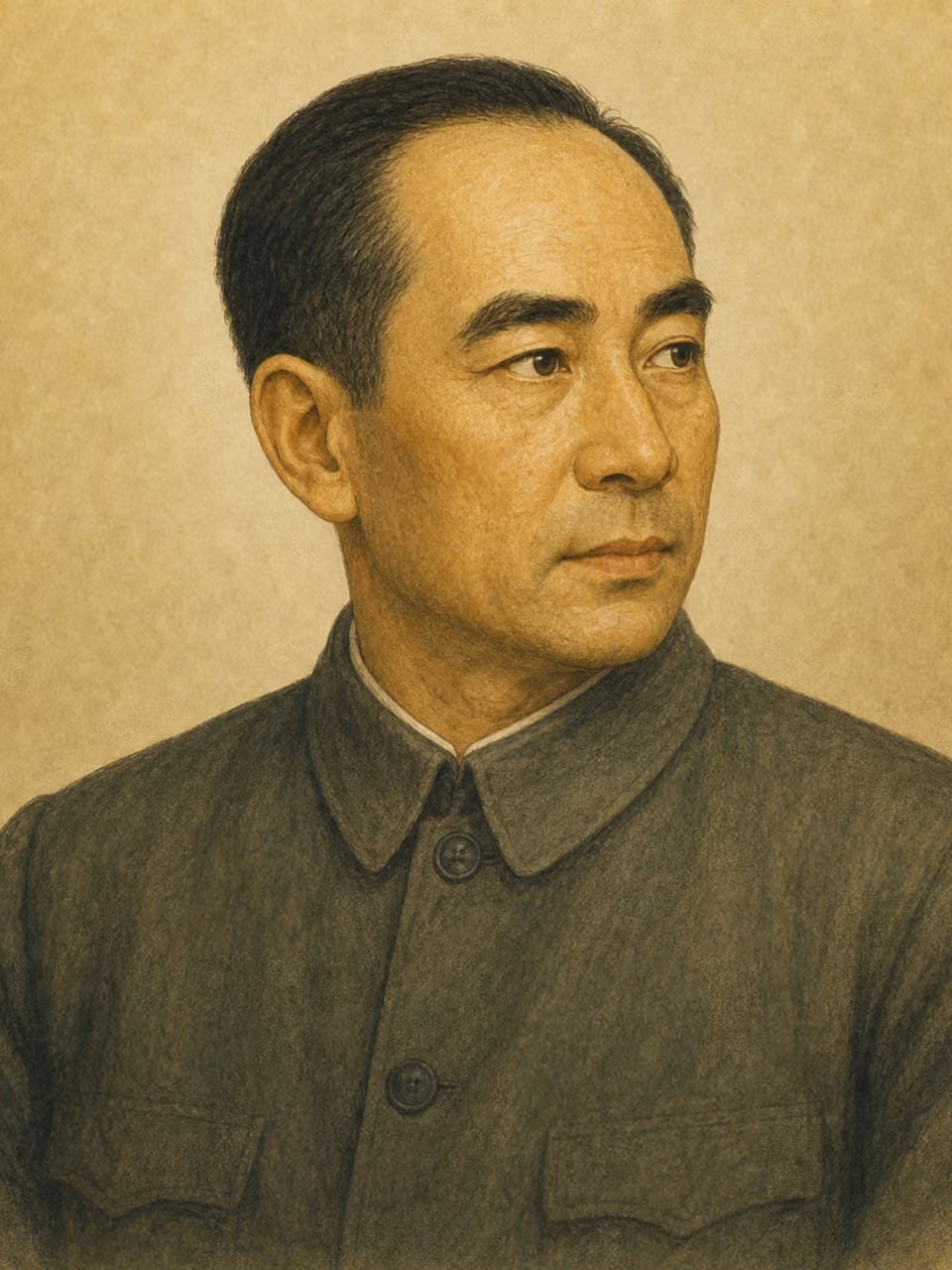
Lin Biao

Portrait: AI-generated imagined likeness

Lin Biao

Military leader · Politician

Years
1907–1971
Birthplace
China
Birth polity
China from late Qing to the Republic
Era
Modern
Field
Military
Occupations
Military leader · Politician

Chinese military officer and politician. He played an active role in the Chinese Civil War as a leader of the People's Liberation Army, and was designated as Mao Zedong's successor during the Cultural Revolution. He is a person who thinks about the power struggle in modern Chinese politics.

View in catalog

Historical context

Places

  • Beijing

    Work

Events

  • Chinese Civil War

    1945–1949

    War · Commander

  • Cultural Revolution

    1966–1971

    Political event · Participant

Origins

Origins map
Birth country
Birth country
China

Map: Natural Earth (PD)

Biography

Early life

Born in Hubei province, he studied at Huangpu Military Academy and joined the military activities of the Chinese Communist Party. He spent his military career amidst the turbulence of the National-Communist Collaboration, the Northern Expedition, the Sino-Japanese War, and the National-Communist Civil War.

Achievements

During the Chinese Civil War, he played an important role on the Northeast Front and other fronts, and after the establishment of the People's Republic of China, he became the Minister of National Defense. During the Cultural Revolution, he was involved in the spread of Mao Zedong Thought and the expansion of the military's political influence.

Character & anecdotes

For a time, Lin Biao was designated as Mao Zedong's successor in the party constitution. However, after the plane crash in 1971, he was criticized as a central figure in an anti-party conspiracy, and his reputation took a sudden turn.

Historical Impact

Studying Lin Biao, we understand that post-revolutionary politics in China was built on tensions between the party, the military, the cult of personality, and the question of succession. He is an important figure in understanding the Cultural Revolution from the perspective of power structure. It also provides clues for thinking about the succession issue within the revolutionary government.