
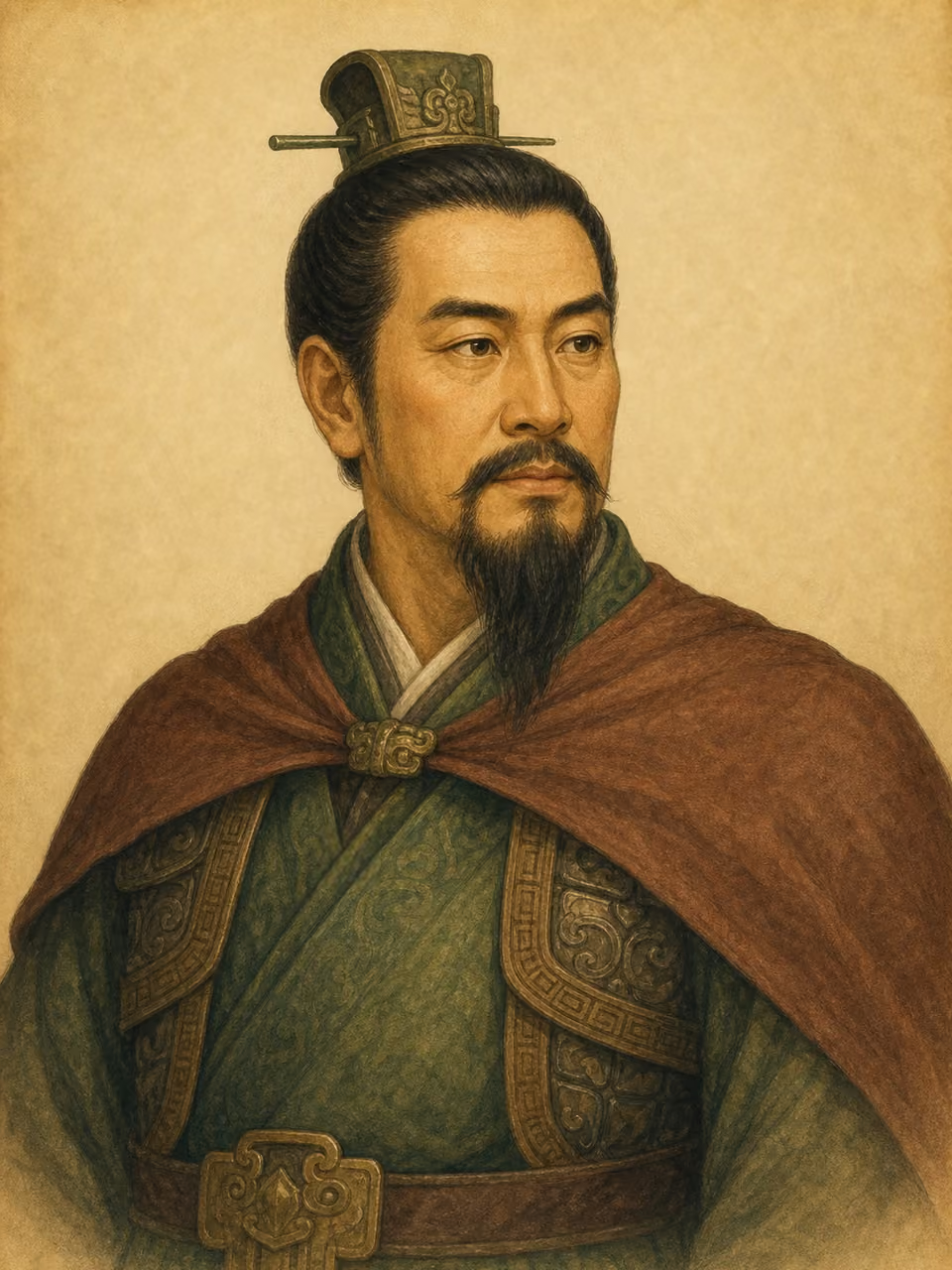
Liu Bei

Portrait: AI-generated imagined likeness

Liu Bei

Monarch · Military leader

Years
161–223
Birthplace
China
Birth polity
Eastern Han dynasty
Era
Ancient
Field
Politics
Occupations
Monarch · Military leader

A military commander and ruler who rose from the chaos at the end of the Later Han Dynasty and founded Shu Han. He is a central figure in reading the political order and formation of local military forces during the Three Kingdoms period. It connects local history and world history and provides clues for deciphering changes during the same era.

View in catalog

Historical context

Places

  • Zhuo Commandery

    Birth

  • Chengdu

    Work

Events

  • Warlord conflicts at the end of the Han

    184–220

    War · Participant

  • Founding of Shu Han

    221

    Political event · Leader

Origins

Origins map
Birth country
Birth country
China

Map: Natural Earth (PD)

Biography

Early life

Although he was born into a family that claimed to be a descendant of the Han royal family, he did not have a rich foundation when he was young. Amidst the chaos that followed the Yellow Turban Rebellion, they gathered troops and increased their status by forming ties with powers in various regions.

Achievements

He appointed Zhuge Liang and others, and after fighting over Jingzhou and Yizhou, he established Chengdu as his base. In 221, he declared himself emperor and established Shu Han, one of the three kingdoms along with Wei and Wu.

Character & anecdotes

Liu Bei was depicted as a benevolent ruler in later stories. In addition to being a historical politician, he is also a person who has remained deeply in the historical memory of East Asia through the Romance of the Three Kingdoms.

Historical Impact

Looking at Liu Bei shows how legitimacy, military power, and regional control were combined after the fall of the Han Empire. This is the gateway to thinking about the transition from late ancient China to the Middle Ages. When you look at the people's activities and works together, it becomes easier to understand the terms in textbooks as concrete historical trends.