
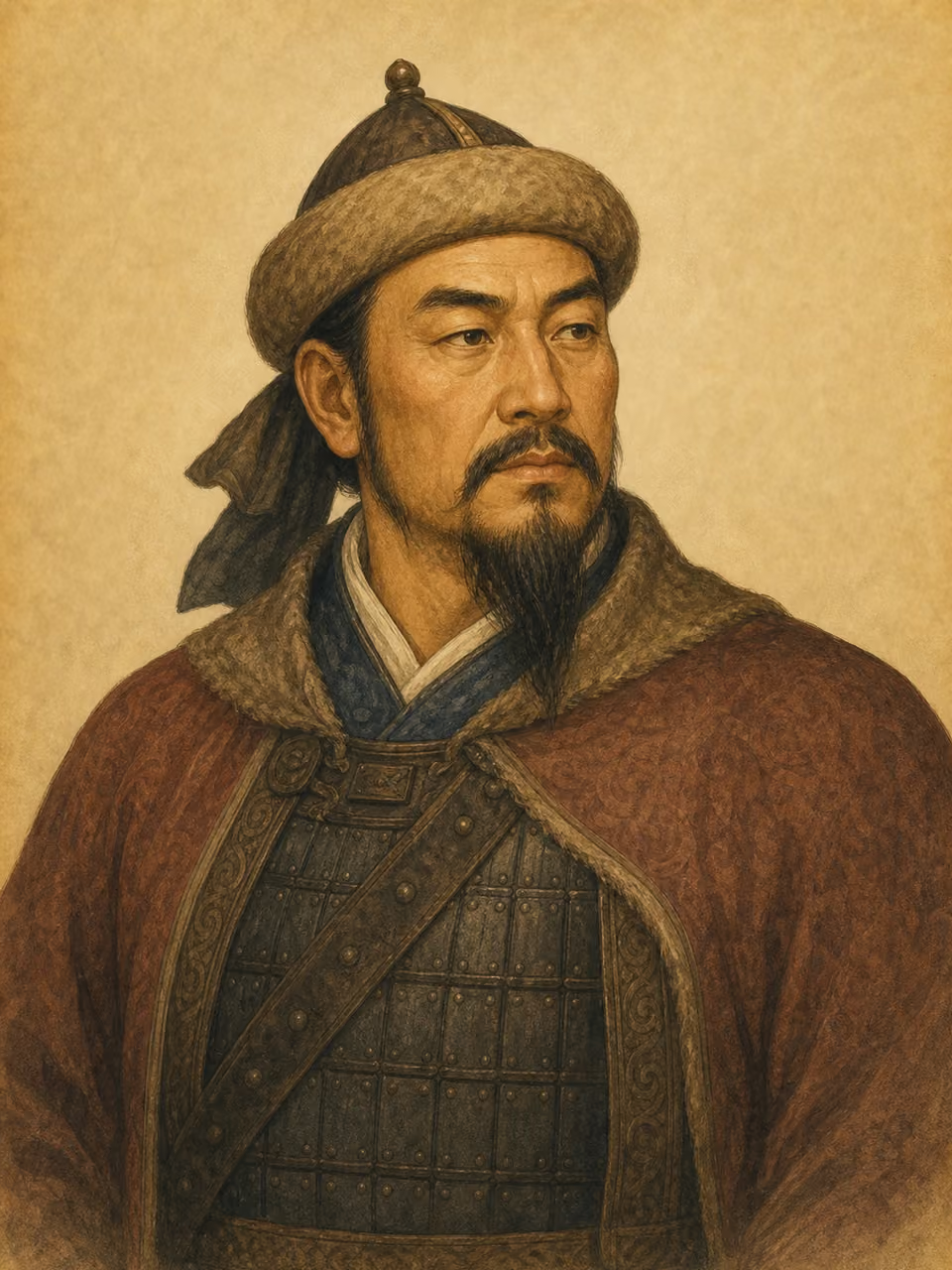
Liu Yuan

Portrait: AI-generated imagined likeness

Liu Yuan

Monarch · Military leader

Years
271–310
Birthplace
China
Birth polity
Western Jin dynasty
Era
Ancient
Field
Politics
Occupations
Monarch · Military leader

He was a leader of the Xiongnu lineage and the ruler who established the Han dynasty, the predecessor of the former Zhao. He is an important figure when considering the weakening of Western Jin and the reorganization of northern China. It connects local history and world history and provides clues for deciphering changes during the same era.

View in catalog

Historical context

Places

  • Shanxi

    Work

  • Pingyang

    Work

Events

  • Founding of Han-Zhao

    304

    Political event · Leader

  • Transition toward the Sixteen Kingdoms

    304–310

    Political event · Participant

Origins

Origins map
Birth country
Birth country
China

Map: Natural Earth (PD)

Biography

Early life

Born into an influential family of the Southern Xiongnu, he grew up as a hostage and official in the Western Jin ruling system. While learning Han culture, they maintained the military base of the Xiongnu group.

Achievements

After the Eight Kings Rebellion disrupted Western Jin, he became independent and took the title of King of Han in 304. This was an event that marked the beginning of the political division towards the era of the Five Hus and Sixteen Kingdoms.

Character & anecdotes

Although Liu Yuan was from the Xiongnu, he asserted his legitimacy by citing his ties to the Han royal family. It is interesting that the nomadic powers also utilized Chinese dynasty names and imperial system.

Historical Impact

When we study Liu Yuan, we understand that Chinese history did not proceed through the alternation of dynasties within a single ethnic group, but rather through mixing and reorganization with northern powers. This leads to an understanding of Wei, Jin, and the Northern and Southern Dynasties. When you look at the people's activities and works together, it becomes easier to understand the terms in textbooks as concrete historical trends.