
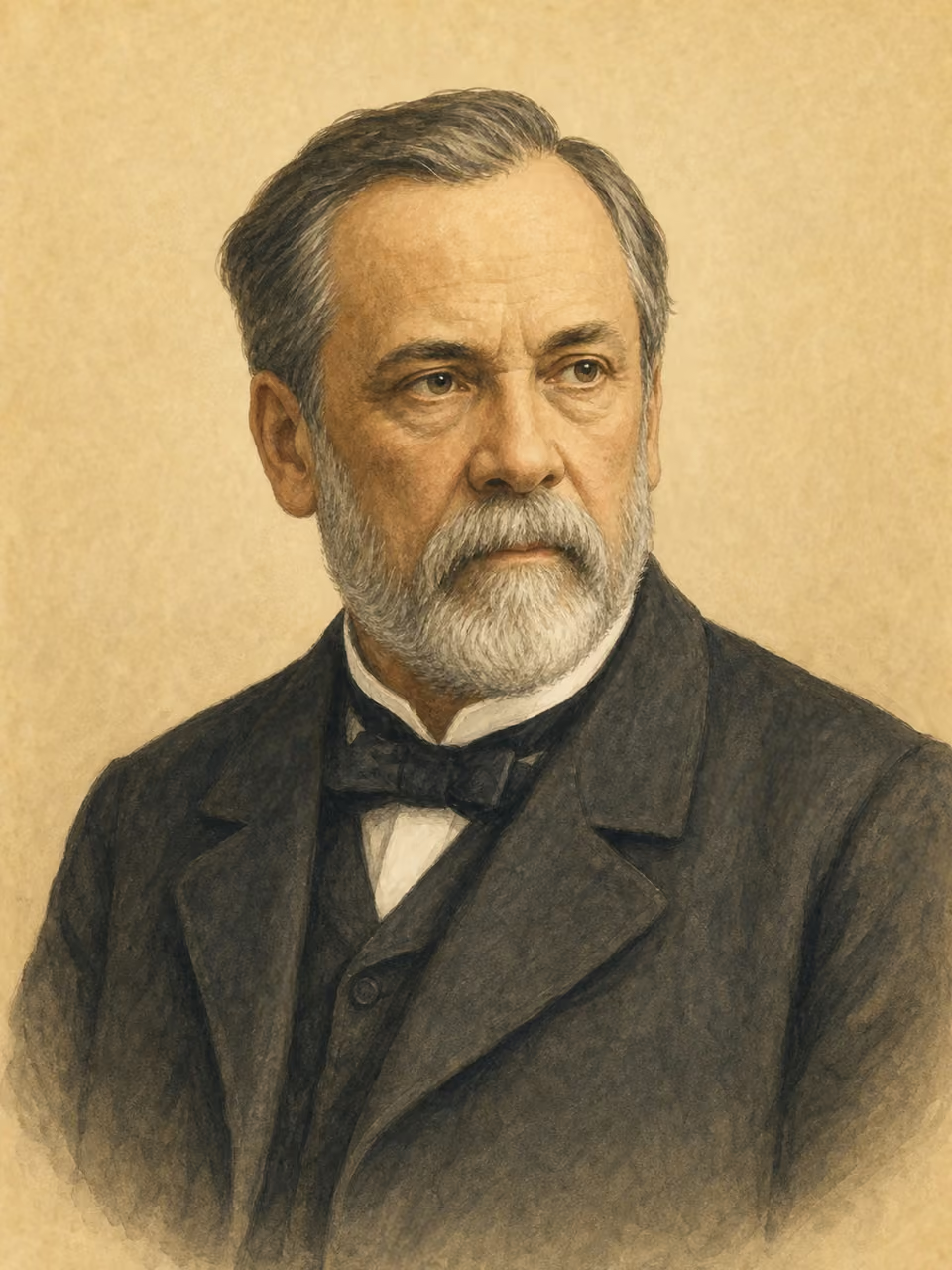
Louis Pasteur

Portrait: AI-generated imagined likeness

Louis Pasteur

Chemist · Microbiologist

Years
1822–1895
Birthplace
France
Birth polity
Kingdom of France
Era
Modern
Field
Medicine
Occupations
Chemist · Microbiologist

Beginning with the problems of fermentation, Pasteur designed experiments that tied microscopic life to spoilage, industry, and disease, moving from the wine vat to the medical laboratory. The later rabies vaccine trials became especially dramatic because they showed research findings turning directly into public expectation, institutional prestige, and preventive medicine.

View in catalog

Historical context

Places

  • Dole

    Birth

  • Paris

    Work

Works & achievements

  • Pasteurization

    c. 1864

    Discovery

  • Rabies vaccine

    1885

    Discovery

Origins

Origins map
Birth country
Birth country
France

Map: Natural Earth (PD)

Biography

Early life

Louis Pasteur was born in 1822 in eastern France and trained as a chemist at the École Normale. His early success in the study of molecular asymmetry showed his experimental precision before his attention shifted toward fermentation, spoilage, and the biological causes behind them.

Achievements

Pasteur demonstrated that microorganisms played decisive roles in fermentation and decay, strengthening the case against spontaneous generation. He also helped develop pasteurization and achieved major breakthroughs in vaccination, especially in work related to anthrax and rabies.

Character & anecdotes

His career is a classic example of laboratory science interacting directly with agriculture, public health, and national prestige. Public demonstrations of vaccines made him famous, though that fame rested on an expanding network of collaborators, institutions, and practical stakeholders.

Historical Impact

Pasteur helped build the intellectual and institutional framework of bacteriology, vaccination, and food safety, while also strengthening the model of laboratory science as a public authority. His influence survives not only in textbooks but in everyday infrastructure, from pasteurization to state-backed biomedical research and the expectation that microbes can be managed through organized intervention.