
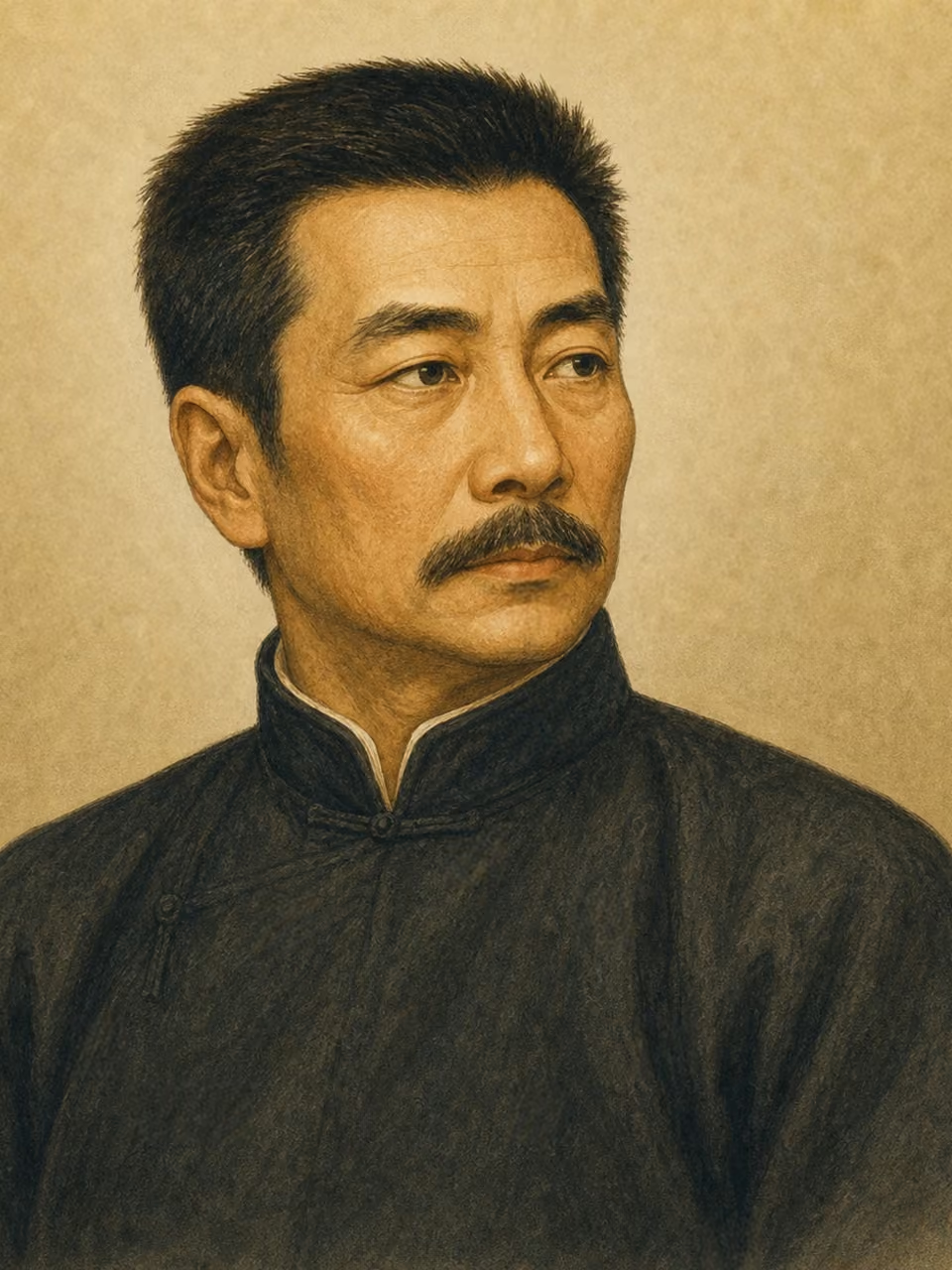
Lu Xun

Portrait: AI-generated imagined likeness

Lu Xun

Writer · Novelist · translator · Poet

Years
1881–1936
Birthplace
China
Birth polity
Late Qing China
Era
Modern
Field
Literature
Occupations
Writer · Novelist · translator · Poet

A representative writer of modern Chinese literature. He criticized the old society in works such as ``Diary of a Mad Person'' and ``A Q Seiden,'' and became associated with the new culture movement. He is a person who thinks about modern Chinese thought and literature.

View in catalog

Historical context

Places

  • Shaoxing

    Birth

  • Beijing

    Publication

Works & achievements

  • Diary of a Madman

    1918

    Book

  • The True Story of Ah Q

    1921

    Book

Events

  • New Culture Movement

    1915–1920

    Movement · Participant

Origins

Origins map
Birth country
Birth country
China

Map: Natural Earth (PD)

Biography

Early life

Born in Shaoxing, Zhejiang Province, he also studied abroad in Japan. From the end of the Qing Dynasty to the beginning of the Republic of China, there was a need to reform language, education, and culture due to pressure from the great powers and setbacks in domestic reforms.

Achievements

A novel written in Bai Cha Wen, it sharply depicts the conventions, authoritarianism, and violence against the weak in Chinese society. Through literature, he encouraged individual awakening and social criticism, and shaped the image of modern Chinese intellectuals.

Character & anecdotes

It is said that after studying medicine, Lu Xun decided to pursue a career in literature, believing that it was necessary to change the mind more than the body. His works are full of satire, anger, and a poignant look at the underdog.

Historical Impact

When we study Lu Xun, we understand that the transformation of modern China was carried out not only in the political system, but also in language, literature, ideology, and everyday ethics. He is a fundamental figure in reading 20th century Chinese culture, and also provides material for thinking about the distance between literature and revolution.