
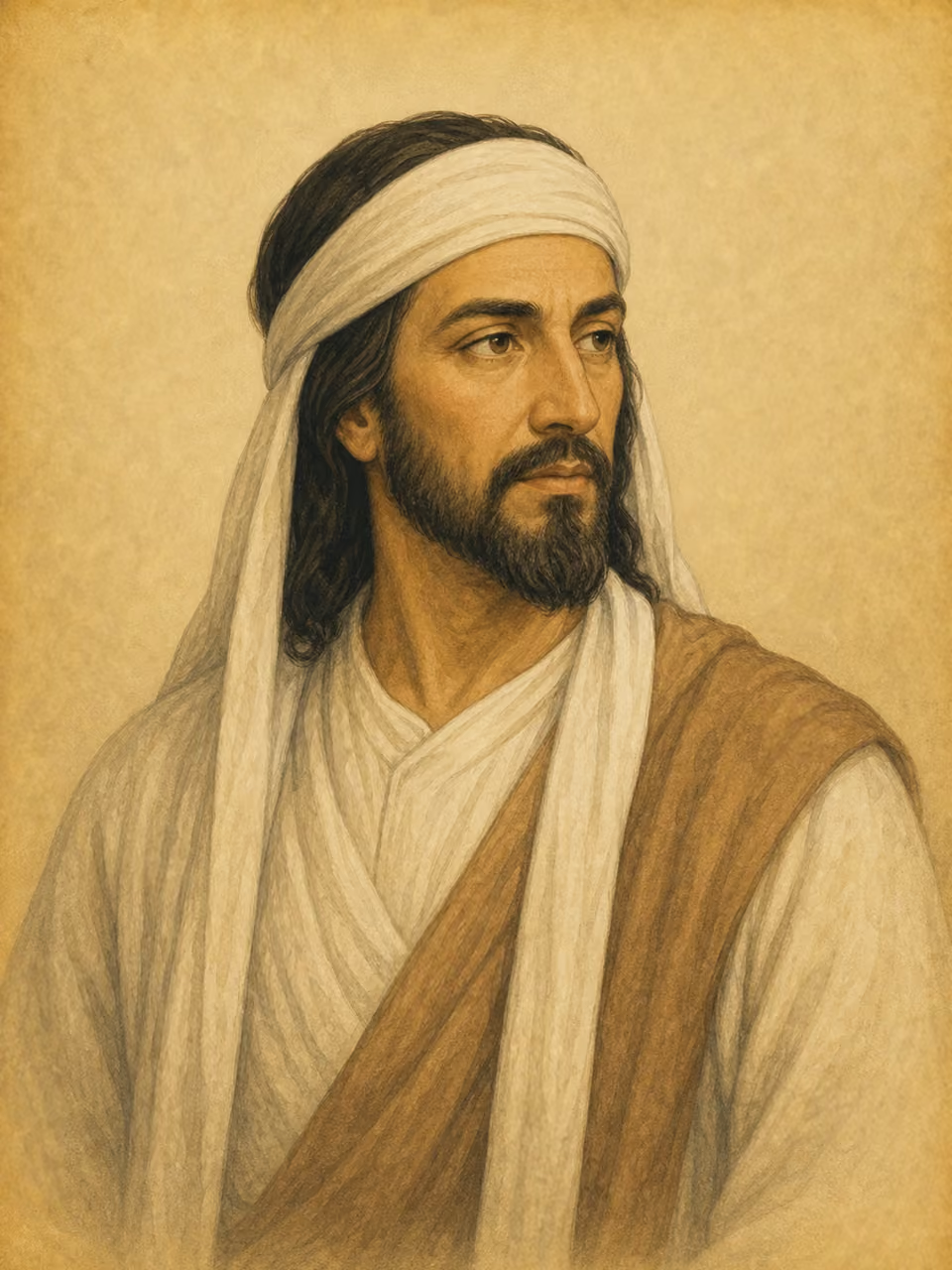
Mani

Portrait: AI-generated imagined likeness

Mani

Religious leader · Philosopher · Writer

Years
c. 216–c. 274
Birthplace
Iraq
Birth polity
Sasanian Empire
Era
Ancient
Field
Religion
Occupations
Religious leader · Philosopher · Writer

A religious figure who founded Manichaeism during the Sasanian period. Incorporating Zoroastrianism, Christianity, Buddhism, etc., he envisioned a world religion that would spread over a wide area. It connects local history and world history and provides clues for deciphering changes during the same era.

View in catalog

Historical context

Places

  • Babylonia

    Birth

  • Sasanian domains

    Work

Works & achievements

  • Shabuhragan

    Book

Events

  • Formation of Manichaeism

    240–274

    Movement · Leader

Origins

Origins map
Birth countryAssociated countries
Birth country
Iraq
Associated countries
Iran

Map: Natural Earth (PD)

Biography

Early life

It is said that he was born around Mesopotamia and grew up in a Judeo-Christian community. He said that he received a revelation from a young age, and formed his own idea of ​​salvation.

Achievements

He preached a cosmology of light and darkness based on the dualism of good and evil. Manichaeism spread to Central Asia, China, and the Mediterranean world through its missionary work while associated with the Sassanian monarchy.

Character & anecdotes

Mani placed great importance on conveying his teachings through pictures and books. He was remembered not only as a religious figure but also as a person who used visual expressions for missionary work.

Historical Impact

Looking at Mani, we can see that the religious world of late antiquity was interconnected across regions. This is an important example of thinking about the exchange of ideas through the Silk Road. When you look at the people's activities and works together, it becomes easier to understand the terms in textbooks as concrete historical trends.