
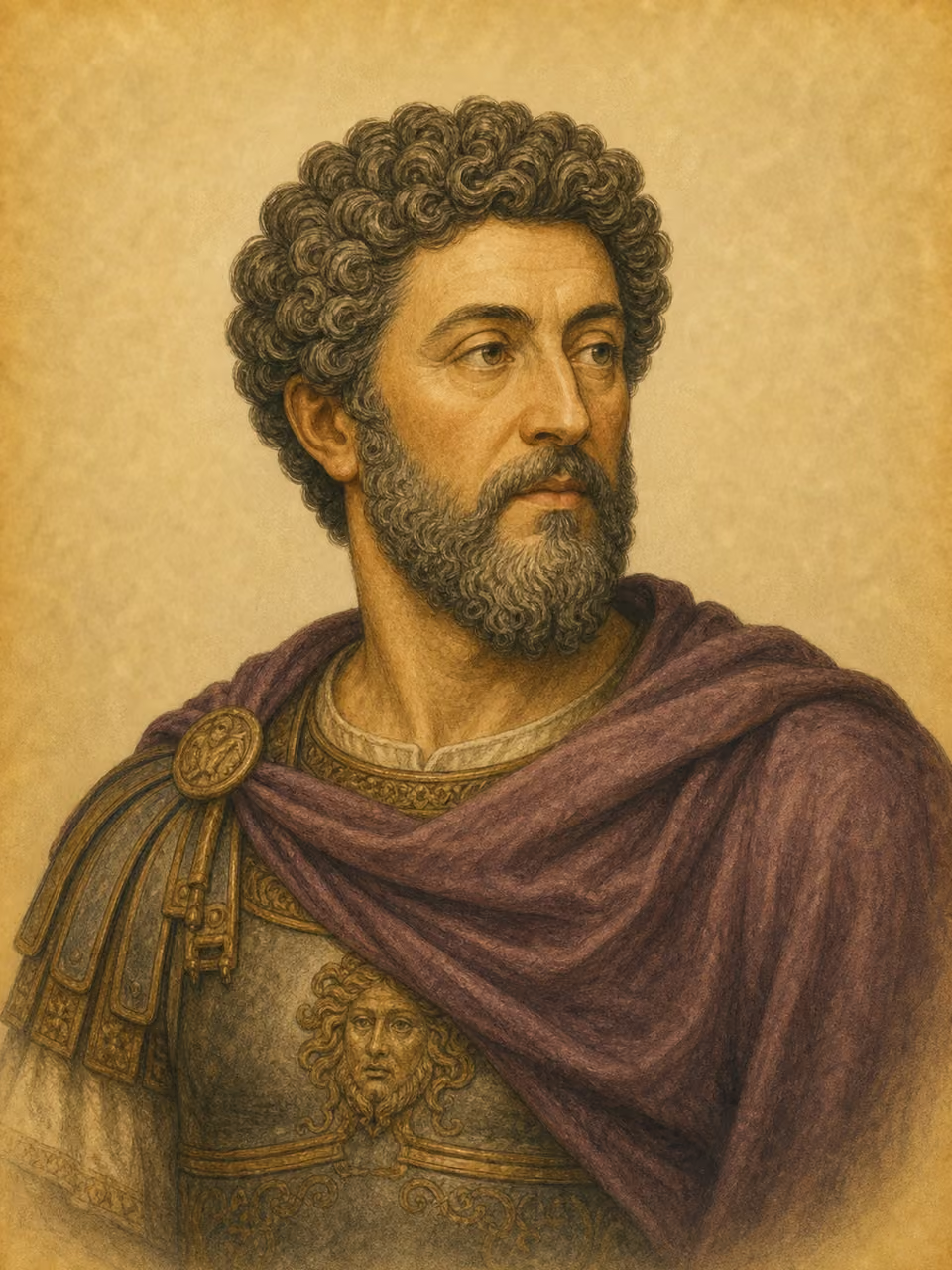
Marcus Aurelius

Portrait: AI-generated imagined likeness

Marcus Aurelius

Emperor · Monarch · Philosopher · Writer

Years
121–180
Birthplace
Italy
Birth polity
Roman Empire
Era
Ancient
Field
Philosophy
Occupations
Emperor · Monarch · Philosopher · Writer

Emperor of the Roman Empire and also known as a Stoic philosopher. It symbolizes the end of the era of the Five Wise Emperors and the pressure of defending the empire. It connects local history and world history and provides clues for deciphering changes during the same era.

View in catalog

Historical context

Places

  • Rome

    Birth

  • Danube frontier

    Campaign

Works & achievements

  • Meditations

    Book

Events

  • Marcomannic Wars

    166–180

    War · Commander

Origins

Origins map
Birth country
Birth country
Italy

Map: Natural Earth (PD)

Biography

Early life

Born into a prestigious Roman family, he was educated as part of Hadrian's succession plans. He studied philosophy, especially Stoic ethics, and emphasized self-discipline as an emperor.

Achievements

As emperor, he ruled the empire and led the war against Germanic powers in the Danube area. The thoughts he wrote during the camp later came to be read as ``Reflections.''

Character & anecdotes

It is thought that ``Seishinroku'' was not a work intended to be made public, but rather a memorandum written to himself. It is also a rare historical document that reveals the inner training of powerful people.

Historical Impact

When we study Marcus Aurelius, we learn that even at the height of the Roman Empire, there were crises such as border defense and epidemics. It provides material for thinking about the relationship between political power and philosophy. When you look at the people's activities and works together, it becomes easier to understand the terms in textbooks as concrete historical trends.