
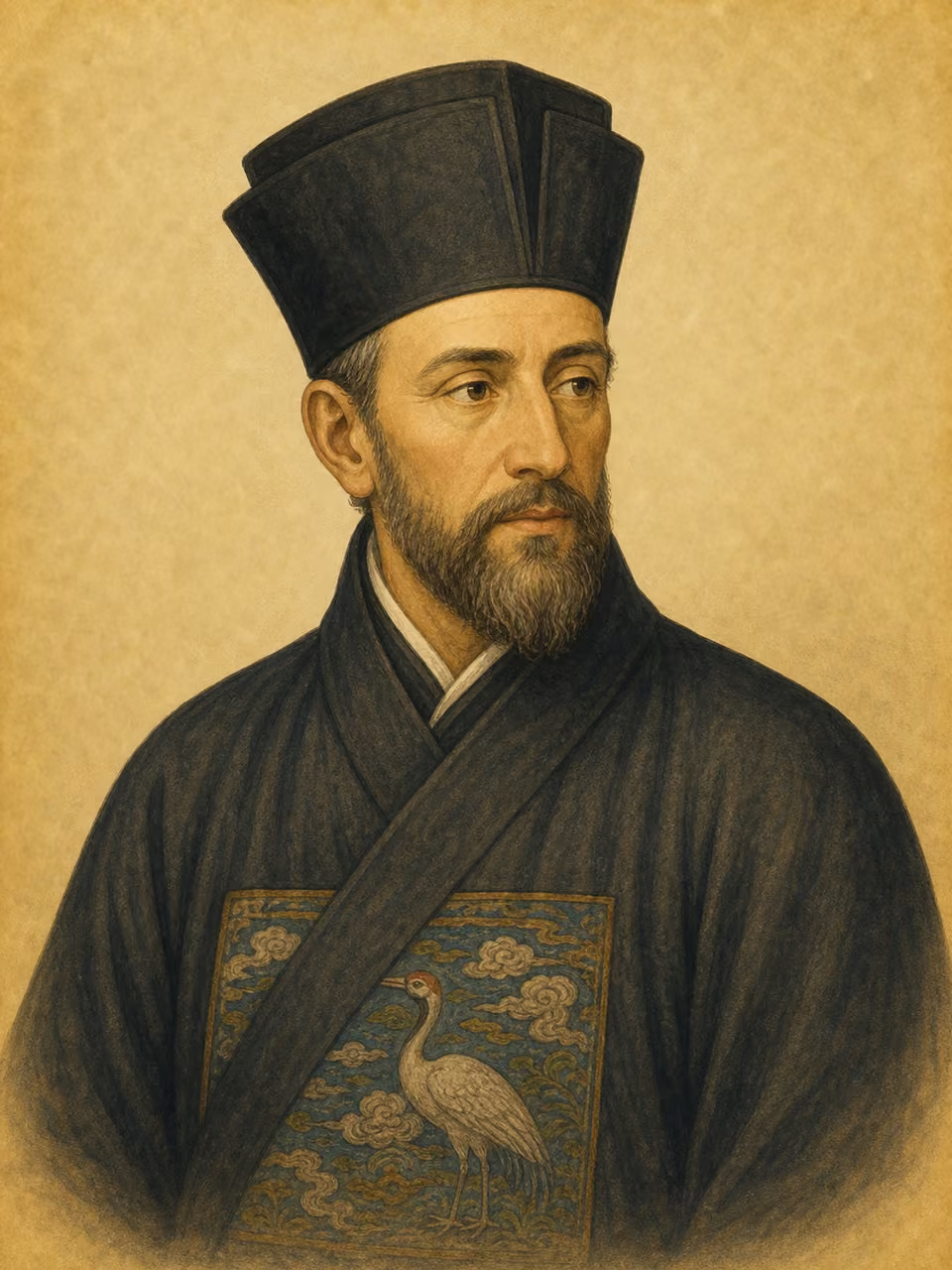
Matteo Ricci

Portrait: AI-generated imagined likeness

Matteo Ricci

missionary · Mathematician · translator

Years
1552–1610
Birthplace
China
Birth polity
Papal States
Era
Early modern
Field
Religion
Occupations
missionary · Mathematician · translator

A Jesuit missionary who was active in China during the Ming Dynasty. He was a person who conveyed Western astronomy, geography, and Christianity to Chinese intellectuals, and symbolized East-West exchange. It connects local history and world history and provides clues for deciphering changes during the same era.

View in catalog

Historical context

Places

  • Macerata

    Birth

  • Beijing

    Work

Works & achievements

  • Kunyu Wanguo Quantu

    1602

    Other

  • The True Meaning of the Lord of Heaven

    1603

    Book

Events

  • Jesuit China mission

    1582–1610

    Movement · Leader

Origins

Origins map
Birth countryAssociated countries
Birth country
China
Associated countries
Italy

Map: Natural Earth (PD)

Biography

Early life

Born in Macerata, Italy, he entered the Society of Jesus and studied mathematics and astronomy. He entered Macau via India and continued his missionary work while learning Chinese and Confucian culture.

Achievements

His Chinese name was Li Mian, and he adopted a missionary method tailored to the Shidaifu class. He conveyed Western knowledge and Christian thought through the world map ``Kongo Bankoku Zenzu'' and ``Tenshu Jitsugi.''

Character & anecdotes

Ricci chose to dress more like a Confucian than a monk in order to be accepted by Chinese intellectuals. This shows that cultural understanding and translation techniques were necessary for missionary methods.

Historical Impact

Studying Matteo Ricci, we can see that after the Age of Discovery, exchanges progressed not only through military and trade, but also through knowledge, religion, and translation. It is an important point of contact in the cultural history of the Ming and Qing dynasties. When you look at the people's activities and works together, it becomes easier to understand the terms in textbooks as concrete historical trends.