
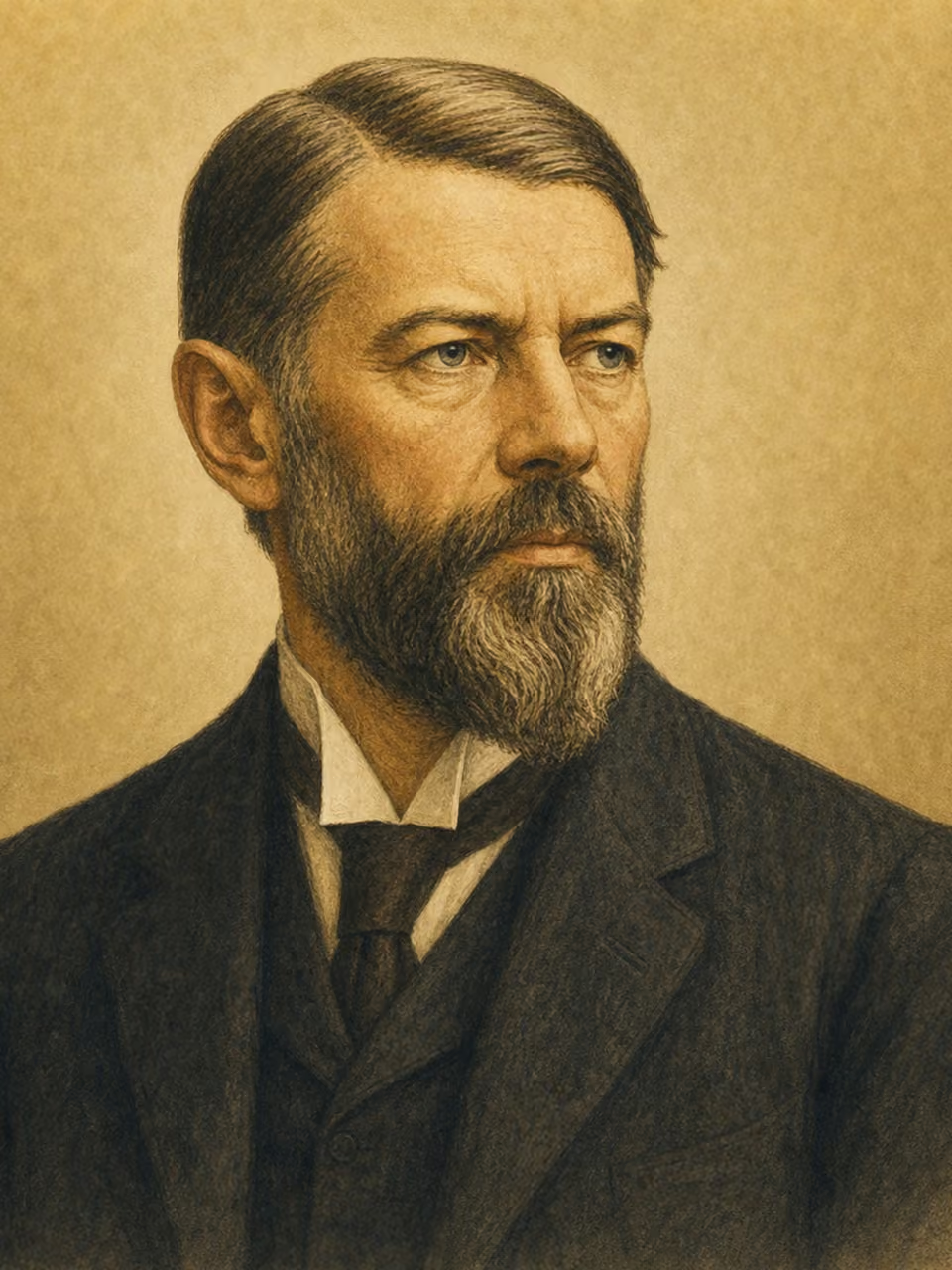
Max Weber

Portrait: AI-generated imagined likeness

Max Weber

Philosopher · Writer · historian · Teacher

Years
1864–1920
Birthplace
Germany
Birth polity
Kingdom of Prussia
Era
Modern
Field
Philosophy
Occupations
Philosopher · Writer · historian · Teacher

German sociologist and thinker. In ``Protestant Ethics and the Spirit of Capitalism,'' he discussed the relationship between religious ethics and modern capitalism. He is a person who thinks about modern social science.

View in catalog

Historical context

Places

  • Heidelberg

    Work

Works & achievements

  • The Protestant Ethic and the Spirit of Capitalism

    1904–1905

    Book

Events

  • Formation of modern social science

    1904–1920

    Movement · Participant

Origins

Origins map
Birth country
Birth country
Germany

Map: Natural Earth (PD)

Biography

Early life

Born in Erfurt, Kingdom of Prussia, he studied law, economic history, and politics. The rapid industrialization, bureaucracy, and party politics of the German Empire provided the background for his social analysis.

Achievements

He analyzed religion, bureaucracy, the legitimacy of rule, capitalism, and rationalization, and created concepts for understanding modern society. It also had a great influence on the methodologies of social science, such as ideal types and value freedom.

Character & anecdotes

Weber also had a strong interest in politics, and seriously considered the relationship between scholarship and value judgments. It is important to see modern rationalization not only as progress, but also as an ``iron cage'' that binds humans.

Historical Impact

When we study Max Weber, we understand that modernization was not just a process of economic growth, but also a process of changing religion, bureaucracy, law, the state, and the way individuals lived. He is a person who left behind basic concepts for analyzing modern society.