
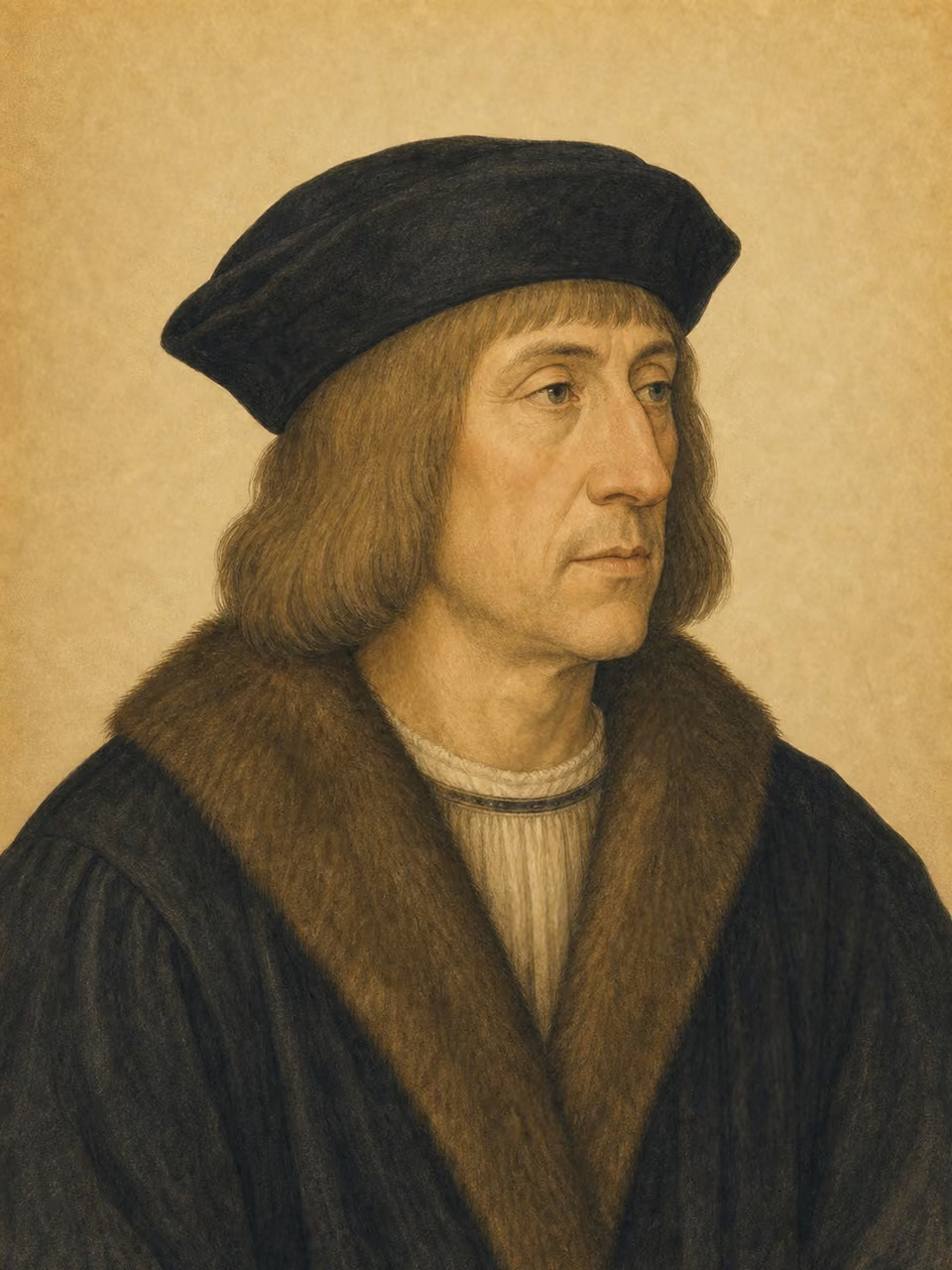
Maximilian I

Portrait: AI-generated imagined likeness

Maximilian I

Emperor · Monarch

Years
1459–1519
Birthplace
Austria
Birth polity
Habsburg Monarchy
Era
Early modern
Field
Politics
Occupations
Emperor · Monarch

A ruler of the Habsburg family who promoted marriage policy and imperial reform as Holy Roman Emperor. His marriage to Burgundy greatly expanded the power of his family. This is the key to understanding the dynastic politics of early modern Europe.

View in catalog

Historical context

Places

  • Wiener Neustadt

    Birth

  • Holy Roman Empire

    Work

Events

  • Habsburg-Burgundian marriage politics

    1477

    Political event · Participant

Origins

Origins map
Birth countryAssociated countries
Birth country
Austria
Associated countries
Germany · Netherlands

Map: Natural Earth (PD)

Biography

Early life

Born into the Habsburg family, he grew up as the successor to his father, Frederick III. His marriage to Maria, Duchess of Burgundy, placed him at the center of international politics surrounding the Low Countries.

Achievements

He was involved in reforming the institutions of the Holy Roman Empire, including the Imperial Diet and the Imperial Supreme Court. Through marriage policy, the Habsburgs expanded their territory and laid the foundations for what would become Charles V's great empire.

Character & anecdotes

Maximilian I is said to be a symbol of the Habsburg family's marriage policy: ``Leave the fighting to others, happy Austria, and get married.'' In reality, he was a monarch who used both war and marriage.

Historical Impact

When we study Maximilian I, we learn that the expansion of power in early modern Europe proceeded not only through conquest, but also through marriage, inheritance, and the imperial system. It provides a clue to understanding the complex dynastic state that existed before the sovereign state system.