
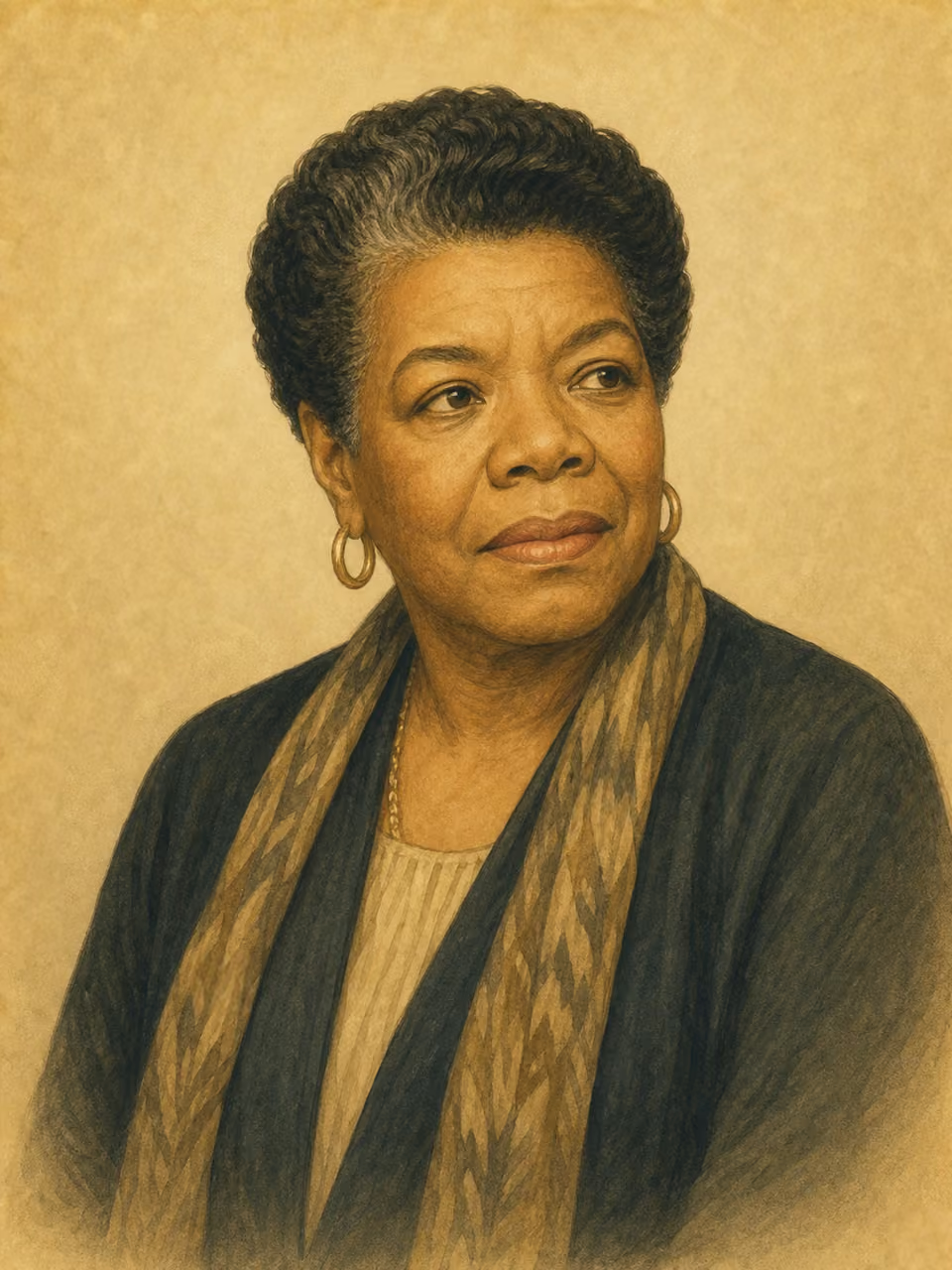
Maya Angelou

Portrait: AI-generated imagined likeness

Maya Angelou

Writer · Poet

Years
1928–2014
Birthplace
United States
Birth polity
United States
Era
Contemporary
Field
Literature
Occupations
Writer · Poet

When Maya Angelou published I Know Why the Caged Bird Sings, she transformed childhood trauma, silence, and survival into a public language for reading the modern United States. Her later appearances as a poet and inaugural reader extended that same voice across memoir, stage, broadcast, and civic ritual.

View in catalog

Historical context

Places

  • St. Louis

    Birth

  • Stamps, Arkansas

    Residence

Works & achievements

  • I Know Why the Caged Bird Sings

    1969

    Book

  • On the Pulse of Morning

    1993

    Poem

Origins

Origins map
Birth country
Birth country
United States

Map: Natural Earth (PD)

Biography

Early life

Maya Angelou was born in 1928 in St. Louis and spent part of her childhood in Arkansas. Experiences of racism, trauma, and silence later became central to the autobiographical writing through which she reconstructed selfhood in language.

Achievements

Her memoir I Know Why the Caged Bird Sings became a major literary event by joining personal history to the wider history of race and gender in America. She later reached broad audiences through poetry, essays, journalism, performance, and public speaking, and her recitation at the 1993 presidential inauguration made her a nationally resonant voice.

Character & anecdotes

Angelou's work was shaped by contact with figures such as Malcolm X and Martin Luther King Jr., but also by her unusually wide experience across stage, screen, and travel. The rhythmic force of her delivery gave her influence both on the page and in spoken public culture.

Historical Impact

Angelou changed the reach of Black women's autobiographical writing by bringing it into schools, public ceremonies, and mass readership without draining away its historical and emotional complexity. Her legacy lies not only in inspiration, but in teaching later writers and audiences how memory can preserve the realities of racism, gendered violence, and dignity.

Notes

Her birth name was Marguerite Annie Johnson.