
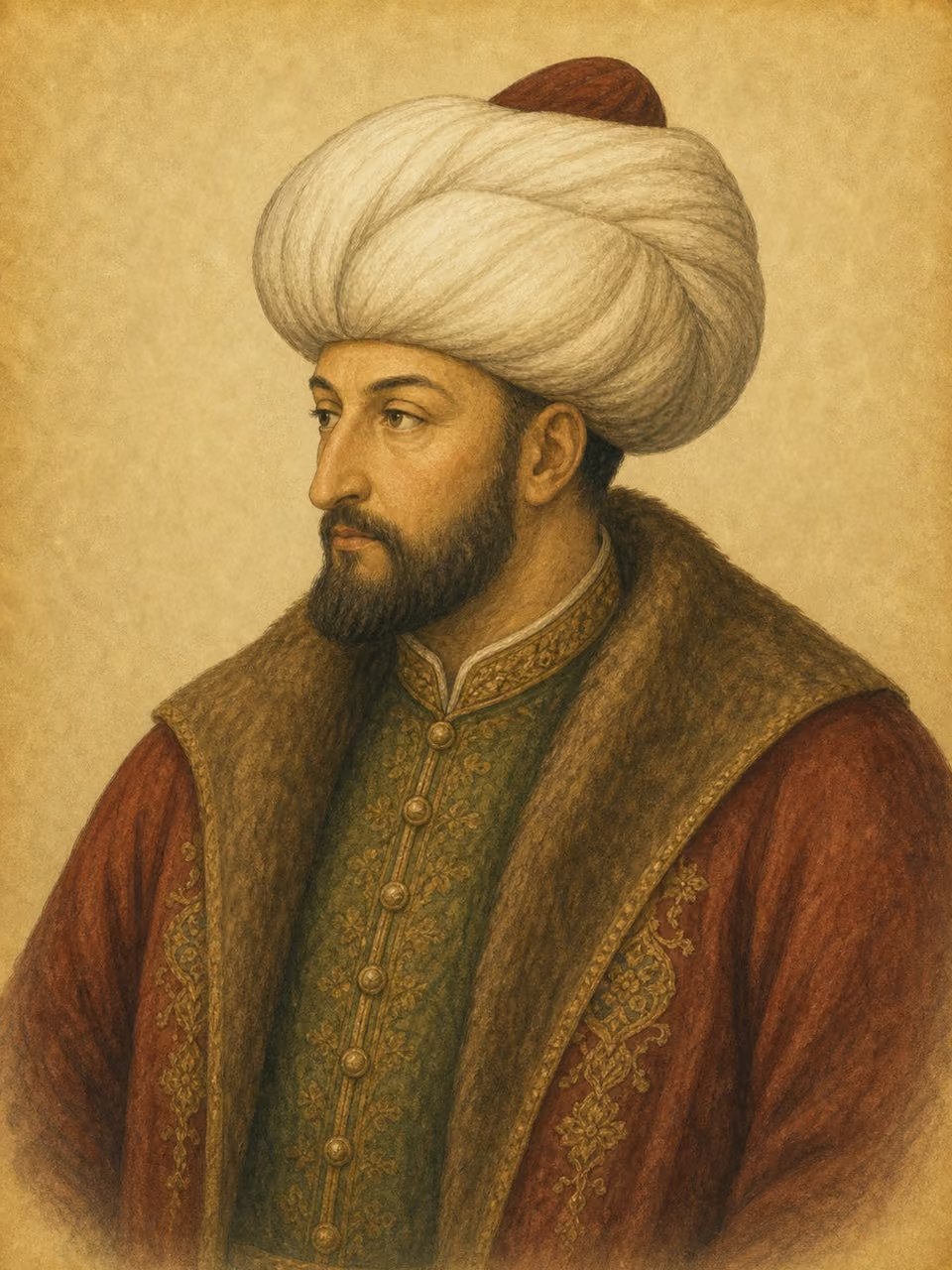
Mehmed II

Portrait: AI-generated imagined likeness

Mehmed II

Monarch · Military leader · Poet

Years
1432–1481
Birthplace
Türkiye
Birth polity
Ottoman Empire
Era
Early modern
Field
Politics
Occupations
Monarch · Military leader · Poet

Sultan of the Ottoman Empire who conquered Constantinople in 1453. It symbolizes the end of the medieval Mediterranean world and the formation of early modern empires. It connects local history and world history and provides clues for deciphering changes during the same era.

View in catalog

Historical context

Places

  • Edirne

    Birth

  • Constantinople

    Campaign

Events

  • Conquest of Constantinople

    1453

    Battle · Commander

  • Ottoman imperial reorganization

    1451–1481

    Political event · Leader

Origins

Origins map
Birth country
Birth country
Türkiye

Map: Natural Earth (PD)

Biography

Early life

Born into the Ottoman royal family, he ascended and abdicated the throne at a young age. When he became sultan again, he set up a military system and artillery with the goal of capturing the capital of the Byzantine Empire.

Achievements

Using cannon and siege tactics, he captured Constantinople and established the city as Istanbul, the center of his empire. It also expanded its control to the Balkans, Anatolia, and the Black Sea.

Character & anecdotes

After the conquest, Mehmed II left the Orthodox Church and merchants in the city, reorganizing its diverse population and rebuilding the capital. Not only destruction but also the design of governance was important.

Historical Impact

If you study Mehmed II, you will see that although the Ottoman Empire was an Islamic dynasty, he was also conscious of succeeding the Roman Empire. He is a person who connects the Mediterranean world and the history of West Asia. When you look at the people's activities and works together, it becomes easier to understand the terms in textbooks as concrete historical trends.