
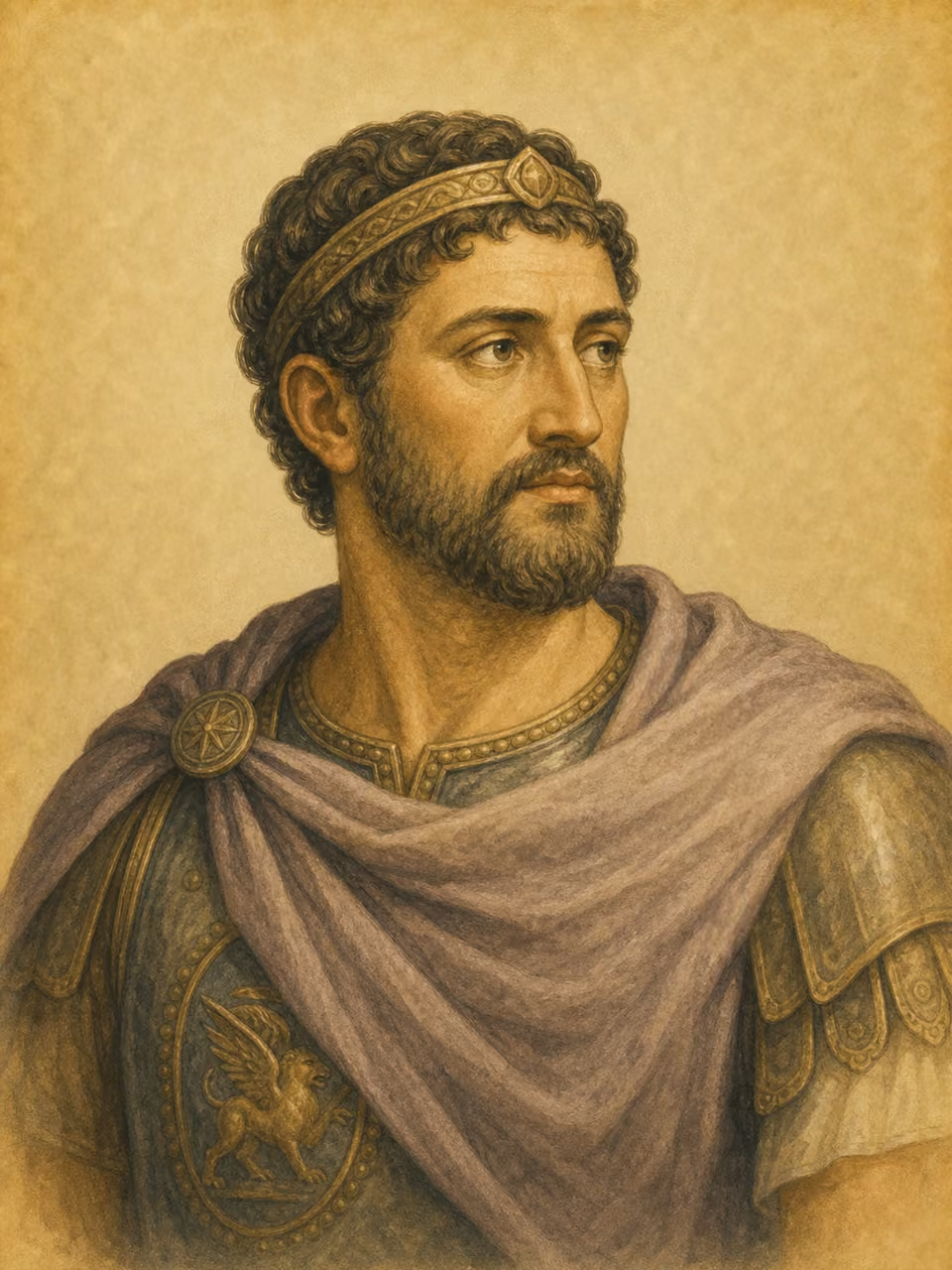
Menander I

Portrait: AI-generated imagined likeness

Menander I

Monarch · Military leader

Years
c. 180 BC–c. 130 BC
Birthplace
Pakistan
Birth polity
Indo-Greek Kingdom
Era
Ancient
Field
Politics
Occupations
Monarch · Military leader

King of the Indo-Greek Kingdom. Located at the intersection of the Hellenistic world and the ancient Indian world, it is known as King Milinda in Buddhist tales. It connects local history and world history and provides clues for deciphering changes during the same era.

View in catalog

Historical context

Places

  • Sagala

    Work

  • Bactria

    Work

Events

  • Indo-Greek rule in northwestern India

    165 BC–130 BC

    Political event · Leader

  • Milinda Panha tradition

    Cultural event · Subject

Origins

Origins map
Birth countryAssociated countries
Birth country
Pakistan
Associated countries
Afghanistan · India

Map: Natural Earth (PD)

Biography

Early life

There are many uncertainties about his year of birth and origins, but he emerged from the Greek ruling class that spread from Bactria to northwestern India. They built their royal power on the back of trade routes and cities.

Achievements

They ruled over a large area in northwestern India and connected the Greek monetary culture with the politics of the Indian world. In the Buddhist text ``King Milinda's Questions,'' he is depicted as a king who has a discussion with the Buddhist monk Nagasena.

Character & anecdotes

Menander was remembered by his Greek name as King, and in Buddhist tales as King Milinda. It's interesting how the same person can take on different forms in multiple cultures.

Historical Impact

When we study Menander I, we learn that Hellenistic culture after Alexander extended to the Indian subcontinent. This will be a clue to viewing ancient Indian history as a history of Eurasian exchanges. When you look at the people's activities and works together, it becomes easier to understand the terms in textbooks as concrete historical trends.