
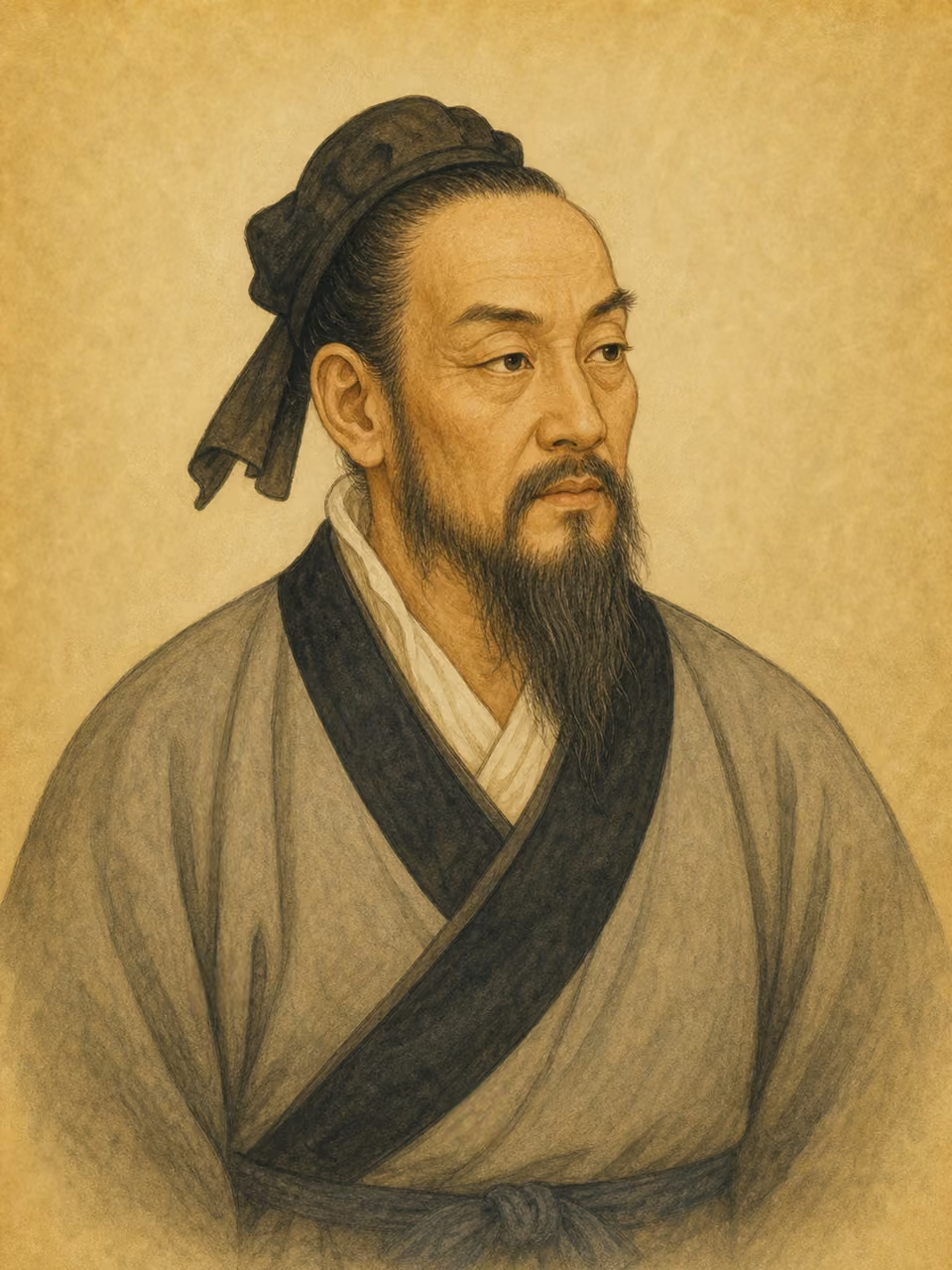
Mencius

Portrait: AI-generated imagined likeness

Mencius

Philosopher · Writer

Years
c. 372 BC–c. 289 BC
Birthplace
China
Birth polity
State of Zou
Era
Ancient
Field
Philosophy
Occupations
Philosopher · Writer

A Confucian thinker during the Warring States period. He occupies a major place in the history of East Asian thought as a person who preached the theory of goodness in nature and royal politics and developed the ideas of Confucius. It connects local history and world history and provides clues for deciphering changes during the same era.

View in catalog

Historical context

Places

  • Zou

    Birth

  • States of Warring States China

    Work

Works & achievements

  • Mencius

    Book

Events

  • Development of Confucian thought

    340 BC–289 BC

    Cultural event · Leader

Origins

Origins map
Birth country
Birth country
China

Map: Natural Earth (PD)

Biography

Early life

He is said to have been born in Zou, and studied as a Confucian who inherited the tradition of Confucius. He visited countries during the Warring States period and preached to the monarchs the need for benevolent government.

Achievements

He advocated the theory that human nature is good and rejected politics that caused suffering to the people. His ideal was a royal road based on virtue rather than supremacy based on military force.

Character & anecdotes

The story of the ``Three Transfers of Meng's Mother,'' in which Mencius' mother moved three times in search of an educational environment, is famous. It was widely disseminated as a lesson in valuing the learning environment.

Historical Impact

When you study Mencius, you realize that Confucianism was not just a teaching of etiquette, but also an ethical ideology that criticized political power. It deeply influenced later thought in China, Korea, and Japan. When you look at the people's activities and works together, it becomes easier to understand the terms in textbooks as concrete historical trends.