
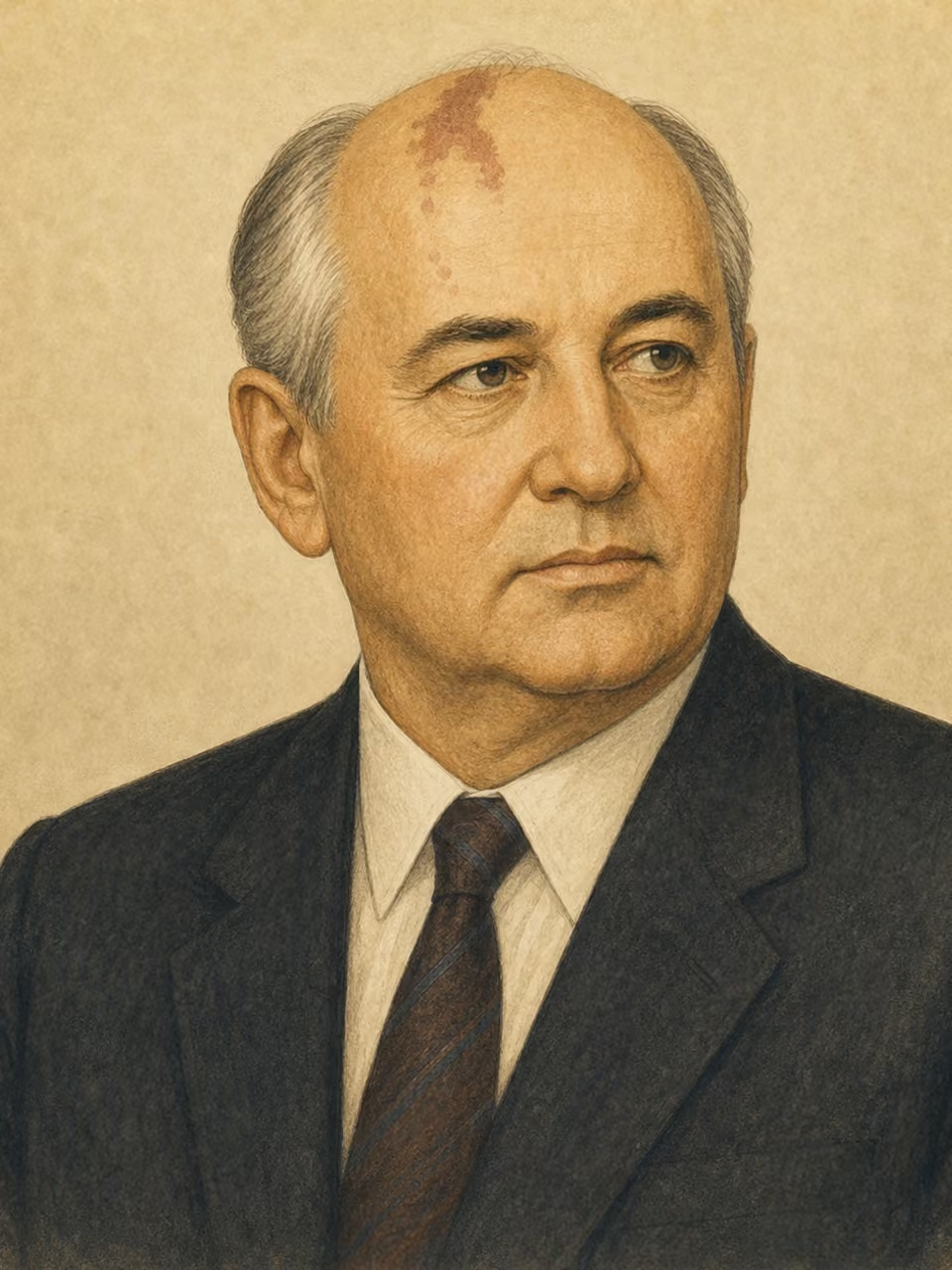
Mikhail Gorbachev

Portrait: AI-generated imagined likeness

Mikhail Gorbachev

Politician · Lawyer · Writer

Years
1931–2022
Birthplace
Russia
Birth polity
Soviet Union
Era
Contemporary
Field
Politics
Occupations
Politician · Lawyer · Writer

The last supreme leader of the Soviet Union. Advocating perestroika and glasnost, he was deeply involved in the end of the Cold War and the process of dismantling the Soviet Union. He is a person who thinks about the transformation of the international order at the end of the 20th century.

View in catalog

Historical context

Places

  • Stavropol

    Work

  • Moscow

    Work

Works & achievements

  • Perestroika

    1987

    Book

Events

  • Perestroika and glasnost

    1985–1991

    Political event · Leader

  • Dissolution of the Soviet Union

    1991

    Political event · Leader

Origins

Origins map
Birth country
Birth country
Russia

Map: Natural Earth (PD)

Biography

Early life

Born in a rural village in the southern part of the Soviet Union, he grew up in a society with strong memories of war and the Stalinist regime. He studied law at Moscow University and gained experience in Communist Party organizations before moving into central politics.

Achievements

In 1985, he became general secretary of the Communist Party of the Soviet Union, promoting perestroika economic reform and glasnost information disclosure. He avoided military intervention in Eastern Europe and played a major role in U.S.-Soviet disarmament and the end of the Cold War.

Character & anecdotes

Reforms began to rebuild the system, but the liberalization of speech and the eruption of ethnic issues shook the Communist Party's rule itself. This is an example of a well-intended reform resulting in more change than expected.

Historical Impact

Gorbachev is a man who shows that the end of the Cold War was not only achieved through military confrontation, but also through reform from within the system and the opening of society. If you study him, you will understand that the institutional reforms of giant states change the entire international order.