
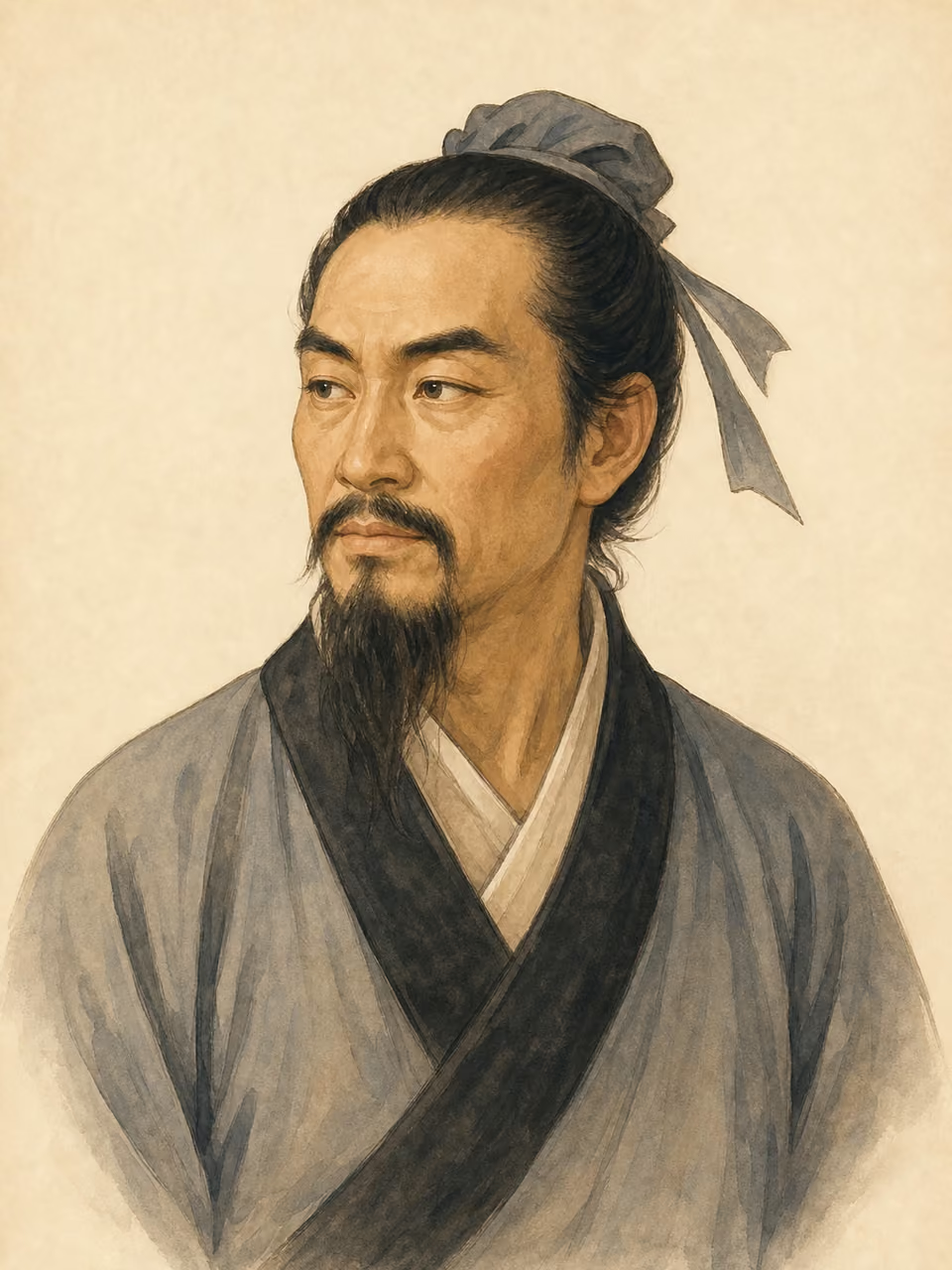
Mozi

Portrait: AI-generated imagined likeness

Mozi

Philosopher · Engineer · Writer

Years
c. 470 BC–c. 391 BC
Birthplace
China
Birth polity
Warring States China
Era
Ancient
Field
Philosophy
Occupations
Philosopher · Engineer · Writer

He was a thinker during the Sengoku period and is said to be the founder of the ink school. He preached love, non-aggression, and practicality, and showed a political ethics different from that of Confucianism. It connects local history and world history and provides clues for deciphering changes during the same era.

View in catalog

Historical context

Places

  • State of Lu

    Birth

Works & achievements

  • Mozi

    Book

Events

  • Development of Mohism

    450 BC–391 BC

    Movement · Leader

Origins

Origins map
Birth country
Birth country
China

Map: Natural Earth (PD)

Biography

Early life

Although much is unclear about his origins, it is said that he developed his ideas from a position close to that of lower-level engineers and practitioners. In an era of continuous war, he explored the logic of stopping attacks between nations.

Achievements

He advocated love, which is universal love that transcends class differences, and non-aggression, which negates wars of aggression. He was also knowledgeable about castle defense techniques, linking thought and practice.

Character & anecdotes

It is said that Mozi's school had a strict organization and provided defense support in various areas. He was not only a philosopher, but also a leader of a practical group who knew technology.

Historical Impact

Studying Mozi reveals that Chinese thought was not exclusively Confucian, but developed in a variety of ways around specific countermeasures to war and inequality. When you look at the people's activities and works together, it becomes easier to understand the terms in textbooks as concrete historical trends.