
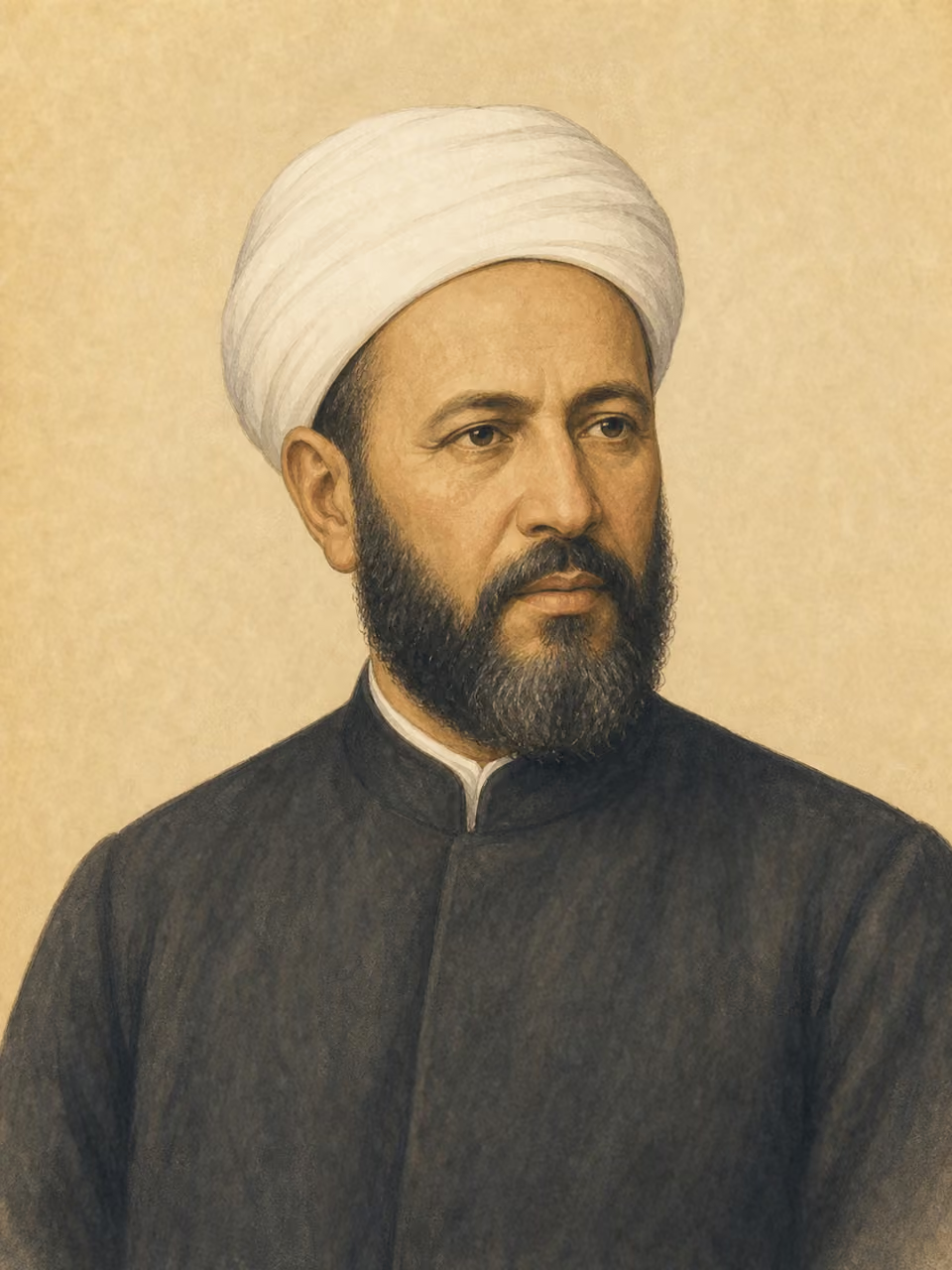
Muhammad Abduh

Portrait: AI-generated imagined likeness

Muhammad Abduh

theologian · Philosopher · Writer · Politician

Years
1849–1905
Birthplace
Egypt
Birth polity
Egypt
Era
Modern
Field
Religion
Occupations
theologian · Philosopher · Writer · Politician

Egyptian Islamic reform thinker. It connected faith and reason, educational reform, and social reform, and had a great influence on modern Islamic thought. He is an important figure in understanding reform movements in Asia and Africa.

View in catalog

Historical context

Places

  • Nile Delta

    Birth

  • Cairo

    Work

Events

  • Islamic modernism

    c. 1880–c. 1905

    Movement · Leader

Origins

Origins map
Birth country
Birth country
Egypt

Map: Natural Earth (PD)

Biography

Early life

Born in a village in the Nile Delta, he studied in Al-Azhar. In nineteenth-century Egypt, Western pressure and the need for domestic reform posed new questions to religious thought.

Achievements

Influenced by Jamaluddin Afghani, he advocated a reinterpretation of Islam and educational reform. As Mufti of Egypt, he was also involved in legal interpretation and supported modern reforms.

Character & anecdotes

Rather than simply accepting Westernization, Abduh emphasized the possibility of reason and reform within Islam. It is characterized by its attempt to overcome the conflict between tradition and modernity.

Historical Impact

When we study Muhammad Abduh, we learn that the reforms in the modern Islamic world were not just military and political movements, but also movements surrounding education, law, and religious interpretation. It is one of the starting points of modern Islamic thought.