
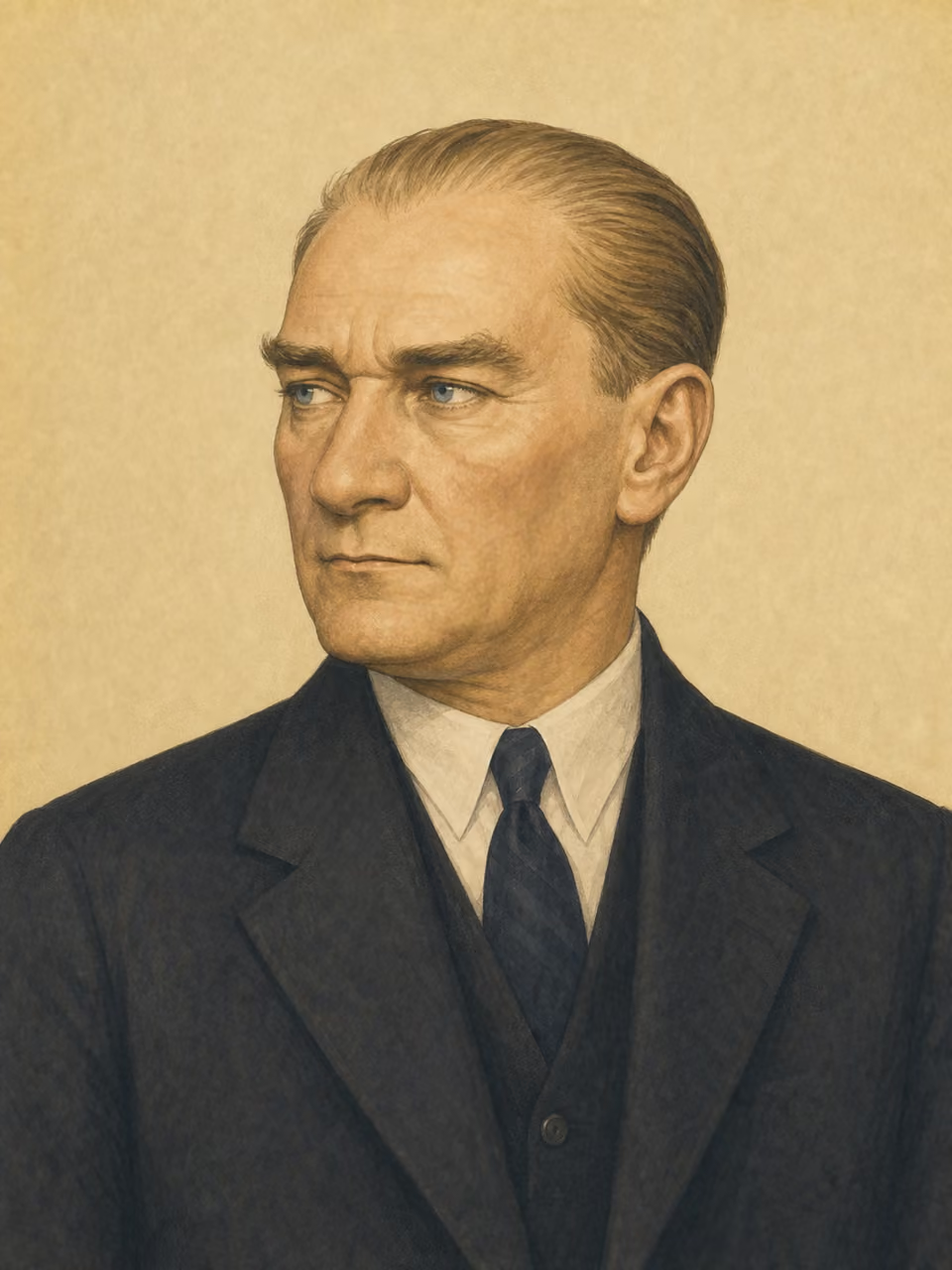
Mustafa Kemal Atatürk

Portrait: AI-generated imagined likeness

Mustafa Kemal Atatürk

Politician · Military commander · revolutionary · Writer

Years
1881–1938
Birthplace
Türkiye
Birth polity
Ottoman Empire
Era
Modern
Field
Politics
Occupations
Politician · Military commander · revolutionary · Writer

The founder of the Republic of Turkey, also known as Mustafa Kemal. He led the War of Independence and promoted secularization and modernization reforms. He is an important figure in understanding the Middle East and nation-state formation after the Ottoman Empire.

View in catalog

Historical context

Places

  • Salonica

    Birth

  • Ankara

    Work

Works & achievements

  • Nutuk

    1927

    Speech

Events

  • Turkish War of Independence

    1919–1923

    War · Leader

  • founding of the Republic of Turkey

    1923

    Political event · Leader

Origins

Origins map
Birth countryAssociated countries
Birth country
Türkiye
Associated countries
Greece

Map: Natural Earth (PD)

Biography

Early life

Born in Salonica, part of the Ottoman Empire, he studied at a military academy. He grew up in the era of the crisis of the multi-ethnic empire and the Young Turk movement, and as a soldier he became reform-minded.

Achievements

He led the Turkish War of Independence and established the Republic in 1923. He abolished the caliphate, reformed the alphabet, reformed the civil code, and promoted secularization policies, greatly changing the framework of the nation.

Character & anecdotes

The surname Atatürk was given by parliament under the republic's surname law. This is an example of an individual's name becoming a political symbol of the father of a new nation.

Historical Impact

When we study Mustafa Kemal, we see an attempt to create a secular nation-state from a defeated empire after World War I. It provides a standard for thinking about the modernization of Turkish politics and its tensions. It is also possible that it will have an impact on the institutions and memories of later generations.