
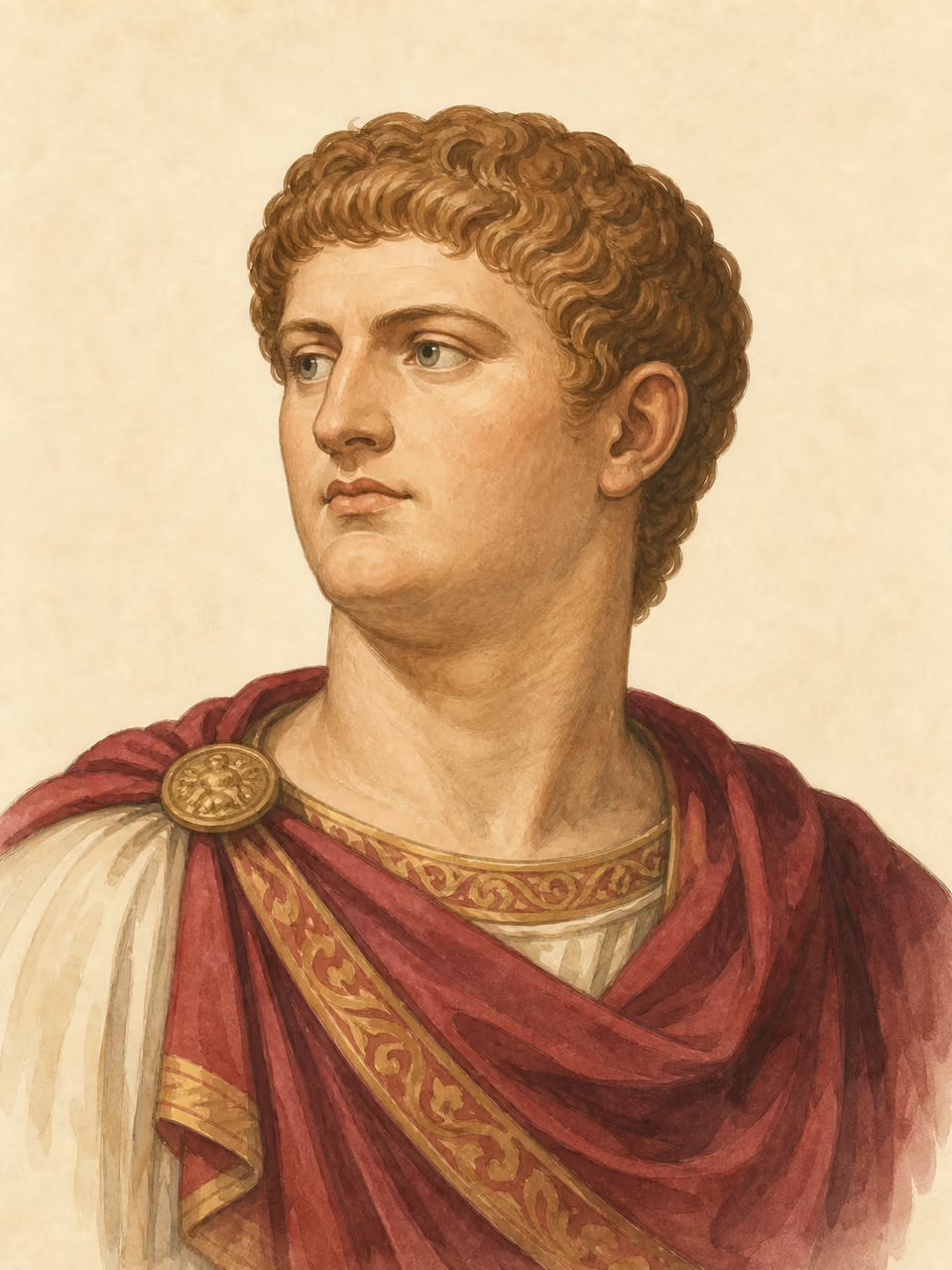
Nero

Portrait: AI-generated imagined likeness

Nero

Emperor · Monarch · Politician

Years
37–68
Birthplace
Italy
Birth polity
Roman Empire
Era
Ancient
Field
Politics
Occupations
Emperor · Monarch · Politician

Last emperor of the Julius-Claudian dynasty of the Roman Empire. Although he is known for his images of tyrants, he is also a figure who considers the power structure of the early imperial period. It connects local history and world history and provides clues for deciphering changes during the same era.

View in catalog

Historical context

Places

  • Antium

    Birth

Events

  • Great Fire of Rome

    64

    Event · Witness

  • End of the Julio-Claudian dynasty

    68

    Political event · Subject

Origins

Origins map
Birth country
Birth country
Italy

Map: Natural Earth (PD)

Biography

Early life

He was adopted by Emperor Claudius and ascended to the throne at a young age with the political support of his mother, Agrippina. In the early years, he was assisted by Seneca and others.

Achievements

In the latter half of his reign, he became increasingly autocratic, and his conflicts with the Senate and powerful people deepened. He became infamous for his response to the Great Fire of Rome in 64 AD and for his persecution of Christians.

Character & anecdotes

He had a strong interest in music and theater, and liked to perform on stage himself. This was difficult for the traditional ruling class of Rome to accept as an emperor's behavior.

Historical Impact

When we study Nero, we learn that the power of the Roman emperor depended on the support of the army, the senate, and the citizens, and could not be explained by individual personality alone. When you look at the people's activities and works together, it becomes easier to understand the terms in textbooks as concrete historical trends.