
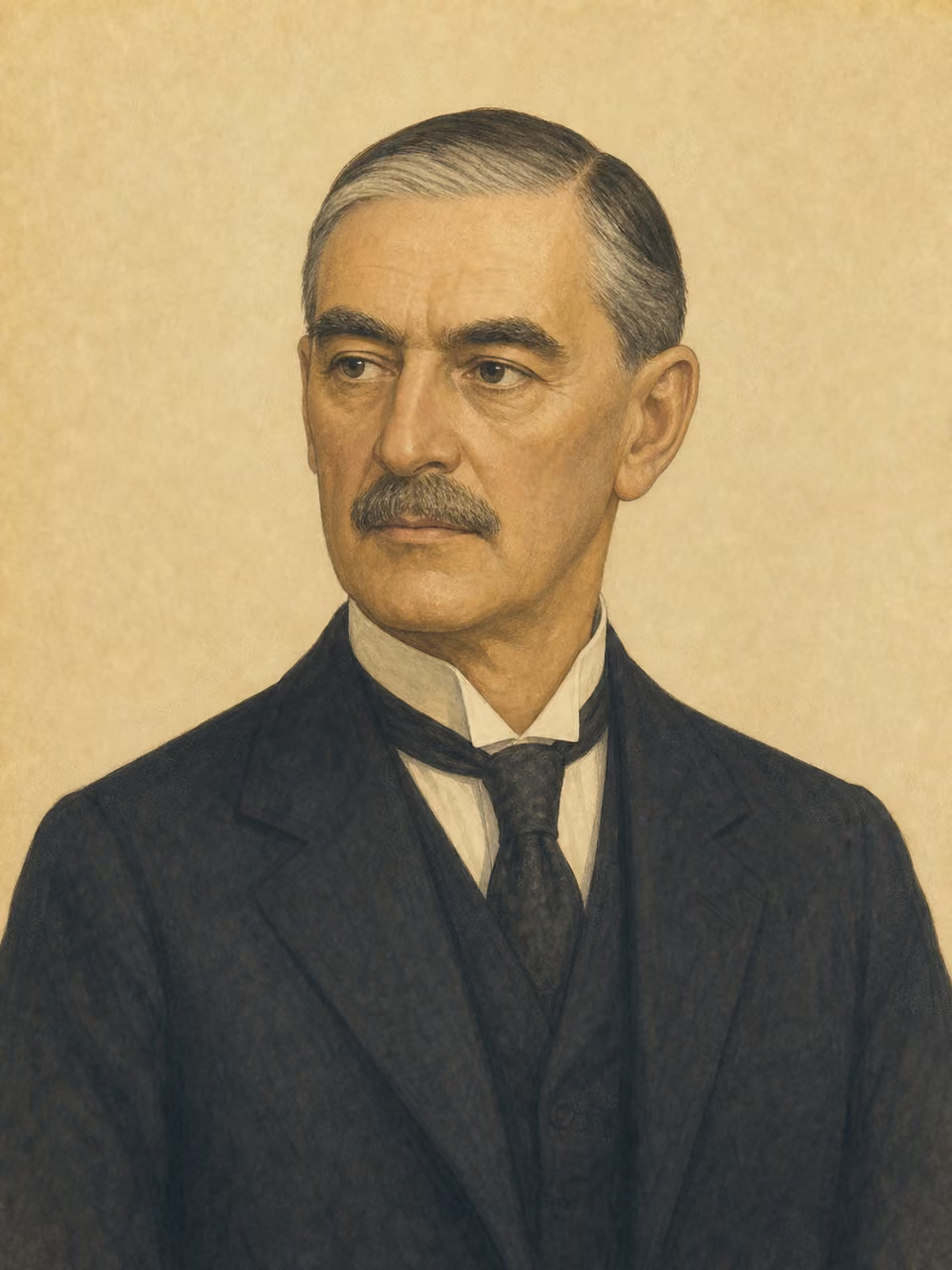
Neville Chamberlain

Portrait: AI-generated imagined likeness

Neville Chamberlain

Politician

Years
1869–1940
Birthplace
United Kingdom
Birth polity
United Kingdom of Great Britain and Ireland
Era
Modern
Field
Politics
Occupations
Politician

British Prime Minister, known for his appeasement policy before World War II. Attempts were made to avert war through the Munich Conference, but they were unable to stop Nazi expansion. He is an important figure in thinking about interwar diplomacy.

View in catalog

Historical context

Places

  • Birmingham

    Birth

  • London

    Work

Events

  • Munich Agreement

    1938

    Political event · Leader

  • Second World War

    1939–1940

    War · Participant

Origins

Origins map
Birth country
Birth country
United Kingdom

Map: Natural Earth (PD)

Biography

Early life

Born into a political family in Birmingham, he entered national politics through business and local politics. After World War I, there was a strong public opinion in Britain that wanted to avoid another war.

Achievements

As chancellor, he was involved in fiscal and social policy, but in foreign policy he chose appeasement with Hitler's regime. At the Munich Conference in 1938, the cession of the Sudetenland was approved.

Character & anecdotes

He is famous for emphasizing ``peace'' upon his return to Japan, but Germany subsequently broke its promise. Debate continues over whether Chamberlain's evaluation is a powerless appeasement or a time buy.

Historical Impact

When we study Neville Chamberlain, we understand that democratic nations were forced to make difficult decisions amidst memories of war, military shortages, public opinion, and the threat of dictatorships. This is the key to understanding diplomacy on the eve of World War II. It is also possible that it will have an impact on the institutions and memories of later generations.