
Nikolai Gogol

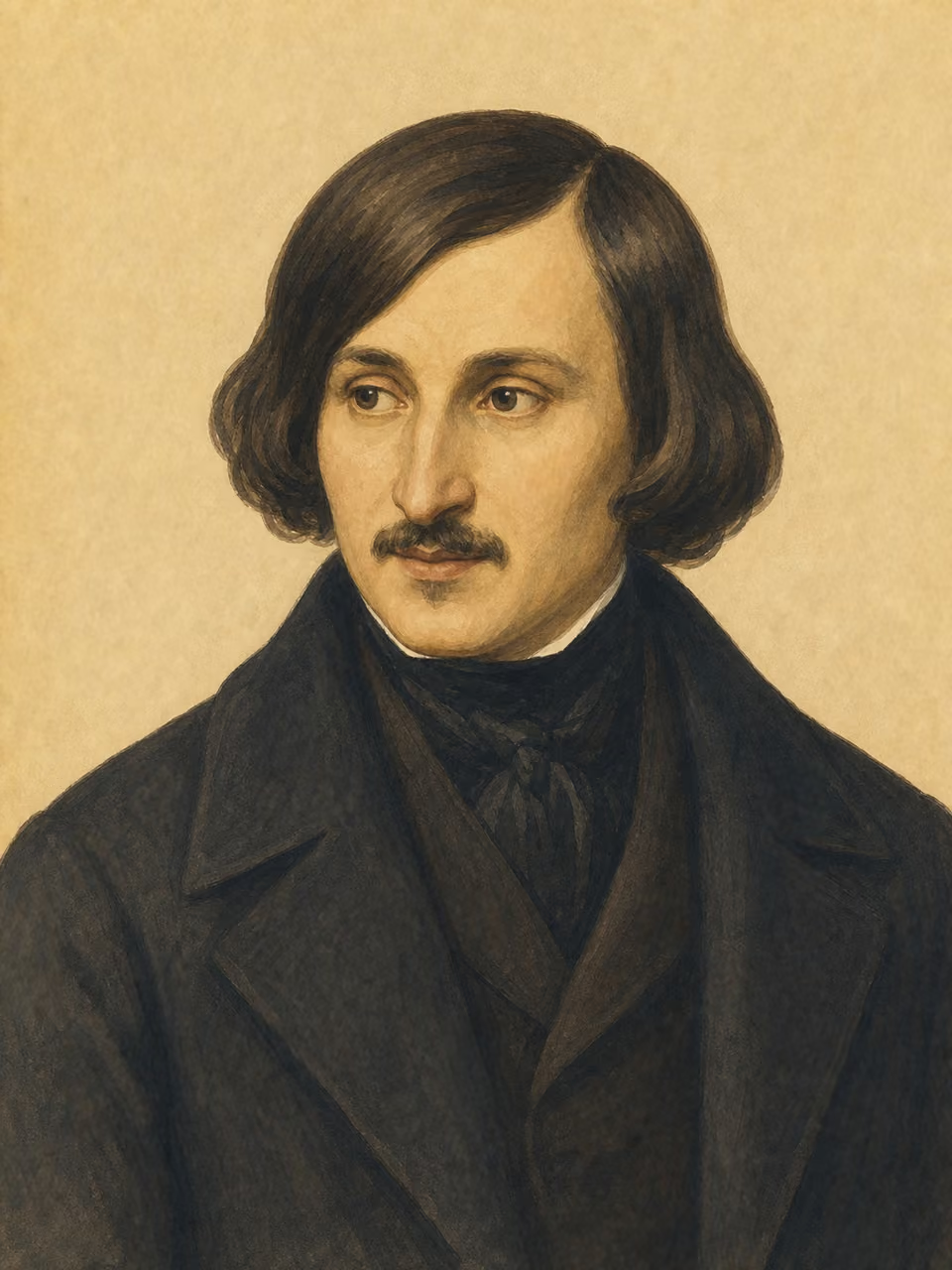
Portrait: AI-generated imagined likeness

Nikolai Gogol

Writer · Novelist · Playwright · Poet

Years
1809–1852
Birthplace
Ukraine
Birth polity
Russian Empire
Era
Modern
Field
Literature
Occupations
Writer · Novelist · Playwright · Poet

A writer active in the Russian Empire, known for his works that mix satire and fantasy. Through ``The Prosecutor'' and ``Dead Souls,'' he sharply depicted the contradictions of bureaucracy and landlord society. This book serves as a gateway to understanding 19th century Russian literature.

View in catalog

Historical context

Places

  • Velyki Sorochyntsi

    Birth

  • Saint Petersburg

    Work

Works & achievements

  • Dead Souls

    1842

    Book

  • The Government Inspector

    1836

    Play

Events

  • development of nineteenth-century Russian literature

    1830–1852

    Cultural event · Participant

Origins

Origins map
Birth countryAssociated countries
Birth country
Ukraine
Associated countries
Russia

Map: Natural Earth (PD)

Biography

Early life

Born in what is now Ukraine, he grew up in the multiethnic cultural environment of the Russian Empire. He moved to St. Petersburg and worked as a bureaucrat and a teacher while trying to make a living through literature.

Achievements

``The Prosecutor'' depicts the corruption of local officials as a comedy, and ``Dead Souls'' depicts the distortions of a serf society in a grand scheme of things. He expanded the expression of Russian prose by combining folktale fantasy with social satire.

Character & anecdotes

Gogol's works elicit laughter, but beneath them lies anxieties about imperial bureaucracy and class society. In his later years, he deepened his religious anguish and is said to have burned the manuscript for the second part of "Dead Souls."

Historical Impact

If you study Gogol, you will see that Russian literature did not stop at imitating Western Europe, but began to depict the contradictions of its own society in its own unique style. It also influenced Dostoyevsky and later realist literature. It also provides material for thinking about the relationship between Ukraine and Russian culture under imperial rule.