
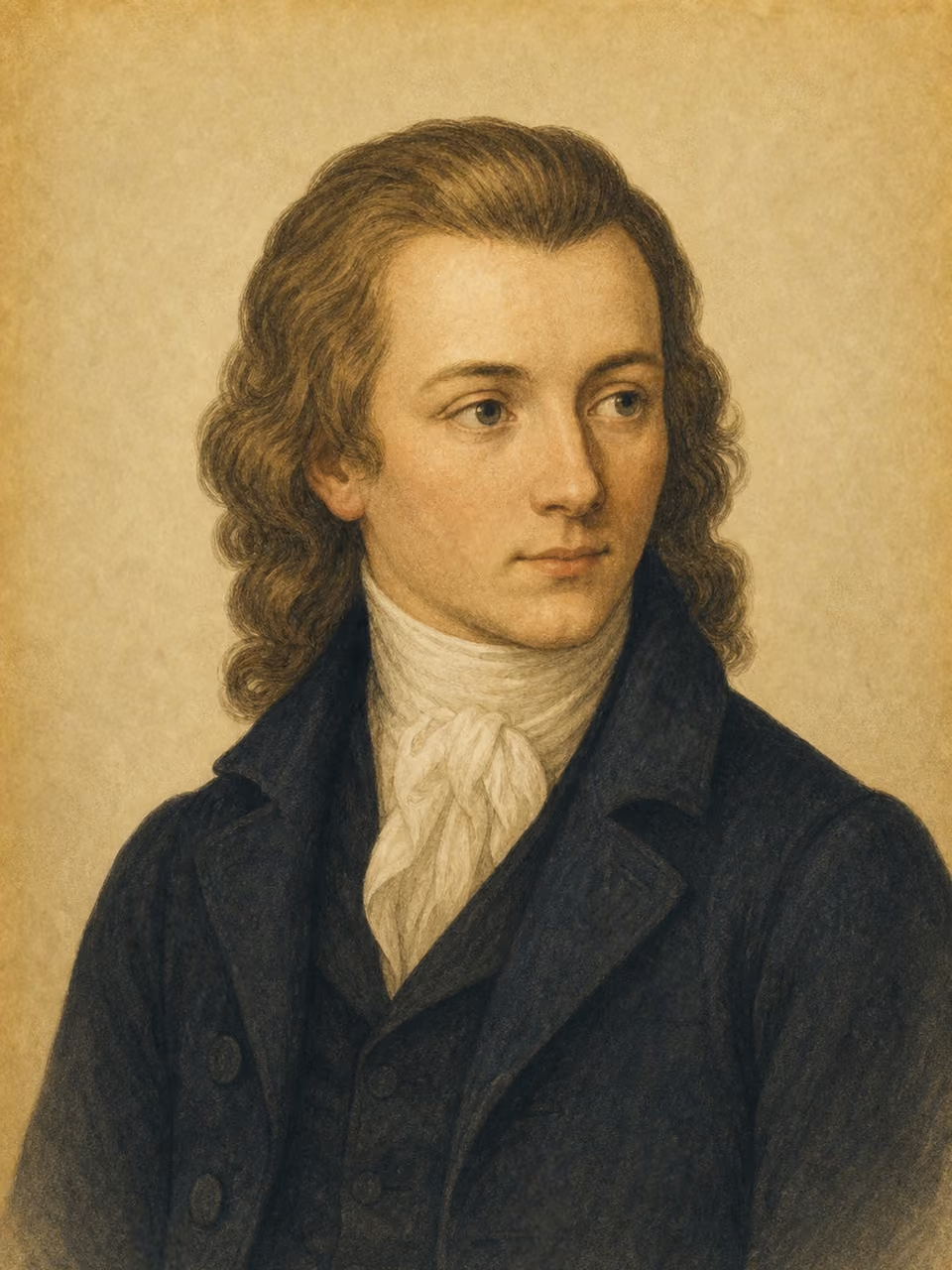
Novalis

Portrait: AI-generated imagined likeness

Novalis

Poet · Writer · Philosopher

Years
1772–1801
Birthplace
Germany
Birth polity
Holy Roman Empire
Era
Early modern
Field
Literature
Occupations
Poet · Writer · Philosopher

A German Romantic poet known for his symbolism of blue flowers. He expressed in literature dreams, death, and longing that cannot be grasped by reason alone. It marks a turning point in modern European literature. We can also see changes in sensibilities over time.

View in catalog

Historical context

Places

  • Oberwiederstedt

    Birth

  • Jena

    Education

Works & achievements

  • Hymns to the Night

    1800

    Poem

  • Heinrich von Ofterdingen

    1802

    Book

Events

  • Early German Romanticism

    1798–1801

    Cultural event · Participant

Origins

Origins map
Birth country
Birth country
Germany

Map: Natural Earth (PD)

Biography

Early life

Born in Saxony, he continued to write poetry while studying law and mining. In Germany after the French Revolution, there was a growing interest in reflection on the Enlightenment and the inner world.

Achievements

In ``Hymn of the Night'' and the unfinished novel ``Blue Flower,'' he combined reality and fantasy, religious sentiment and love. It gave form to the central imagination of early German Romanticism.

Character & anecdotes

The early death of his fiancée Sophie had a profound impact on Novalis's poetic world. It is unique in that it expresses loss not as mere sadness, but as a yearning for eternity.

Historical Impact

When we study Novalis, we learn that nineteenth-century literature emphasized dreams, symbols, and inner depth as a reaction to rationalism. Romanticism had a wide influence on later poetry, novels, music, and art. We can also consider how literature expressed the anxieties and hopes of modern people.