
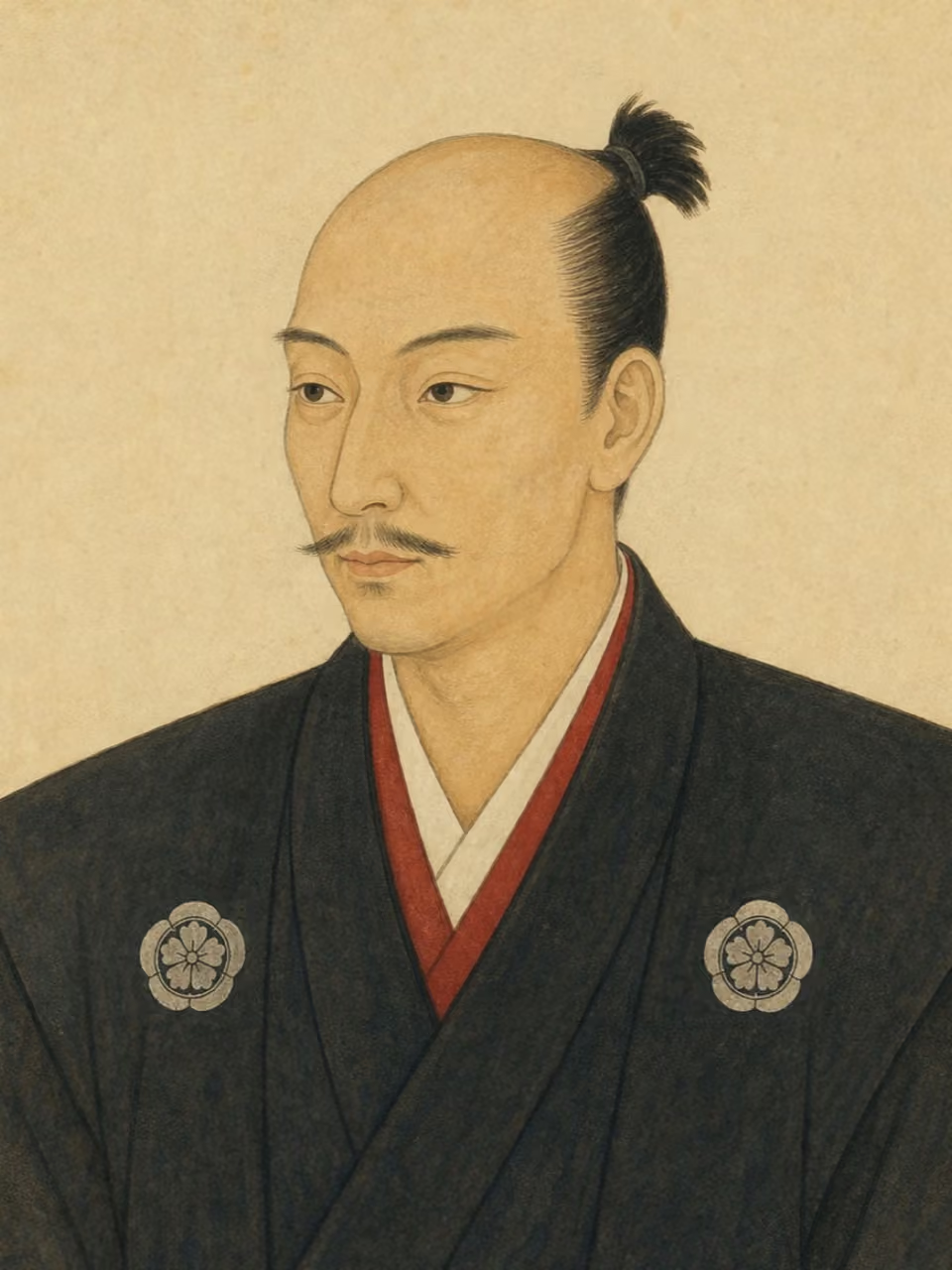
Oda Nobunaga

Portrait: AI-generated imagined likeness

Oda Nobunaga

Daimyo · Military commander

Years
1534–1582
Birthplace
Japan
Birth polity
Owari Province under the Muromachi shogunate
Era
Early modern
Field
Military
Occupations
Daimyo · Military commander

His surprise victory over Imagawa Yoshimoto at Okehazama made Oda Nobunaga impossible to ignore, and within little more than a decade he had pushed aside the Muromachi shogunate itself. At Nagashino, the Oda-Tokugawa army's coordinated use of arquebuses, fortifications, and battlefield control helped defeat the Takeda, while his free-market measures, barrier removals, and Azuchi Castle signaled a broader remaking of rule.

View in catalog

Historical context

Places

  • Owari Province

    Birth

  • Azuchi Castle

    Residence

  • Honno-ji

    Death

Events

  • Battle of Nagashino

    1575

    Battle · Commander

  • Honno-ji Incident

    1582

    Political event · Subject

Origins

Origins map
Birth country
Birth country
Japan

Map: Natural Earth (PD)

Biography

Early life

Born in 1534, a son of the warlord Oda Nobuhide in Owari Province (the western part of today's Aichi Prefecture). His eccentric youthful behavior earned him the nickname "the Great Fool of Owari," but he prevailed in the family succession struggle and unified the province.

Achievements

In 1560 he rose to fame by defeating the vastly larger army of Imagawa Yoshimoto at Okehazama. He effectively ended the Muromachi shogunate in 1573. At Nagashino in 1575, the Oda-Tokugawa army defeated the Takeda; the battle is associated with organized arquebus fire rather than a simple story of guns annihilating cavalry. His reforms — the rakuichi-rakuza free markets, the abolition of toll barriers, and the magnificent Azuchi Castle — modernized commerce and governance.

Character & anecdotes

He used a seal reading "Tenka Fubu" — the realm under military rule — declaring his intent to unify Japan by force. Fascinated by Western goods, he protected Christian missionaries, prized globes and European armor, and famously took the African-born retainer Yasuke into his service.

Historical Impact

Although he died in 1582 before unification was complete, the political centralization and commercial change he drove were carried forward by Toyotomi Hideyoshi and Tokugawa Ieyasu, helping turn a fractured warlord order into the foundations of early modern Japan. Later generations remembered him not just as a conqueror but as the archetype of a ruler who broke established authority, a presence that still shapes Japanese historical memory and popular culture.

Notes

The famous verse "If the cuckoo does not sing, kill it" was composed by later generations to caricature his temperament — the words are not his own.