
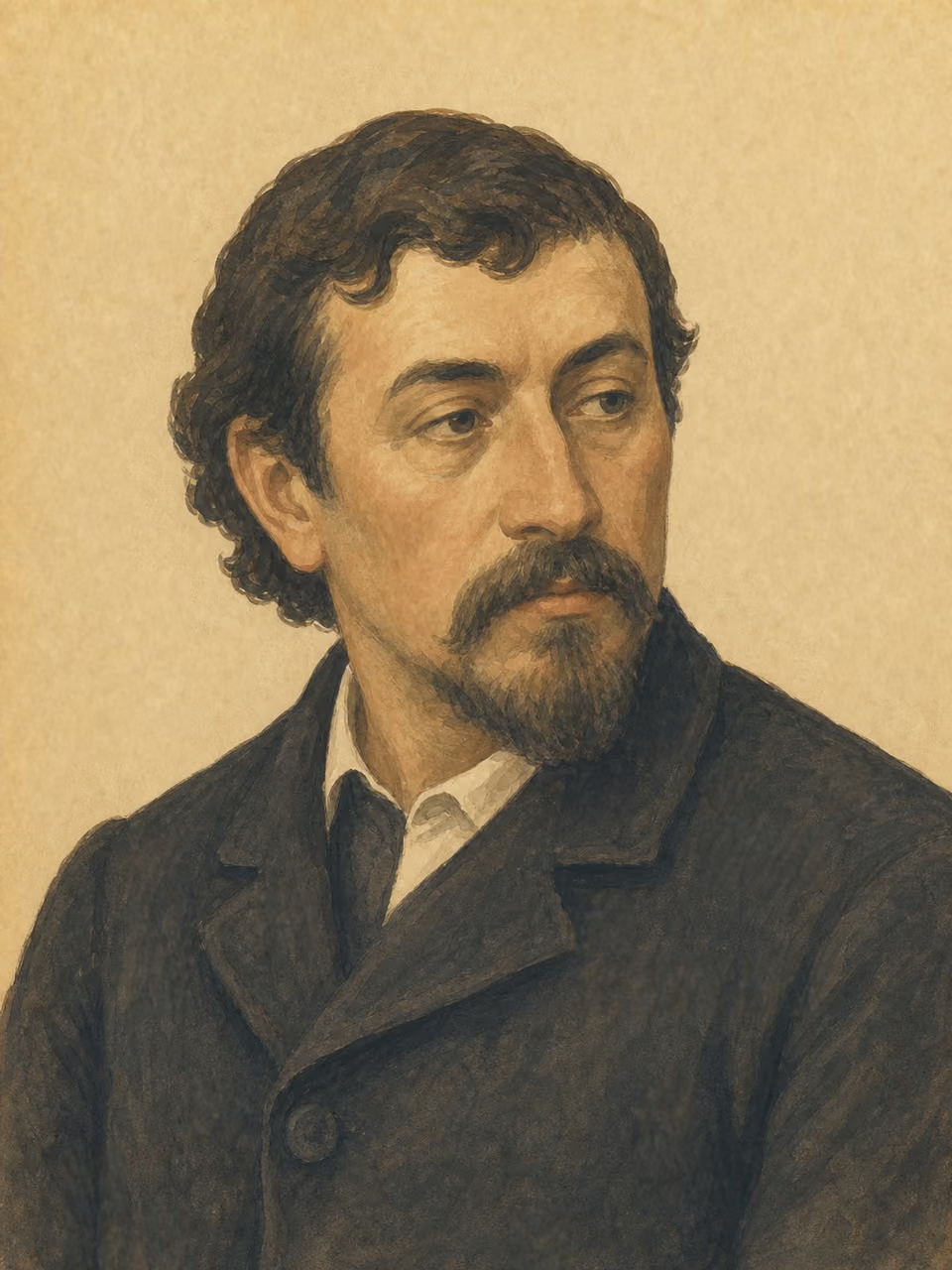
Paul Gauguin

Portrait: AI-generated imagined likeness

Paul Gauguin

Painter · Sculptor · Printmaker

Years
1848–1903
Birthplace
France
Birth polity
French Second Republic
Era
Modern
Field
Art
Occupations
Painter · Sculptor · Printmaker

A French painter known for his strong colors and symbolic expressions. Produced in Pont-Aven and Tahiti, he expressed his longing for a world different from modern Western society. He is one of the representatives of post-impressionism.

View in catalog

Historical context

Places

  • Paris

    Birth

  • Pont-Aven

    Work

  • Tahiti

    Work

Works & achievements

  • Vision after the Sermon

    1888

    Painting

  • Where Do We Come From? What Are We? Where Are We Going?

    1897

    Painting

Events

  • Post-Impressionism

    1886–1903

    Movement · Participant

Origins

Origins map
Birth country
Birth country
France

Map: Natural Earth (PD)

Biography

Early life

Born in Paris, he worked as a seaman and stockbroker before turning his attention to painting. Although he interacted with the Impressionists, he began to place more emphasis on inner meaning and decorative colors than on visible light.

Achievements

In ``The Vision After the Sermon'' and other works from his Tahitian period, he used flat colored surfaces and symbolic representations of figures. Moving away from Western realism, he combined religion, mythology, and cross-cultural imagery.

Character & anecdotes

Although moving to Tahiti was an artistic turning point, it also included the danger of idealizing the reality under colonial rule. Along with the charm of the work, you can also read the cross-cultural views of modern Europe.

Historical Impact

When you study Gauguin, you can see a trend in modern art that sought to express emotions and myths through color and symbolism. It also inspired the Nabi school and Expressionism. His works provide material for thinking about artistic innovation and colonialism at the same time.