
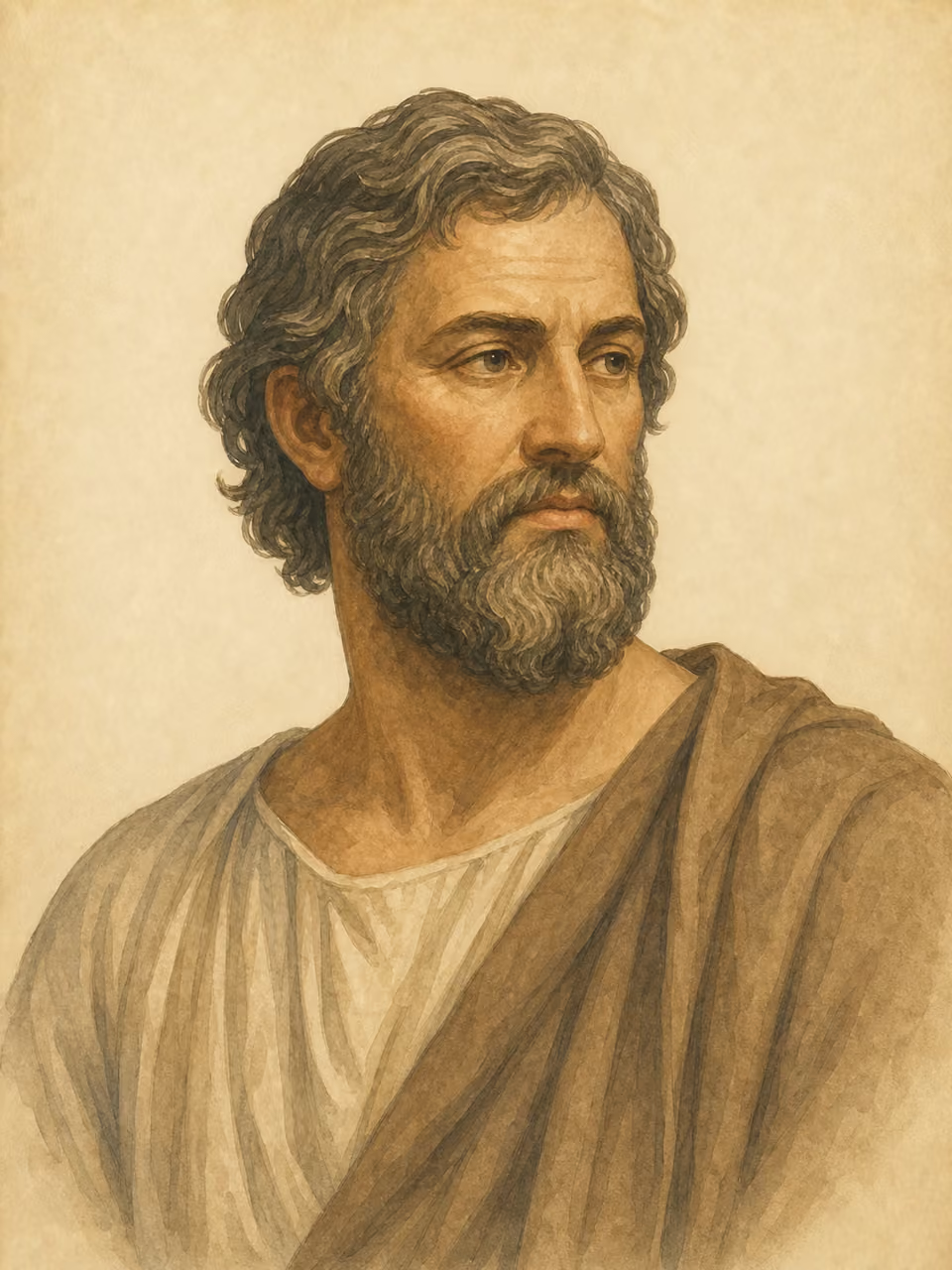
Phidias

Portrait: AI-generated imagined likeness

Phidias

Sculptor · Architect · Painter

Years
c. 500 BC–c. 430 BC
Birthplace
Greece
Birth polity
Athens
Era
Ancient
Field
Art
Occupations
Sculptor · Architect · Painter

A sculptor representing classical Athens. He is associated with the construction of the Parthenon and represents the ideals of classical Greek art. It connects local history and world history and provides clues for deciphering changes during the same era.

View in catalog

Historical context

Places

  • Athens

    Birth

Works & achievements

  • Athena Parthenos

    Other

  • Statue of Zeus at Olympia

    Other

Events

  • Development of Classical Athenian art

    460 BC–430 BC

    Cultural event · Leader

Origins

Origins map
Birth country
Birth country
Greece

Map: Natural Earth (PD)

Biography

Early life

He is said to have been born in Athens and honed his skills as a sculptor. He was active during the period when Athens was undergoing reconstruction and urban development after the Persian War.

Achievements

He was involved in the construction of the Acropolis under Pericles, and created statues such as Athena Parthenos. The statue of Zeus at Olympia is also famous as a wonder of the ancient world.

Character & anecdotes

The huge statues were luxurious and made of gold and ivory. It shows that religious worship, art, and the prestige of the city-state were integrated.

Historical Impact

When we study Phidias, we learn that ancient Greek art was both the work of an individual and a public project representing the political prestige of democratic Athens. When you look at the people's activities and works together, it becomes easier to understand the terms in textbooks as concrete historical trends.