
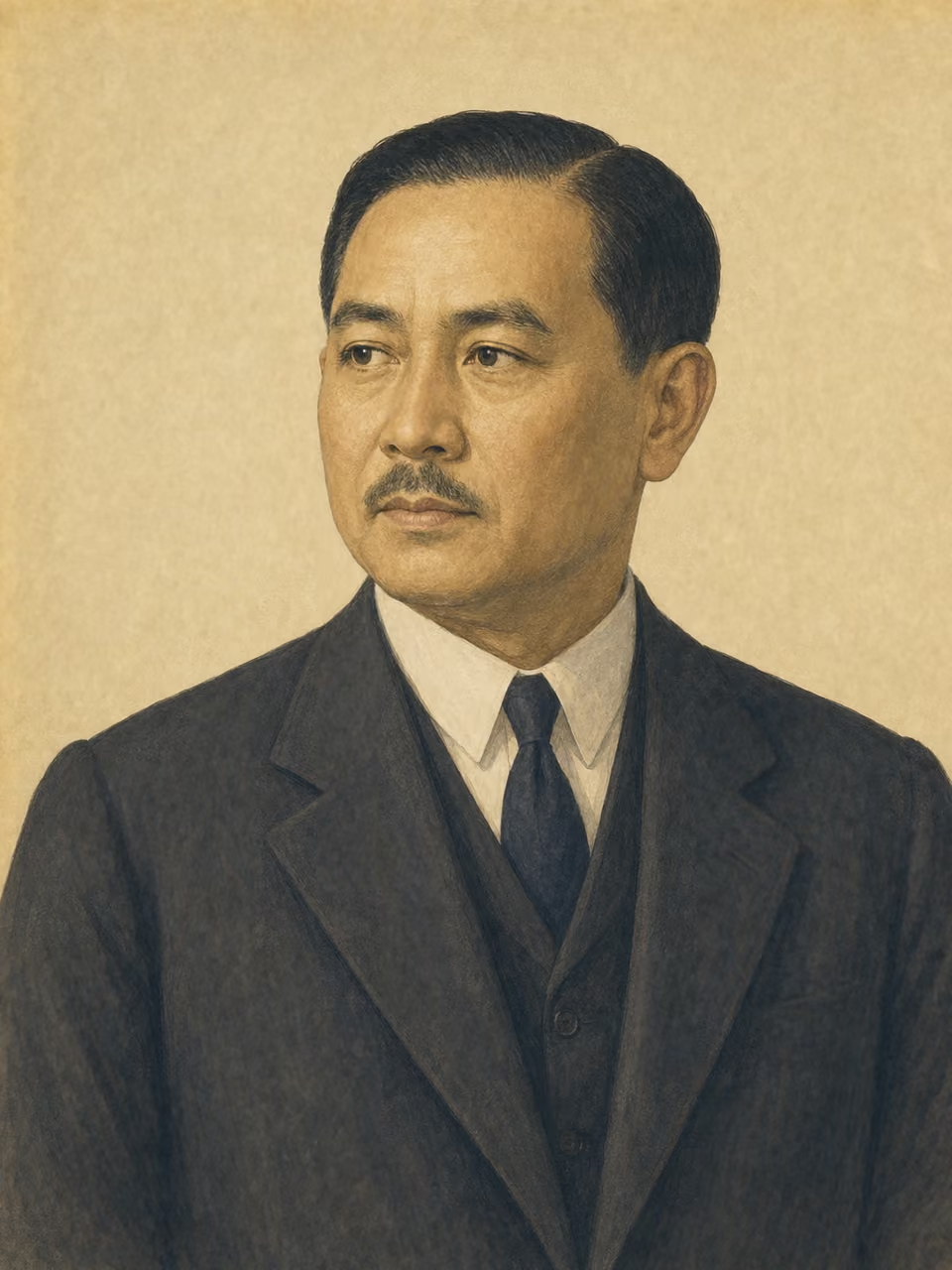
Plaek Phibunsongkhram

Portrait: AI-generated imagined likeness

Plaek Phibunsongkhram

Politician · Military leader

Years
1897–1964
Birthplace
Thailand
Birth polity
Kingdom of Siam
Era
Modern
Field
Politics
Occupations
Politician · Military leader

A Thai military officer and politician known as Phibun. He rose to power after the constitutional revolution in 1932, and as prime minister he changed the name of the country and promoted national integration policies. He is an important figure in thinking about the formation of modern nations in Southeast Asia.

View in catalog

Historical context

Places

  • Nonthaburi

    Birth

  • Bangkok

    Work

Events

  • Siamese Revolution of 1932

    1932

    Revolution · Participant

  • Thai nationalist state building

    1938–1944

    Political event · Leader

Origins

Origins map
Birth country
Birth country
Thailand

Map: Natural Earth (PD)

Biography

Early life

Born in the Kingdom of Siam, he was educated as a military man. As demands for reforms to the monarchy-centered politics increased, young military and bureaucrats became the bearers of a constitutional revolution.

Achievements

As prime minister, he changed the country's name from Siam to Thailand and promoted national integration through dress, language, and rituals. During World War II, Japan strengthened its relationship with Japan, causing great controversy at home and abroad.

Character & anecdotes

Although Phibun's cultural policy advocated modernization, it also had the character of the state regulating daily life in detail. This shows that the formation of a modern nation extends to the lifestyle of individuals.

Historical Impact

If you study Phibun, you will see that even in Thailand, an independent country in Southeast Asia, the military, nationalism, and international wars have greatly influenced politics. Modernization in non-colonized regions was not free from authoritarianism and external dependence. It also serves as a prerequisite for understanding the military influence on contemporary Thai politics.