
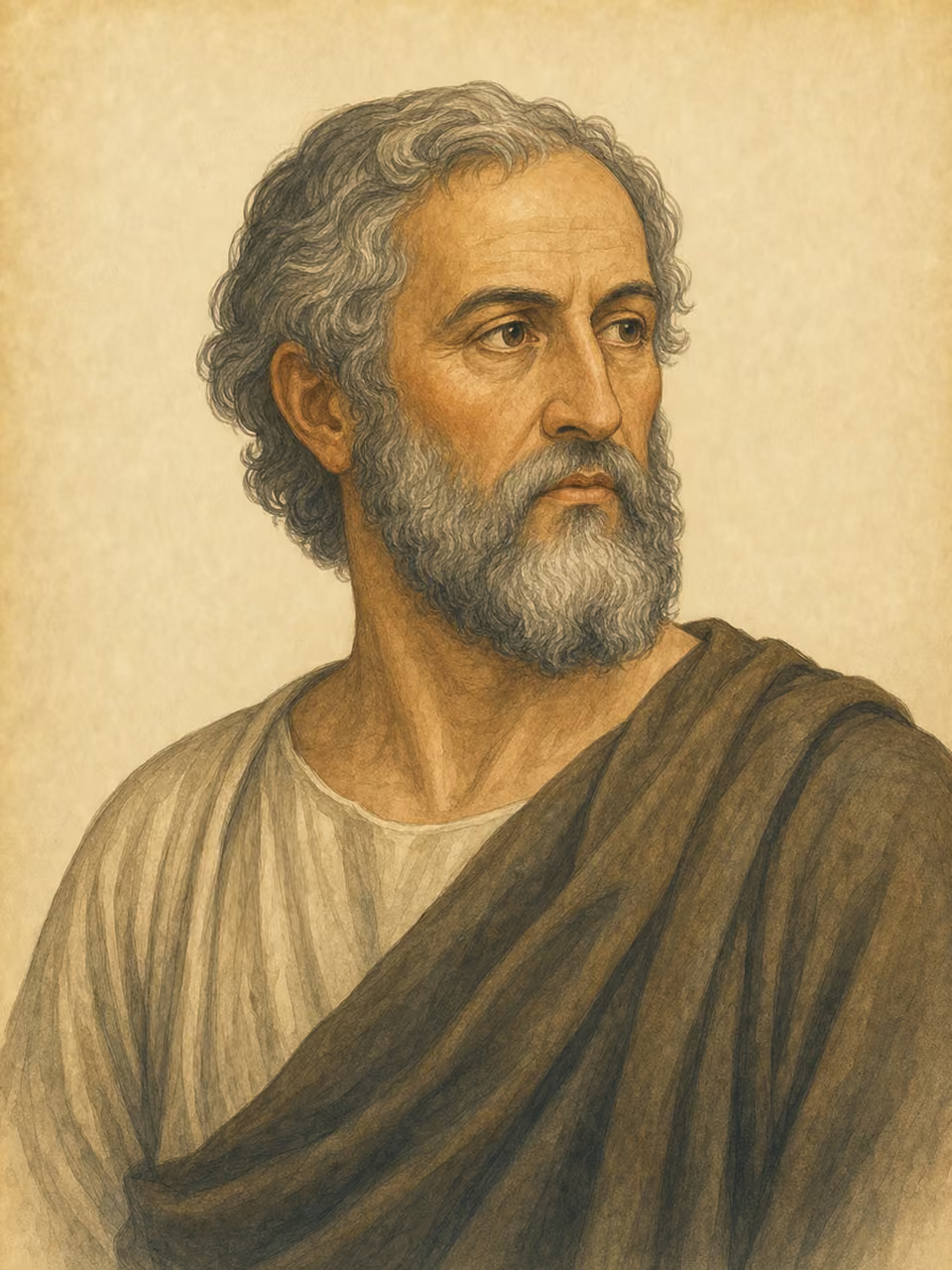
Protagoras

Portrait: AI-generated imagined likeness

Protagoras

Philosopher

Years
c. 490 BC–c. 420 BC
Birthplace
Greece
Birth polity
Ancient Greek world
Era
Ancient
Field
Philosophy
Occupations
Philosopher

A thinker representing the sophists of ancient Greece. He is known for the saying, ``Man is the measure of all things,'' and he reconsidered the nature of knowledge and debate. This book will help you understand the meaning of debate and education in a democratic society.

View in catalog

Historical context

Places

  • Abdera

    Birth

  • Athens

    Work

Events

  • Sophistic movement

    450 BC–420 BC

    Movement · Participant

Origins

Origins map
Birth country
Birth country
Greece

Map: Natural Earth (PD)

Biography

Early life

He was born in Abdera on the Thracian coast and traveled throughout Greece doing educational work. He gained attention as an intellectual who taught oratory in the Athenian democratic society.

Achievements

He showed a philosophy that emphasized human judgment and relativity rather than absolute truth. He provided oratory as an education and taught the power of words necessary for political participation.

Character & anecdotes

Many of his works have been lost and are only known through citations by later philosophers. It also appeared in Plato's Dialogues, and was remembered for its comparison with Socratic philosophy.

Historical Impact

When you study Protagoras, you will see that Greek philosophy revolved not only around the study of nature, but also around language, judgment, and education in democratic politics. You can understand the history of ideas by linking them to changes in political society. We can also see the relationship between education and political participation.