
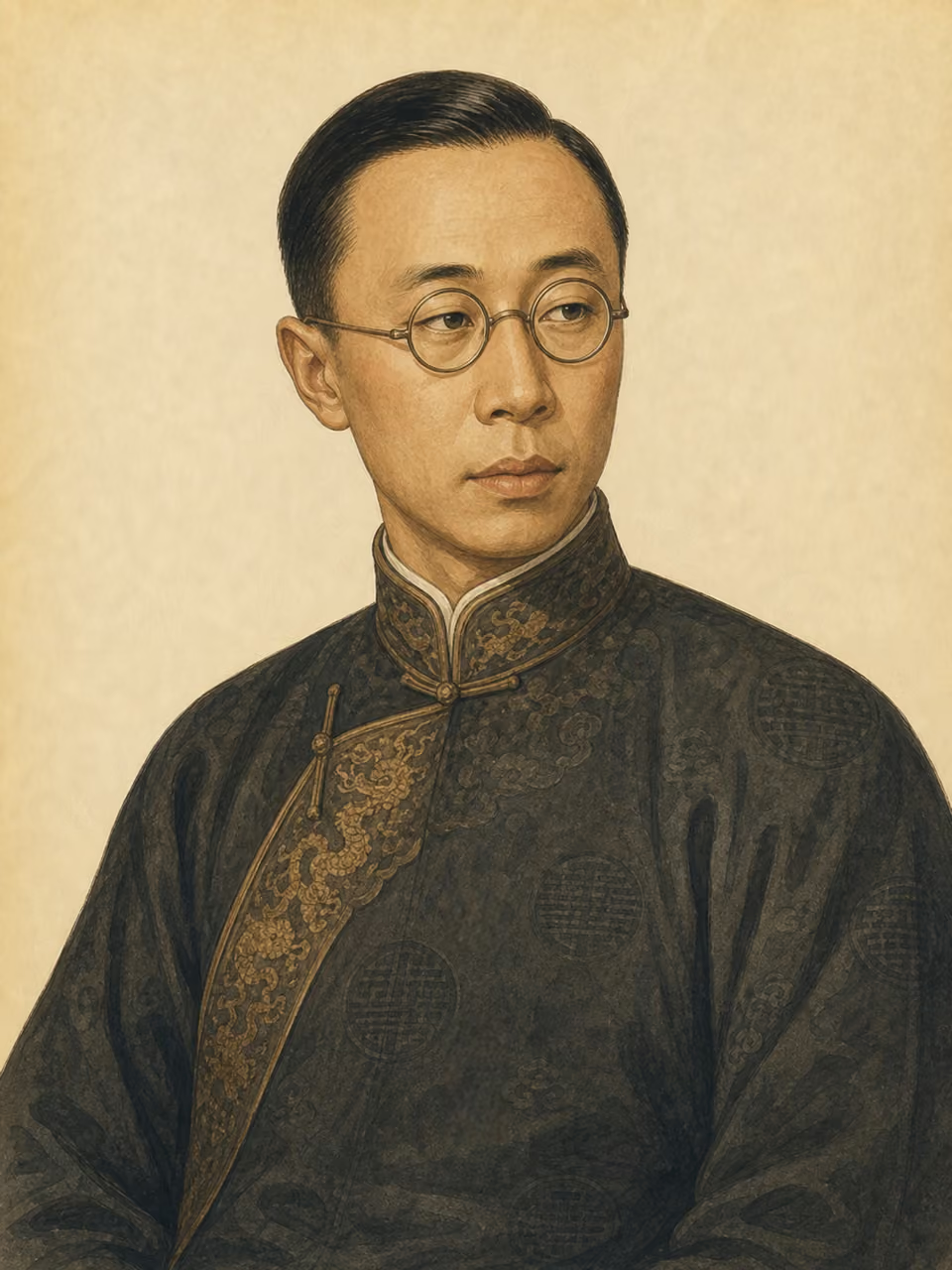
Puyi

Portrait: AI-generated imagined likeness

Puyi

Emperor · Monarch · Writer

Years
1906–1967
Birthplace
China
Birth polity
Qing dynasty
Era
Modern
Field
Politics
Occupations
Emperor · Monarch · Writer

The last emperor of the Qing Dynasty. He ascended the throne at a young age, and after abdicating during the Xinhai Revolution, he became Emperor of Manchukuo with Japanese support. He is a person who thinks about the collapse of dynasties and imperialism in modern China.

View in catalog

Historical context

Places

  • Beijing

    Residence

Works & achievements

  • From Emperor to Citizen

    1964

    Book

Events

  • Abdication of the Qing emperor

    1912

    Political event · Subject

  • Enthronement in Manchukuo

    1934–1945

    Political event · Leader

Origins

Origins map
Birth country
Birth country
China

Map: Natural Earth (PD)

Biography

Early life

He was born in Beijing as a member of the imperial family of the Aixinjuluo clan, and ascended the throne as Emperor Xuantong at the age of three. In China at the end of the Qing Dynasty, pressure from the great powers, revolutionary movements, and the failure of constitutional reform pushed the dynasty into a corner.

Achievements

Although he abdicated in 1912 and the Qing Dynasty ended, he continued to live a special life in the Forbidden City, maintaining his title of emperor. In the 1930s, he became emperor of Manchukuo under Japanese rule, and was interned as a war criminal after the war.

Character & anecdotes

Puyi's life changed dramatically: from emperor to head of a puppet state to war criminal to citizen of the People's Republic of China. The fate of individuals reflects the turbulent changes in 20th century China.

Historical Impact

When you study Puyi, you can see that China's dynastic system came to an end, and the political system drastically changed from a republic to a warlord, to a Japanese invasion, and to a socialist state. He is a person who symbolizes the transformation of modern East Asia. You can also see the intersection between personal history and international politics.