
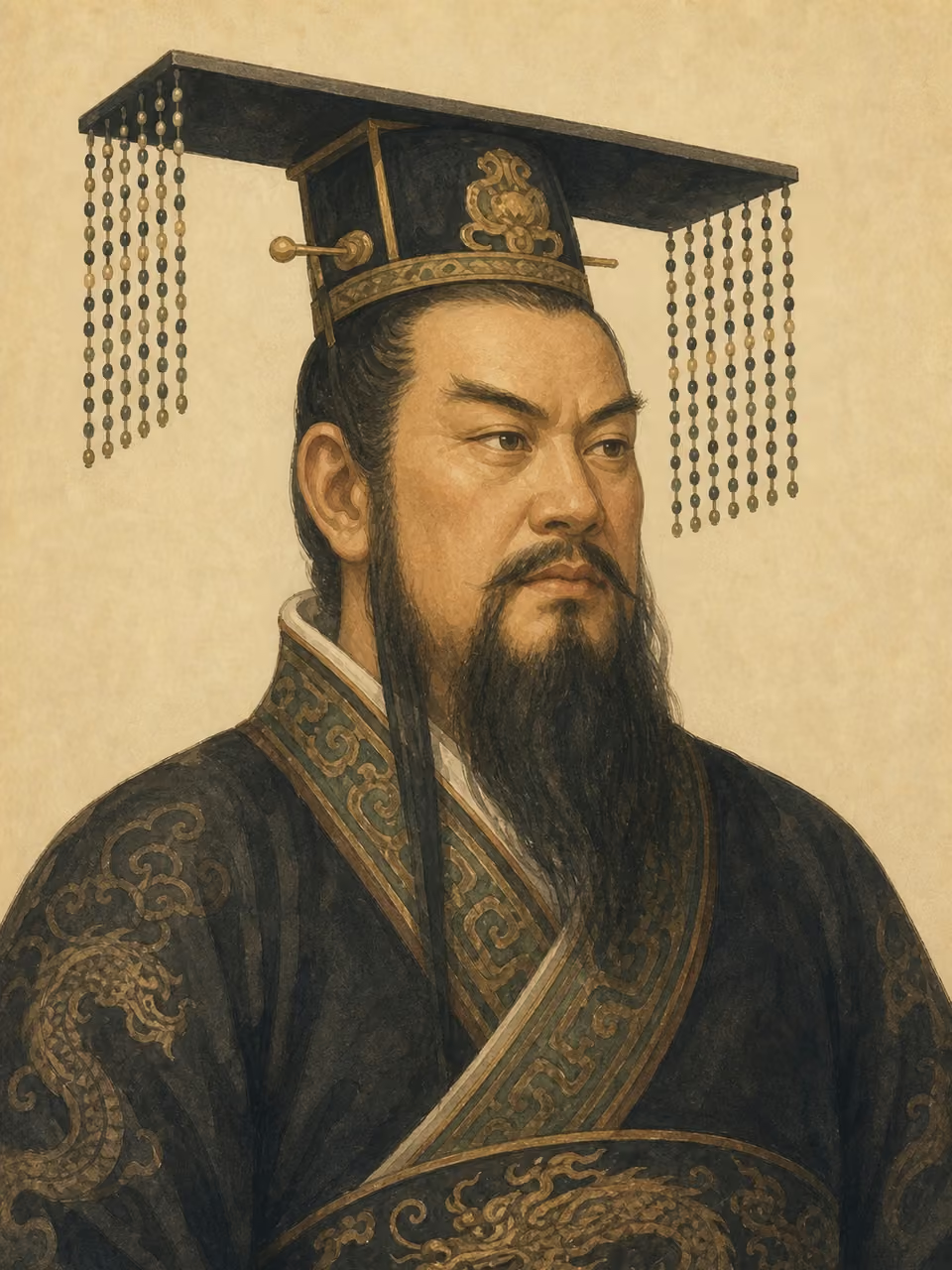
Qin Shi Huang

Portrait: AI-generated imagined likeness

Qin Shi Huang

Emperor · Politician

Years
259 BC–210 BC
Birthplace
China
Birth polity
State of Qin
Era
Ancient
Field
Politics
Occupations
Emperor · Politician

Ascending first as a young king and then finishing the wars that broke the Warring States order, Qin Shi Huang turned conquest into a claim that all under heaven could be ruled from one center. After unification, his regime pushed standardization in script, roads, weights, measures, and currency with unusual speed and force.

View in catalog

Historical context

Places

  • Handan

    Birth

  • Xianyang

    Residence

Works & achievements

  • Terracotta Army

    Building

Events

  • Qin's wars of unification

    230 BC–221 BC

    War · Leader

Origins

Origins map
Birth country
Birth country
China

Map: Natural Earth (PD)

Biography

Early life

Born in 259 BCE as Ying Zheng, he inherited the throne of Qin at a young age and reached full power after a regency. He then directed the final stage of the campaigns that ended the Warring States order.

Achievements

By conquering the rival states, he created the first large-scale unified Chinese empire. His regime imposed administrative centralization and pursued standardization in script, weights, measures, currency, road systems, and other tools of rule, giving later dynasties a durable model of imperial government.

Character & anecdotes

Later historians attached dramatic stories to his reign, including book burning, harsh repression, and obsessive quests for immortality. Some of those narratives may reflect political judgment as much as simple reporting, but they shaped his enduring image as a ruler of immense reach and severity.

Historical Impact

The Qin dynasty itself collapsed quickly, but the imperial structure associated with Qin Shi Huang outlasted the house that created it by centuries. Later Chinese states repeatedly worked within arguments about centralized administration, standardization, law, and coercive power that begin, in one form or another, with the model his reign established.

Notes

The terracotta army buried near his mausoleum remains one of the most vivid archaeological monuments of early imperial China.