
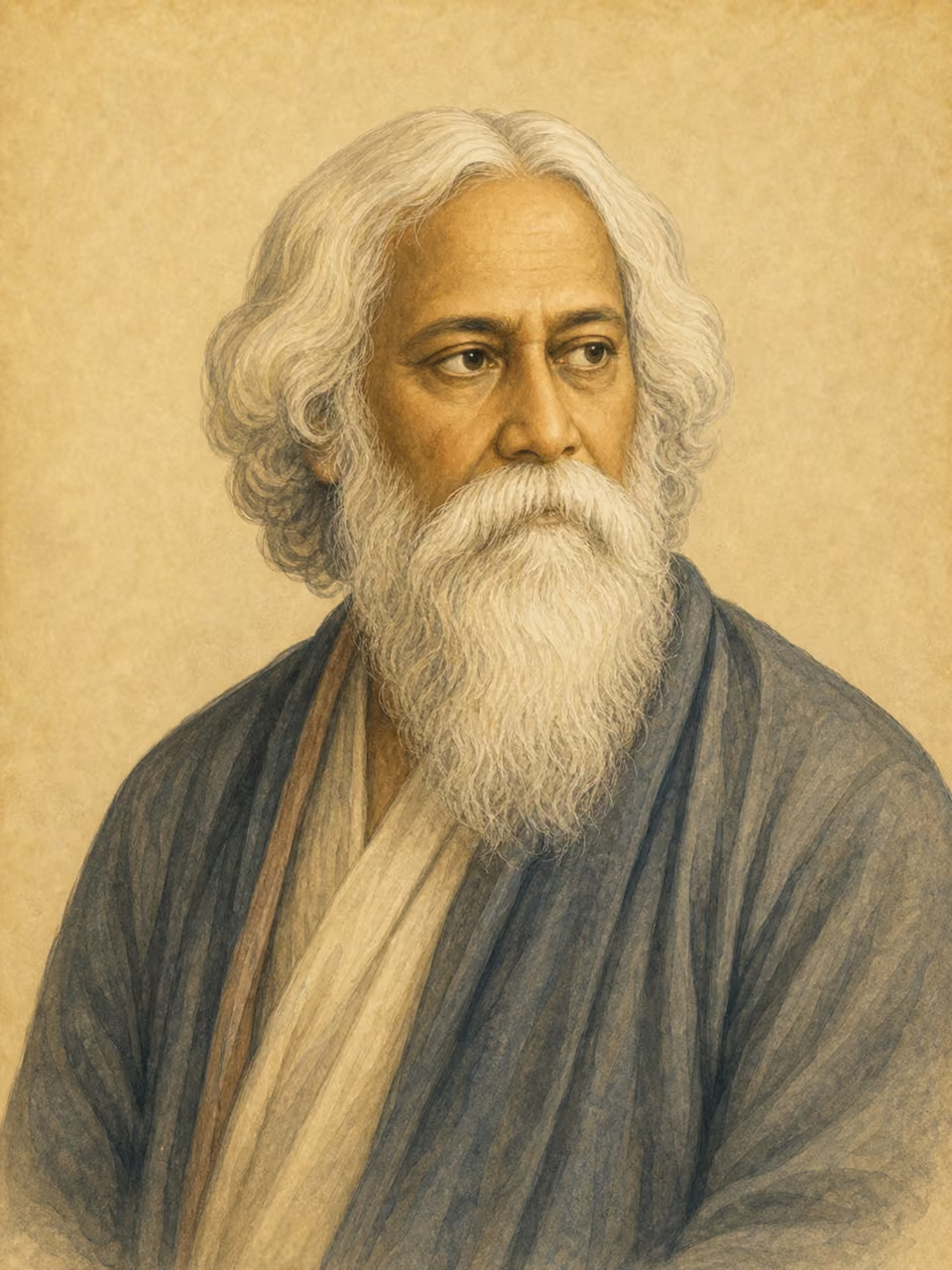
Rabindranath Tagore

Portrait: AI-generated imagined likeness

Rabindranath Tagore

Poet · Writer · Composer

Years
1861–1941
Birthplace
India
Birth polity
British Raj
Era
Modern
Field
Literature
Occupations
Poet · Writer · Composer

After gaining global attention through Gitanjali, Tagore moved constantly between poetry, songs, fiction, lectures, and the educational experiment at Santiniketan, using each setting to rethink culture under colonial rule. His renunciation of a British knighthood after the 1919 Amritsar massacre turned literary prestige into an unmistakable public protest.

View in catalog

Historical context

Places

  • Kolkata

    Birth

  • Santiniketan

    Work

Works & achievements

  • Gitanjali

    1910

    Poem

Events

  • Nobel Prize in Literature

    1913

    Cultural event · Participant

Origins

Origins map
Birth country
Birth country
India

Map: Natural Earth (PD)

Biography

Early life

Rabindranath Tagore was born in 1861 into the influential Tagore family of Calcutta, where literature, music, and reformist thought were part of everyday life. He did not fit easily into conventional schooling, but broad study at home and early writing gave him a strong independent voice from a young age.

Achievements

Tagore gained international renown through Gitanjali and in 1913 became the first Asian Nobel laureate in literature. Beyond poetry, he wrote novels, plays, songs, and short fiction, while also developing an educational vision at Santiniketan that joined artistic cultivation with intellectual freedom.

Character & anecdotes

After the Jallianwala Bagh massacre in 1919, Tagore renounced the knighthood he had received from the British crown, making his protest unmistakable. He also wrote the lyrics that later became the national anthems of India and Bangladesh, showing how literary work could enter public life at the highest level.

Historical Impact

Tagore remains vital not only as a Bengali literary giant, but as a thinker who linked education, music, aesthetic form, and anti-colonial self-respect without collapsing into simple nationalism. His influence still shapes South Asian cultural memory, and debates over cosmopolitanism, nation, and moral authority continue to pass through his work.