
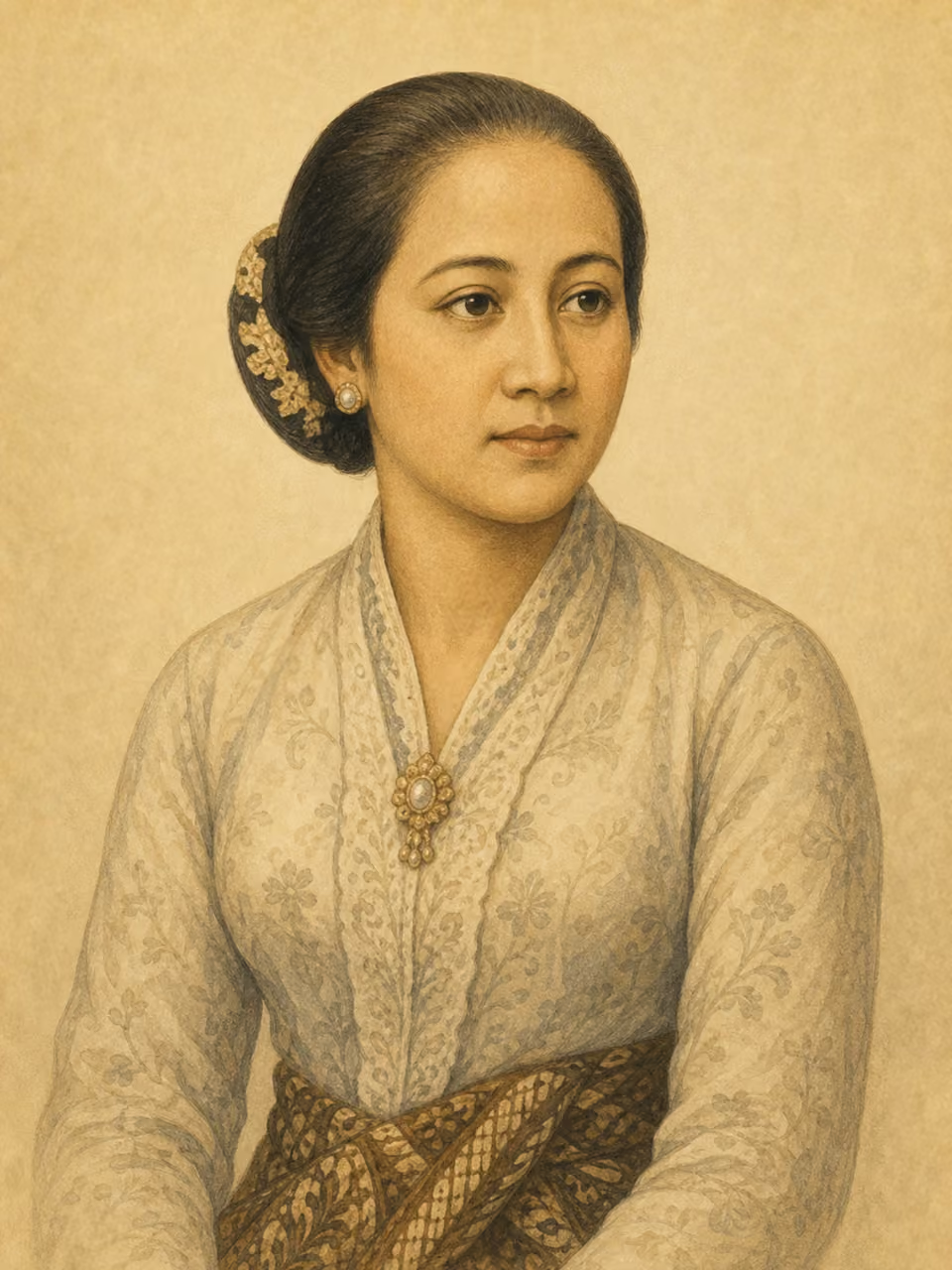
Raden Ajeng Kartini

Portrait: AI-generated imagined likeness

Raden Ajeng Kartini

Women's rights activist · Writer

Years
1879–1904
Birthplace
Indonesia
Birth polity
Dutch East Indies
Era
Modern
Field
Social reform
Occupations
Women's rights activist · Writer

Confined by elite Javanese custom while still young, Kartini used letters to Dutch correspondents as a practical way to keep thinking beyond the boundaries imposed on her life. Once published after her death, those letters turned private exchange into a public critique of women's education, social hierarchy, and colonial contradiction.

View in catalog

Historical context

Places

  • Jepara

    Birth

Works & achievements

  • Letters of a Javanese Princess

    1911

    Book

Events

  • Indonesian National Awakening

    Movement · Influenced by

Origins

Origins map
Birth country
Birth country
Indonesia

Map: Natural Earth (PD)

Biography

Early life

Raden Ajeng Kartini was born in 1879 into a prominent Javanese priyayi family. She received Dutch-language schooling as a girl, but customary elite seclusion sharply narrowed her world at a young age. Reading and correspondence became the means through which she continued to think beyond those constraints.

Achievements

In letters to Dutch friends, Kartini wrote with unusual clarity about the lack of education available to women, the weight of custom, and the contradictions of colonial society. Published after her death, those letters became an important intellectual source for arguments in favor of girls' schooling and broader female participation in public life.

Character & anecdotes

Kartini did not live long enough to become an elder stateswoman of reform; she died in 1904 soon after childbirth. Yet the brevity of her life only sharpened the later force of her image, and in Indonesia she became a national commemorative figure rather than a minor colonial-era correspondent.

Historical Impact

Kartini endures not simply as a national heroine of uplift, but because she articulated female self-determination from within the specific pressures of colonial Java. Indonesian public memory has repeatedly commemorated her, yet that very memorialization keeps reopening debates about education, family authority, class, and the meaning of emancipation.