
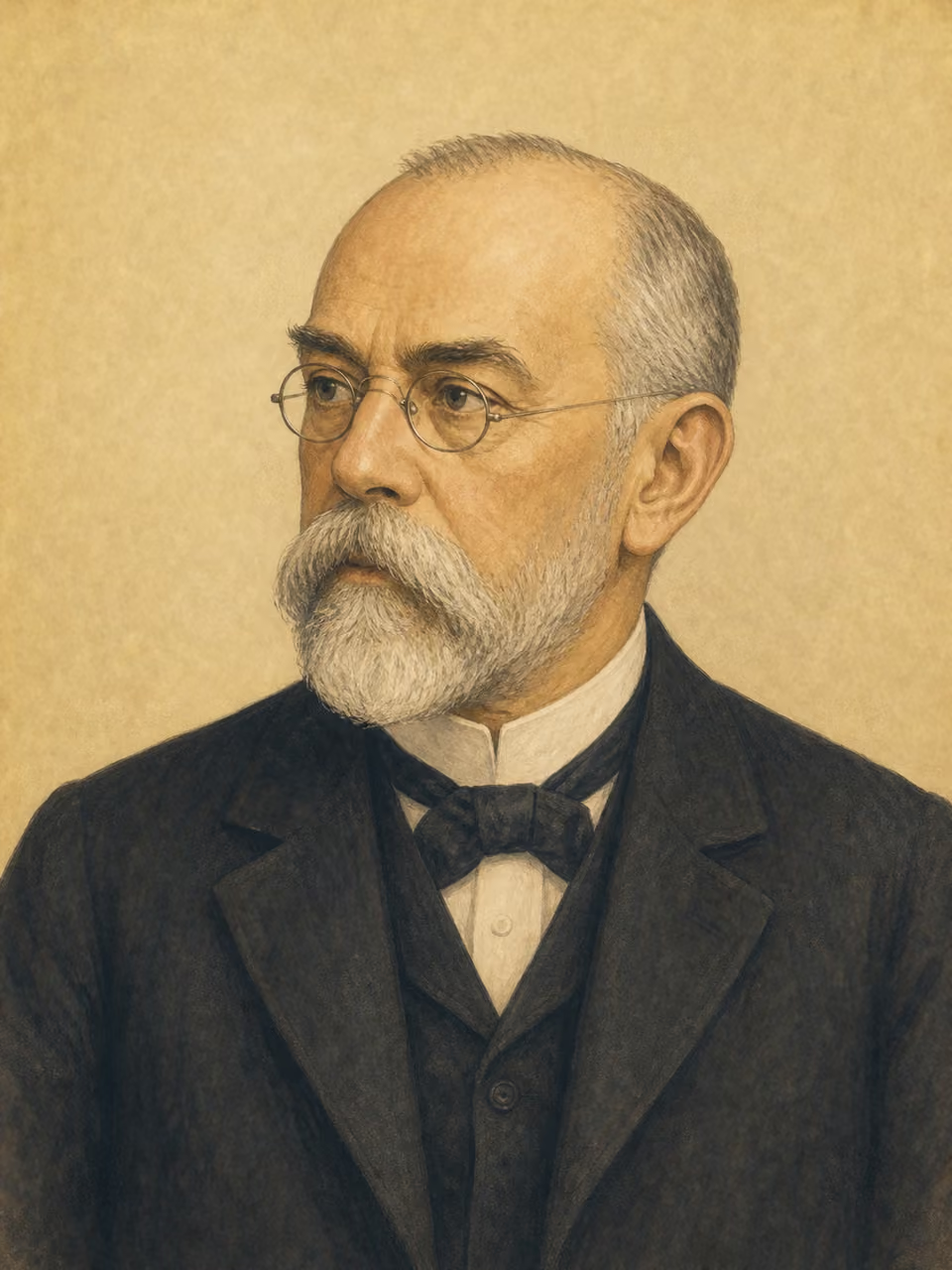
Robert Koch

Portrait: AI-generated imagined likeness

Robert Koch

Physician · Microbiologist · Chemist · Biologist

Years
1843–1910
Birthplace
Germany
Birth polity
Kingdom of Hanover
Era
Modern
Field
Medicine
Occupations
Physician · Microbiologist · Chemist · Biologist

A German physician and bacteriologist known for his research on Mycobacterium tuberculosis and Vibrio cholerae. He empirically developed the germ theory and solidified the foundations of modern medicine. He is an important figure in infectious disease research and public health.

View in catalog

Historical context

Places

  • Clausthal

    Birth

  • Berlin

    Work

Works & achievements

  • Koch's postulates

    Theory

  • discovery of the tuberculosis bacillus

    1882

    Discovery

Events

  • establishment of germ theory of disease

    1876–1905

    Movement · Participant

Origins

Origins map
Birth country
Birth country
Germany

Map: Natural Earth (PD)

Biography

Early life

Born in Clausthal in the Kingdom of Hanover, he studied medicine and became a doctor. While working as a local doctor, he used microscopes and culture techniques to try to find the cause of infectious diseases through experiments.

Achievements

His research on anthrax, Mycobacterium tuberculosis, and Vibrio cholerae established the principles that show that specific microorganisms cause specific diseases. He made significant contributions to the development of laboratory medicine and public health.

Character & anecdotes

Koch's research progressed in competition with Pasteur and others. Bacteriology had great social significance, as nations, militaries, colonies, and urban hygiene required infectious disease control.

Historical Impact

Studying Koch reveals the transformation of nineteenth-century medicine from empirical treatment to laboratory-based science. Research on tuberculosis and cholera also influenced public health policy. He is a central figure in understanding the basics of modern infectious disease control and microbiology.