
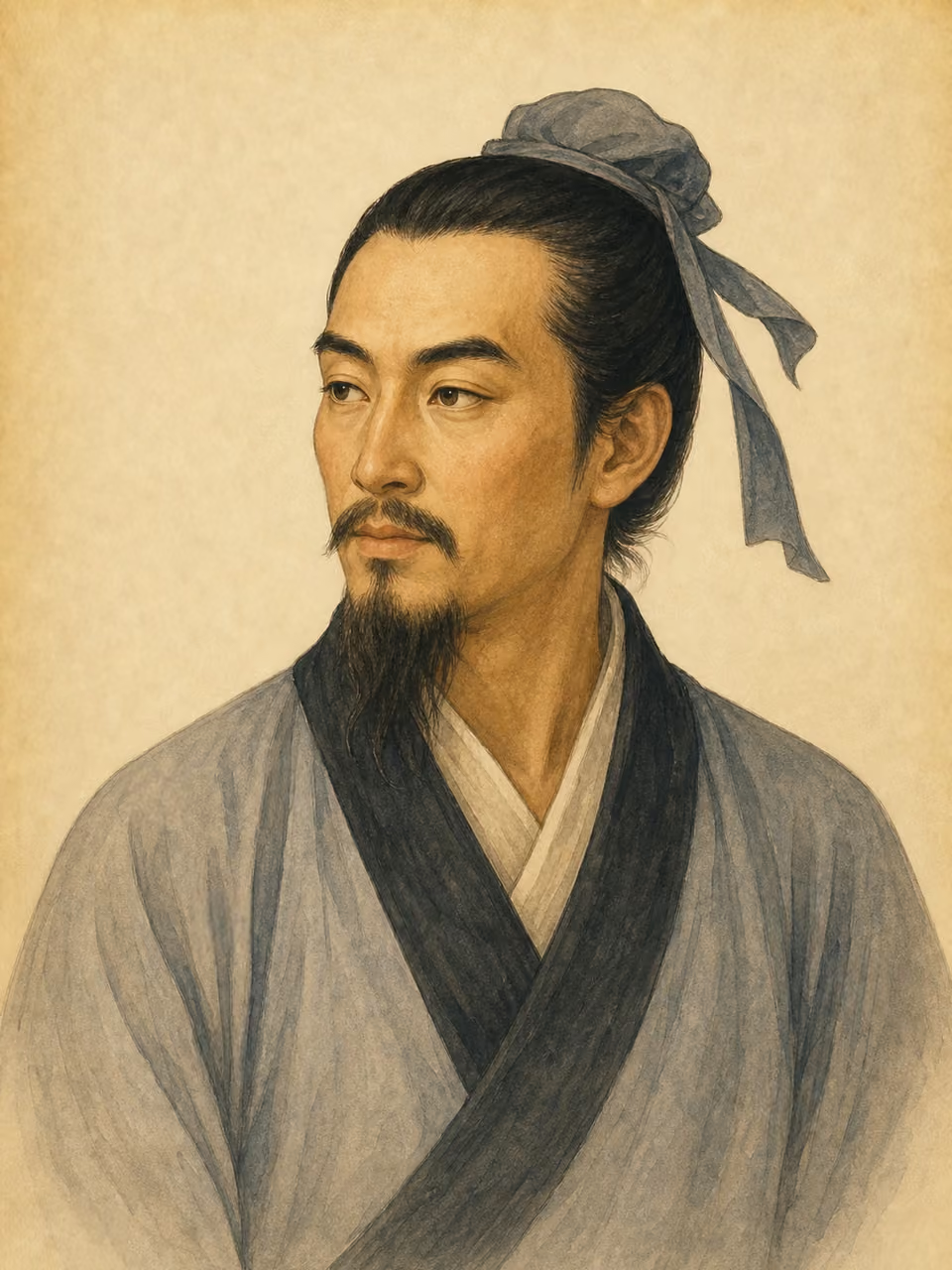
Ruan Ji

Portrait: AI-generated imagined likeness

Ruan Ji

Poet · Writer · Philosopher · Composer

Years
210–263
Birthplace
China
Birth polity
Late Han and Cao Wei China
Era
Ancient
Field
Literature
Occupations
Poet · Writer · Philosopher · Composer

A poet and thinker of the Wei and Jin dynasties, known as one of the Seven Sages of the Bamboo Forest. In a time of political instability, it expressed a free spirit and a reclusive way of life. It also serves as a gateway to thinking about the relationship between samurai culture and Taoist sensibilities.

View in catalog

Historical context

Places

  • Chenliu

    Birth

Events

  • Activity of the Seven Sages of the Bamboo Grove

    240–263

    Cultural event · Participant

Origins

Origins map
Birth country
Birth country
China

Map: Natural Earth (PD)

Biography

Early life

He was born into the intellectual class from the end of the Later Han Dynasty to the Three Kingdoms period. In the political climate of the Wei regime and the rise of the Sima clan, he was active both as a bureaucrat and as a literary figure.

Achievements

Through five-word poems and ideological writings, he expressed his sense of distance from the religious order and his inner self. The legend of the Seven Sages of the Bamboo Forest has become a cultural image that symbolizes the style of Wei and Jin.

Character & anecdotes

Ruan Chi is known for his anecdote about pretending to be drunk to avoid making political comments. This is a story of how intellectuals defend themselves in a time of dangerous power struggles.

Historical Impact

If you study Nguyen Ci, you will see that in Chinese history, literature was a place to escape from politics, and at the same time, it was also an expression of expression that included criticism of politics. The culture of the Wei, Jin, and Northern and Southern Dynasties can be understood not only as chaos but also as spiritual history. It is also possible to imagine an intellectual who keeps a distance from politics.