
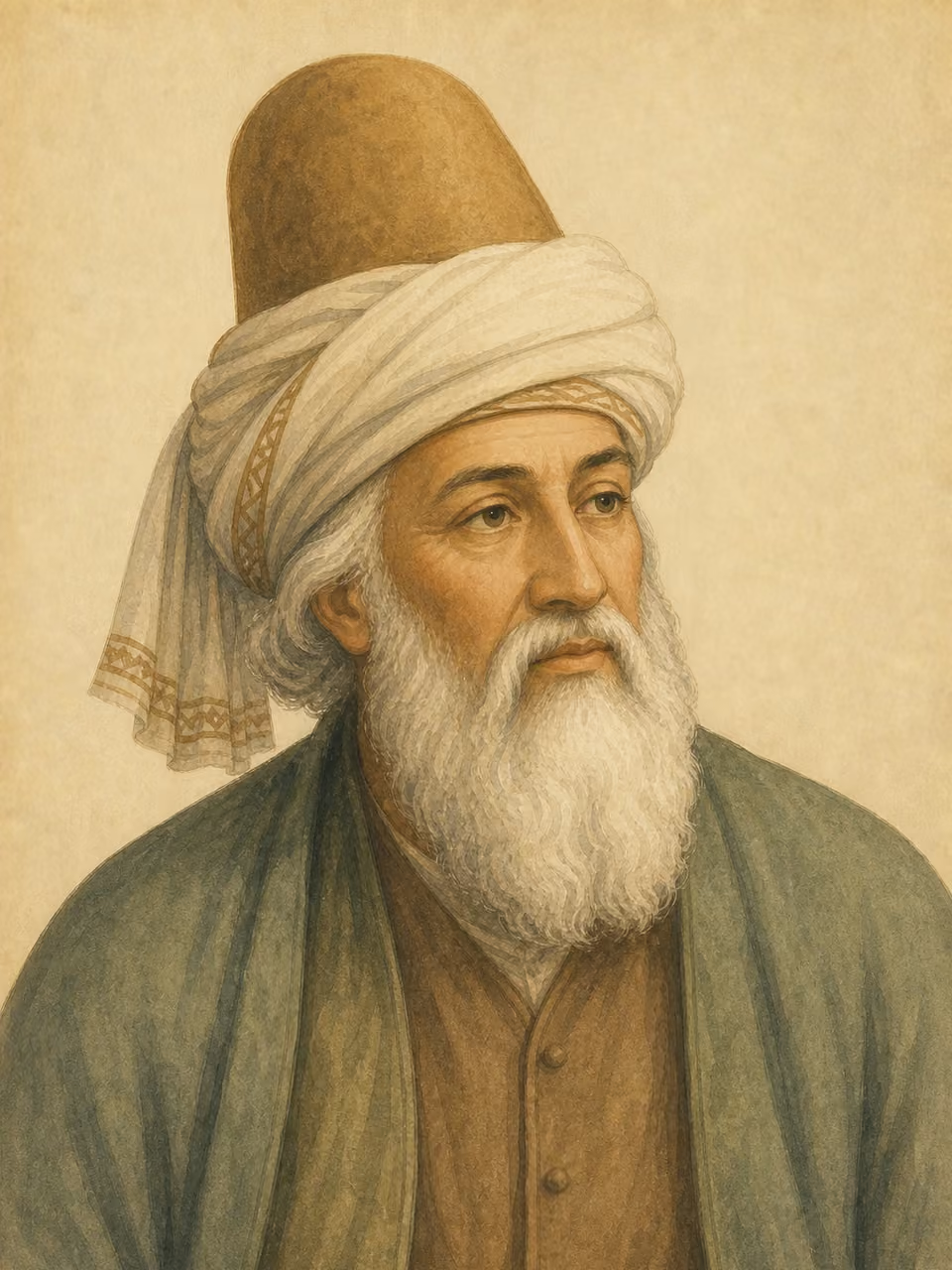
Rumi

Portrait: AI-generated imagined likeness

Rumi

Poet · Writer · Mystic

Years
1207–1273
Birthplace
Afghanistan
Birth polity
Khwarazmian Empire
Era
Medieval
Field
Literature
Occupations
Poet · Writer · Mystic

Rumi's life is often told as a turning point: a jurist and teacher whose encounter with Shams of Tabriz unsettled his previous world and released a new torrent of poetry. In the long poems that followed, longing, grief, storytelling, and devotion became inseparable parts of a single spiritual language.

View in catalog

Historical context

Places

  • Balkh

    Birth

  • Konya

    Work

Works & achievements

  • Masnavi

    Poem

Origins

Origins map
Birth countryAssociated countries
Birth country
Afghanistan
Associated countries
Türkiye

Map: Natural Earth (PD)

Biography

Early life

Rumi was born in 1207 in Balkh, in what is now Afghanistan, and migrated west with his family before settling in Konya. Raised in a learned household, he was first trained as a jurist and theologian rather than as a poet detached from institutional religion.

Achievements

His encounter with Shams of Tabriz transformed the course of his life and writing. Out of that turning point came works such as the Masnavi and the Divan-e Shams, in which narrative, parable, and lyrical address combine to explore desire, absence, and spiritual union.

Character & anecdotes

Rumi is often remembered as an ecstatic voice of universal love, but that image can hide the scholarly discipline of his earlier career. The intensity of his bond with Shams and the grief surrounding Shams's disappearance became central to how later generations understood his poetry.

Historical Impact

Rumi's poetry became central within Persianate literary and devotional culture and later remained tied to the ritual life of the Mevlevi order. Modern translation and reinterpretation then carried him into world literature, music, and popular spirituality, giving him an afterlife far broader than that of most medieval poets.