
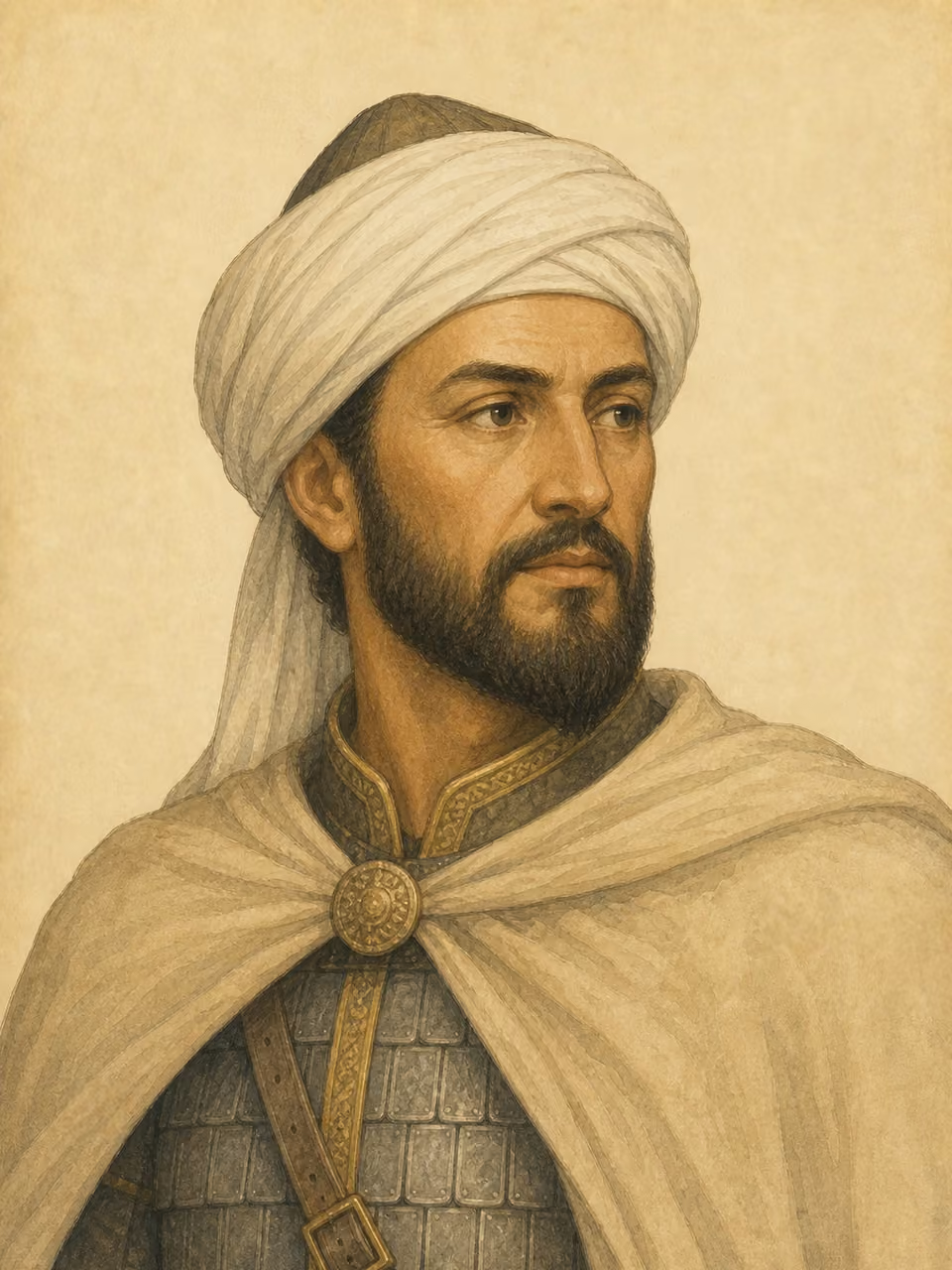
Saladin

Portrait: AI-generated imagined likeness

Saladin

Monarch · Military leader

Years
1138–1193
Birthplace
Iraq
Birth polity
Zengid dynasty
Era
Medieval
Field
Military
Occupations
Monarch · Military leader

Saladin's career reached its most famous moment when victory at Hattin opened the way to the recovery of Jerusalem, but that triumph rested on years of coalition-building across Egypt, Syria, and neighboring regions. He was not simply a battlefield hero; he was also a ruler who had to finance war, secure loyalties, and hold together a politically diverse realm.

View in catalog

Historical context

Places

  • Tikrit

    Birth

  • Damascus

    Death

Events

  • Battle of Hattin

    1187

    Battle · Commander

  • Third Crusade

    1189–1192

    War · Commander

Origins

Origins map
Birth countryAssociated countries
Birth country
Iraq
Associated countries
Syria

Map: Natural Earth (PD)

Biography

Early life

Saladin was born in Tikrit in 1138 into a Kurdish military family. He advanced through service in Syria and Egypt, gaining experience in both campaigning and statecraft under the larger political order associated with Nur al-Din.

Achievements

After establishing control in Egypt, he consolidated power across parts of Syria and the surrounding region, creating the foundation of Ayyubid rule. His victory at Hattin in 1187 and the subsequent capture of Jerusalem made him the most celebrated Muslim commander of the Crusading era.

Character & anecdotes

Later memory often turned Saladin into a model of chivalry and magnanimity, especially in contrast-driven Crusade narratives. That image has some basis, but it can obscure the harder realities of the military organization, finance, and political coercion required to hold his coalition together.

Historical Impact

Saladin remains central to medieval Middle Eastern history because he turned resistance to the Crusader states into a project of dynastic and regional consolidation. His memory later carried political force far beyond the twelfth century, since both Islamic and European traditions repeatedly reshaped him into a symbol of legitimate rule, piety, and honorable war.