
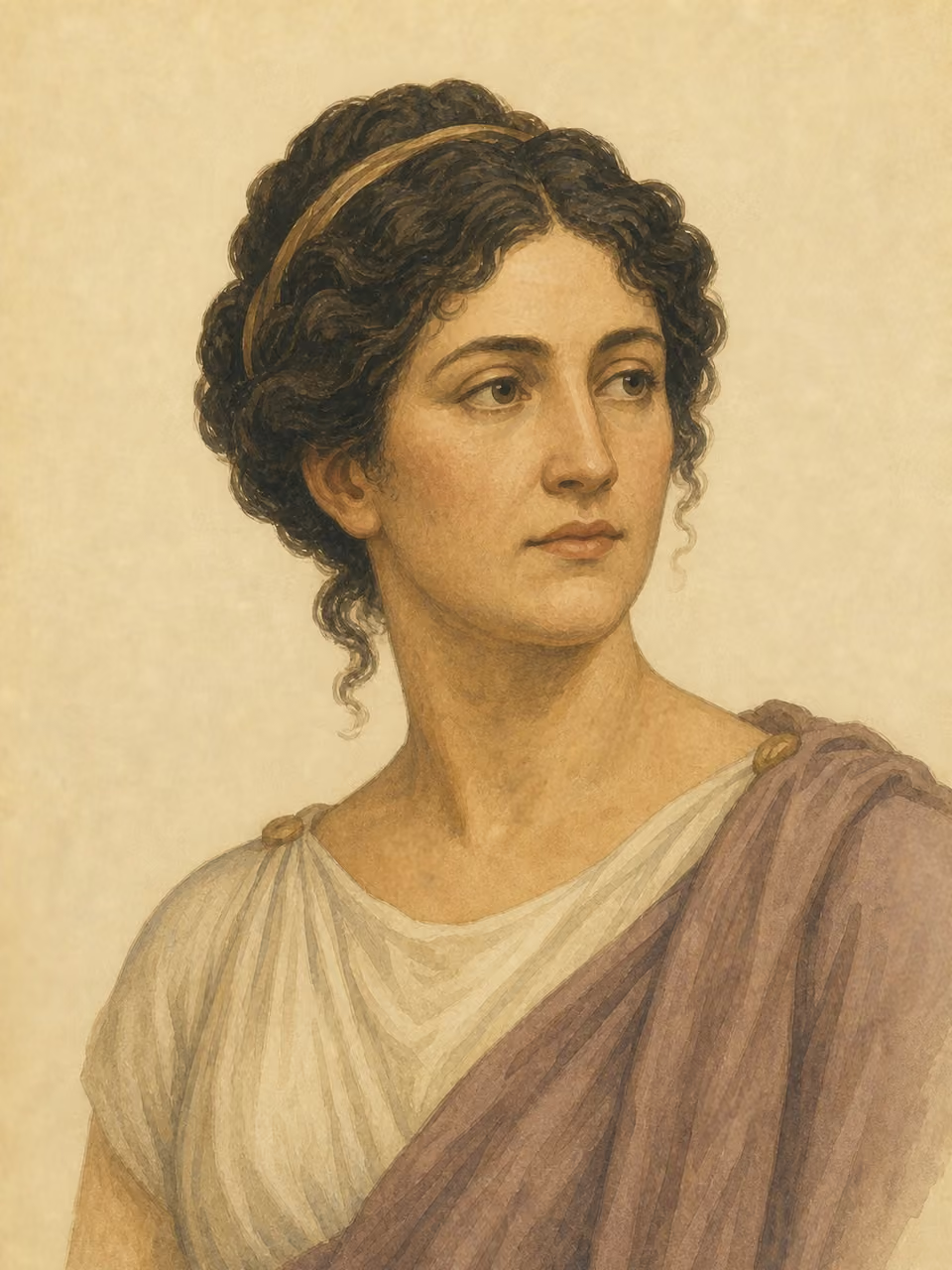
Sappho

Portrait: AI-generated imagined likeness

Sappho

Poet

Years
c. 630 BC–c. 570 BC
Birthplace
Greece
Birth polity
Ancient Greece
Era
Ancient
Field
Literature
Occupations
Poet

Sappho is heard today mostly through fragments, yet those broken lines still preserve the immediacy of songs once performed on Lesbos with startling intensity about desire, prayer, and emotional vulnerability. That combination of intimacy and formal control made her reputation extraordinary even in antiquity, long before most of her poems were lost.

View in catalog

Historical context

Places

  • Lesbos

    Birth

Works & achievements

  • Ode to Aphrodite

    Poem

Origins

Origins map
Birth country
Birth country
Greece

Map: Natural Earth (PD)

Biography

Early life

Sappho was probably born on Lesbos around 630 BCE, but secure biographical facts are scarce. Almost everything beyond a few broad outlines depends on later testimonies and on inferences drawn from fragmentary poems.

Achievements

Her songs in the Aeolic dialect combined precision, musicality, and emotional concentration to a degree that astonished later readers. Although most of her work has been lost, the surviving fragments still reveal extraordinary control over voice, image, and performance-based lyric form.

Character & anecdotes

Ancient and later traditions surrounded Sappho with stories that are difficult to separate from legend. Yet her status was already so high in antiquity that she could be called the 'tenth Muse,' a sign of how strongly her reputation endured even when the poems themselves were disappearing.

Historical Impact

Her poetry became a benchmark for lyric expression, especially for readers thinking about love, female authorship, and the articulation of intimate feeling. Because so much of the corpus survives only in damaged scraps, Sappho also became central to modern scholarship on textual recovery, historical loss, and the interpretive power of fragments.

Notes

Most of what survives comes through papyrus finds and quotations preserved by later ancient authors.